


- EURUSD
- XAUUSD
- XAGUSD
- WTI
- USDX


















Sabit getirili ürünler, faiz, kupon ödemeleri veya diğer sözleşmeye dayalı nakit akışları yoluyla gelir üreten yatırımlardır. Yaygın örnekler arasında devlet ve şirket tahvilleri, belediye tahvilleri, mevduat sertifikaları (CD'ler) ve tahvil fonları yer alır. Vade süreleri, ödeme yapıları, riskleri ve vergi uygulamaları farklılık gösterir.
Sabit Getirili Ürünler Nelerdir ve Nasıl Çalışırlar?
Sabit getirili ürünler, belirtilen şartlar altında gelir sağlayan finansal araçlardır. Çoğu, yatırımcıların bir devlete, şirkete veya finans kuruluşuna faiz karşılığında ve çoğu durumda vade sonunda anaparanın geri ödenmesi karşılığında para ödünç vermelerine olanak tanıyarak işler.
Örneğin, bir şirket sermaye toplamak için tahvil çıkarabilir ve yatırımcılara belirli tarihlerde faiz ödemeyi kabul edebilir. Vade sonunda, tahvilin nominal değerinin geri ödenmesi beklenir. Diğer ürünler farklı şekilde çalışır: Hazine bonoları genellikle iskonto ile satın alınırken, bazı krediler ve tahviller, gösterge faiz oranına göre değişen faiz öder.
"Sabit gelir" terimi, her ödemenin veya yatırım değerinin garanti edildiği anlamına gelmez. Faiz oranları dalgalanabilir, ihraç edenler temerrüde düşebilir ve vadesinden önce satılan bir menkul kıymetin değeri, satın alma fiyatından daha düşük olabilir.
Sabit Getirili Ürünler Nasıl Gelir Üretir?
İade koşulları ürünün yapısına bağlıdır. Yaygın iade kaynakları şunlardır:
- Kupon ödemeleri: Tahviller genellikle düzenli aralıklarla, genellikle yılda iki kez faiz öder. Yıllık %5 kupon faizi olan 1.000 dolarlık bir tahvil yılda 50 dolar öder.
- Faiz ödemeleri: Mevduat hesapları ve birçok kredi, şartlarına göre faiz öder. Faiz oranı sabit veya değişken olabilir.
- Nominal değer üzerinden iskonto getirisi: Hazine bonoları genellikle iskonto ile veya nominal değer üzerinden satılır. Vade sonunda yatırımcılar nominal değeri alırlar; herhangi bir iskonto getiriyi temsil eder.
- Değişken faizli ödemeler: Bazı tahviller ve krediler, faiz oranlarını bir referans noktasına göre yeniden belirler, bu nedenle ödemeler artabilir veya azalabilir.
- Fon dağıtımları: Tahvil fonları, ellerindeki varlıklardan gelir elde eder ve bu geliri hissedarlara dağıtabilir. Dağıtım miktarları değişebilir.
Sabit Getirili Bir Ürün Vadeye Ulaştığında Ne Olur?
Vade tarihi olan bireysel tahvil veya mevduatlarda, ihraççı veya bankanın, yükümlülüklerini yerine getirme kabiliyetine ve ürünün şartlarına bağlı olarak, vade sonunda anaparayı geri ödemesi beklenir. Faiz ödemeleri genellikle vade sonunda durur.
Tahvil yatırım fonu veya ETF farklıdır. Bir menkul kıymet portföyü içerir ve genellikle belirli bir vade tarihi yoktur. Yatırımcılar, belirli bir tarihte vaat edilen anapara geri ödemesini almak yerine, fon paylarını geçerli piyasa fiyatından satarlar.
Sabit Getirili Ürünlerin Başlıca Türleri Nelerdir?
Sabit getirili ürünler, kısa vadeli devlet tahvillerinden kurumsal borçlara ve ortak yatırım fonlarına kadar geniş bir yelpazeyi kapsar. Başlıca farklılıklar, bu ürünleri kimin ihraç ettiği, nasıl gelir elde ettikleri, vade tarihleri ve yatırımcıların üstlendiği risklerdir.
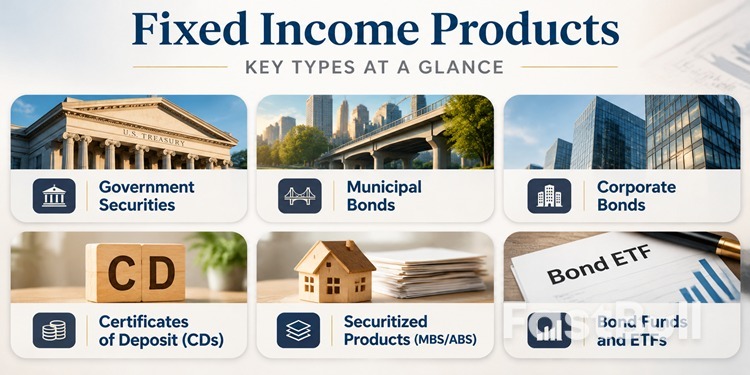
ABD Hazine Tahvilleri
U.S. Treasury securities are debt instruments issued by the federal government. Common types include:
- Treasury Bills (T-Bills): Short-term securities with maturities of 4 to 52 weeks. They are generally sold at a discount and pay face value at maturity.
- Treasury Notes (T-Notes): Securities with maturities of 2, 3, 5, 7, or 10 years that pay interest every six months.
- Treasury Bonds (T-Bonds): Long-term securities with 20- or 30-year maturities that generally pay interest twice a year.
- Treasury Inflation-Protected Securities (TIPS): Securities whose principal adjusts with changes in the Consumer Price Index for All Urban Consumers (CPI-U). Interest is calculated on the adjusted principal, so payment amounts can change.
Treasury securities are backed by the full faith and credit of the U.S. government. Their interest is generally subject to federal income tax but exempt from state and local income taxes. See TreasuryDirect's overview of marketable securities for product details.
Municipal Bonds
Municipal bonds are issued by states, cities, counties, and public authorities to finance projects such as schools, roads, hospitals, and utilities. Two common types are:
- General Obligation Bonds: Supported by the issuer's taxing power or general revenues.
- Revenue Bonds: Repaid primarily from revenue generated by a specific project or service, such as a toll road or water system.
Interest on many municipal bonds is exempt from federal income tax, and it may also be exempt from state and local taxes for residents of the issuing state. Tax treatment varies: some municipal bond interest is taxable or may affect the alternative minimum tax (AMT). Check the bond's official documents and your tax situation. The IRS guidance on investment income explains the general rules.
Corporate Bonds
Companies issue corporate bonds to finance expansion, acquisitions, refinancing, and operations. Investors receive interest under the bond terms, and the company is expected to repay principal at maturity.
- Investment-Grade Bonds: Have higher credit ratings and generally lower perceived default risk, so they often offer lower yields.
- High-Yield Bonds: Have lower credit ratings and greater default risk. They generally offer higher yields to compensate investors for taking that risk.
A higher yield is not automatically a better deal. It may reflect a greater chance that the issuer will miss interest payments or fail to repay principal.
Certificates of Deposit (CDs)
Certificates of deposit are bank deposits that pay interest in exchange for keeping money deposited for an agreed term. Early withdrawal from a traditional CD may trigger a penalty.
- Traditional CDs: Purchased directly from a bank, usually with a stated interest rate and maturity date.
- Brokered CDs: Issued by banks but purchased through brokerage firms. They may be sold in a secondary market before maturity, and the sale price can be above or below the amount invested.
CDs at FDIC-insured banks are generally covered up to $250,000 per depositor, per insured bank, per ownership category, subject to FDIC rules. Coverage is aggregated with other deposits in the same category at that bank. Brokered CD investors should check the issuing bank and available coverage. The FDIC deposit insurance overview explains the limits and eligible deposits.
Agency Bonds and Securitized Products
Agency bonds are issued by federal agencies or government-sponsored enterprises (GSEs). Their backing varies by issuer, and not all carry the full faith and credit guarantee of the U.S. government.
Securitized products are created by pooling loans or other financial assets and issuing securities backed by the cash flows from those assets. Examples include:
- Mortgage-Backed Securities (MBS): Backed by pools of residential or commercial mortgages. Investor payments come from mortgage principal and interest.
- Asset-Backed Securities (ABS): Backed by assets such as auto loans, credit card receivables, or student loans.
Cash flows can be affected by borrower defaults, early repayments, and changes in interest rates.
Bond Mutual Funds and ETFs
Bond mutual funds and exchange-traded funds pool investors' money to buy portfolios of government, corporate, municipal, or other debt securities. They can provide diversification and access to bonds without requiring investors to select each security themselves.
Bond ETFs trade on exchanges during market hours. Mutual funds generally transact once each business day at their net asset value (NAV). Both can fluctuate in value, charge fees, and make distributions that vary. Unlike an individual bond held to maturity, a typical bond fund does not promise to return a fixed principal amount on a specific date.
Other Fixed Income Instruments
Institutional fixed income markets also include instruments such as:
- Commercial Paper: Short-term, generally unsecured corporate debt used to fund operating expenses and other near-term needs.
- Bank Loans: Loans to businesses. Many institutional loan investments have floating rates, so interest payments can change as benchmark rates move.
Fixed Income Products: Examples and Key Differences
The table below compares common products by how they generate income and what distinguishes them.
| Product | Income Source | Key Characteristic |
|---|---|---|
| Treasury Bills | Discount to face value | Short-term U.S. government debt |
| Treasury Bonds | Coupon payments | Long-term U.S. government debt |
| Municipal Bonds | Interest payments | Potential tax advantages |
| Corporate Bonds | Coupon payments | Credit risk varies by issuer |
| CDs | Interest payments | Bank deposit with a stated term |
| Bond ETFs | Portfolio income and distributions | Diversified bond exposure |
Consider a corporate bond with a $1,000 face value and a 5% annual coupon. It pays $50 in interest each year, often in two $25 installments. If the investor buys it for $950, the current yield is about 5.26% ($50 ÷ $950).
The coupon rate, current yield, and yield to maturity (YTM) measure different things:
- Coupon Rate: Annual coupon interest divided by the bond's face value.
- Current Yield: Annual coupon interest divided by the bond's current market price.
- Yield to Maturity: The estimated annualized return if the bond is held until maturity, taking into account coupon payments and the difference between its purchase price and the amount repaid at maturity, assuming the issuer makes the required payments.
What Risks Should Investors Understand?
Fixed income products can offer more predictable cash flows than some investments, but they are not risk-free. The main risks depend on the issuer, maturity, structure, and market conditions.
Interest Rate Risk
Market interest rates and the prices of existing fixed-rate bonds generally move in opposite directions. When rates rise, older bonds with lower coupons become less attractive and their market prices tend to fall. Longer-maturity bonds are usually more sensitive to rate changes.
Credit and Default Risk
Credit risk is the possibility that an issuer will fail to make interest payments or repay principal. Lower-rated corporate bonds generally carry greater default risk than investment-grade bonds. Credit ratings help assess risk, but they are opinions, not guarantees.
Inflation, Liquidity and Reinvestment Risks
Inflation reduces the purchasing power of fixed payments. Liquidity risk arises when a security is difficult to sell without accepting a lower price. Reinvestment risk occurs when coupon or principal payments must be reinvested at lower rates. Callable bonds and mortgage-backed securities can also expose investors to early repayment, which may force them to reinvest sooner than expected.
How Do You Choose the Right Fixed Income Product?
The right product depends on when you need the money, how much risk you can accept, and whether you prioritize income, liquidity, or tax treatment.
Match the Product to Your Investment Timeline
Investors who need their money soon may compare Treasury bills or short-term CDs. Those seeking longer-term income may consider Treasury notes, corporate bonds, or municipal bonds. Bond funds can provide ongoing exposure without requiring investors to choose individual maturity dates.
Compare Yields, Credit Quality and Tax Treatment
Ürünleri yalnızca ana getiri oranına göre karşılaştırmayın. Kredi kalitesini, vadeyi, ücretleri, likiditeyi ve vergi sonrası geliri göz önünde bulundurun. Belediye tahvilleri için, vergi eşdeğeri getiri, vergiden muaf geliri vergilendirilebilir alternatiflerle karşılaştırmaya yardımcı olabilir, ancak sonuç yatırımcının vergi dilimine ve eyalet vergi kurallarına bağlıdır.
Bireysel Tahviller ve Sabit Getirili Fonlar
Bireysel tahvillerin belirli ödeme koşulları ve vade tarihleri vardır. İhraççı yükümlülüklerini yerine getirir ve yatırımcı tahvili vadeye kadar elinde tutarsa, anapara genellikle nominal değer üzerinden geri ödenir. Tahvil fonları çeşitlendirme ve portföye daha kolay erişim sağlar, ancak hisse fiyatları dalgalanır ve genellikle vade tarihleri yoktur veya orijinal yatırımı geri ödeme garantisi vermezler.
Sabit Getirili Ürünler Hakkında Sıkça Sorulan Sorular
Tahviller sabit getirili ürünler olarak mı kabul edilir?
Evet. Devlet, belediye ve şirket tahvilleri yaygın sabit gelirli ürünlerdir. Genellikle belirtilen şartlar altında faiz öderler ve ihraç edenin ödeme gücüne bağlı olarak vade sonunda anaparanın geri ödenmesini sağlamak üzere tasarlanmıştır.
Krediler sabit gelirli krediler midir?
Yatırımcılar, sözleşmeye dayalı faiz ve anapara ödemeleri üreten borç haklarına sahip olduklarında, krediler sabit gelir piyasasının bir parçası olabilir. Bazı kredilerin faiz oranları değişkendir, bu nedenle ödemeleri gösterge faiz oranlarına göre değişir.
Yatırım Bankacılığında Sabit Getirili Ürünler Nelerdir?
Yatırım bankacılığında, sabit gelirli ürünler genellikle kurumların ihraç ettiği, yapılandırdığı, alım satımını yaptığı veya dağıttığı borçlanma senetlerini ve ilgili araçları içerir. Örnekler arasında devlet ve şirket tahvilleri, belediye borçları, ipotek teminatlı menkul kıymetler ve diğer yapılandırılmış kredi ürünleri yer alır.
Sabit Getirili Fon Nedir?
Sabit gelir fonu, öncelikle devlet tahvilleri, şirket tahvilleri veya belediye tahvilleri gibi borçlanma senetlerine yatırım yapan bir yatırım fonu veya ETF'dir. Sabit gelir yatırımlarından oluşan bir portföye maruz kalma imkanı sağlar, ancak piyasa değeri ve dağıtımları değişebilir.