


- GBPUSD
- XAUUSD
- XAGUSD
- WTI
- USDX


Petikan
Analisis
Pengguna
24/7
Kalendar Ekonomi
Pendidikan
Data
- Nama
- Terkini
- Sblm












Perlombongan Bitcoin secara solo pada tahun 2025 boleh dilakukan secara teknikal tetapi amat sukar. Ketahui tentang kadar kejayaan, kos, keuntungan vs perlombongan kumpulan dan jika ia berbaloi untuk dicuba.
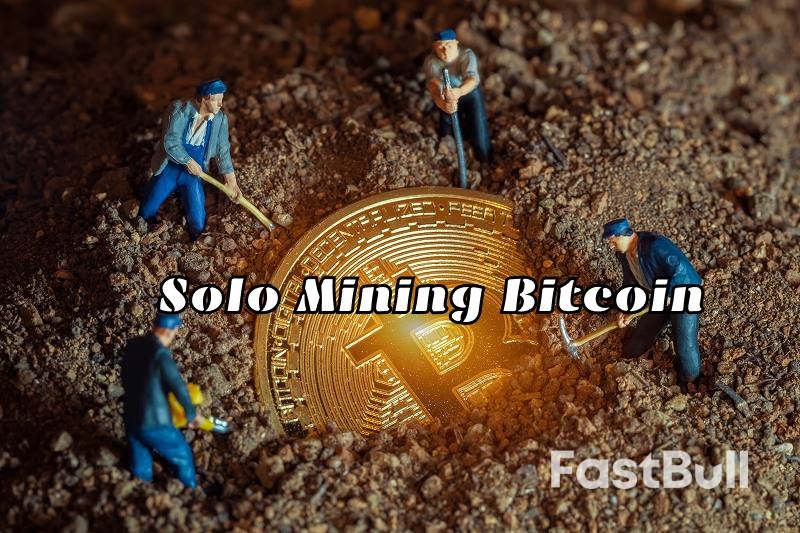
Perlombongan Solo Bitcoin telah menjadi amalan yang semakin jarang berlaku kerana kumpulan perlombongan perindustrian menguasai rangkaian pada tahun 2025. Namun sesetengah pelombong masih mengejar kebebasan dan potensi ganjaran penuh perlombongan sahaja. Panduan ini menerangkan cara perlombongan solo berfungsi hari ini, betapa sukarnya ia telah menjadi, dan sama ada individu masih boleh mendapat keuntungan daripadanya.
Perlombongan bitcoin solo bermaksud cuba melombong blok Bitcoin secara bebas, tanpa menyertai kumpulan perlombongan. Apabila anda melombong secara solo, anda bersaing secara langsung dengan seluruh rangkaian pelombong global untuk menyelesaikan teka-teki kriptografi yang kompleks. Jika anda berjaya mencari blok, anda menerima ganjaran blok penuh—pada masa ini 6.25 BTC serta yuran transaksi—tetapi anda menanggung semua kos dan risiko pengiraan sahaja.
Proses melombong bitcoin secara solo mengikut mekanisme konsensus bukti kerja Bitcoin. Perkakasan perlombongan anda berulang kali mencincang data pengepala menyekat, mencari nilai cincang yang memenuhi sasaran kesukaran rangkaian. Ini pada asasnya ialah loteri pengiraan di mana lebih banyak kuasa pencincangan meningkatkan peluang anda tetapi tidak menjamin apa-apa.
Inilah yang berlaku semasa perlombongan bitcoin solo:
Tidak seperti perlombongan kolam di mana ganjaran diagihkan berdasarkan kerja yang disumbangkan, perlombongan solo beroperasi secara menyeluruh atau tiada. Anda mungkin melombong selama berbulan-bulan atau bertahun-tahun tanpa menjumpai satu blok, atau anda secara teorinya boleh mencari satu pada hari pertama anda—walaupun senario yang terakhir ini secara astronomi tidak mungkin dengan perkakasan biasa.
Memahami perbezaan asas antara perlombongan solo dan kolam adalah penting sebelum memberikan sumber kepada mana-mana pendekatan.
| Aspek | Perlombongan Solo | Perlombongan Kolam |
|---|---|---|
| Pengagihan Ganjaran | 100% daripada ganjaran blok (6.25 BTC + yuran) jika berjaya | Bahagian berkadar berdasarkan kadar hash yang disumbangkan |
| Kekerapan Pembayaran | Amat jarang berlaku, tidak dapat diramalkan (mungkin tidak pernah) | Bayaran tetap (harian hingga mingguan) |
| Kestabilan Pendapatan | Pendapatan sifar untuk tempoh lanjutan, kemudian pembayaran besar-besaran | Pulangan yang konsisten dan boleh diramal |
| Bayaran Kolam | tiada | 1-3% daripada pendapatan |
| Keperluan Teknikal | Jalankan nod Bitcoin penuh, persediaan lanjutan | Sambungan mudah ke pelayan kumpulan |
| Risiko Varians | Sangat tinggi—peluang seperti loteri | Pulangan rendah yang lancar merentasi banyak pelombong |
| Kadar Hashrate Minimum | Secara realistik 100+ TH/s untuk sebarang peluang yang munasabah | Sebarang jumlah yang diterima (walaupun ASIC tunggal) |
The economic reality is stark: pool mining provides predictable income that covers electricity costs and generates steady profit, while solo mining bitcoin resembles buying lottery tickets with your electricity bill. Most rational miners choose pools because consistent returns allow for business planning, equipment maintenance, and risk management.
The difficulty of solo mining bitcoin has reached unprecedented levels in 2025. To understand just how challenging it has become, we need to examine the current network conditions and calculate your realistic probability of success.
Bitcoin's mining difficulty adjusts every 2,016 blocks (approximately every two weeks) to maintain a consistent 10-minute block time. As of 2025, the network difficulty has increased dramatically compared to Bitcoin's early years, making solo mining exponentially harder than it was even a few years ago.
Key network statistics that impact solo mining difficulty:
This difficulty level means that even a state-of-the-art ASIC miner running at 100 terahashes per second (TH/s) represents only 0.000017% of the total network hashrate. You're competing against massive mining farms with thousands of machines operating in regions with cheap electricity.
Mathematics reveals the harsh reality of bitcoin solo mining success. Your probability of finding a block depends entirely on your hashrate relative to the total network hashrate.
Here's the probability calculation for different hardware scenarios:
| Your Hashrate | % of Network | Expected Time to Find 1 Block | Probability per Day |
|---|---|---|---|
| 100 TH/s (1 high-end ASIC) | 0.000017% | ~11.4 years | 0.024% |
| 500 TH/s (5 ASICs) | 0.000083% | ~2.3 years | 0.12% |
| 1 PH/s (10 ASICs) | 0.00017% | ~14 months | 0.24% |
| 10 PH/s (100 ASICs) | 0.0017% | ~42 days | 2.4% |
| 100 PH/s (1000 ASICs) | 0.017% | ~4.2 days | 24% |
These are expected averages based on probability. The actual time could be much shorter or significantly longer due to the random nature of mining. You might find a block on your first day (probability near zero) or mine for triple the expected time without success—both scenarios have occurred in practice.
For perspective, if you run a single high-end ASIC costing $3,000-$5,000 with electricity expenses around $150-$300 monthly, you could spend $20,000+ on electricity over the expected 11.4 years before finding your first block. Even if successful, the block reward might not cover your accumulated costs, especially considering hardware depreciation and potential Bitcoin price fluctuations.
Despite astronomical odds, solo bitcoin mining pool victories do occasionally occur—but context matters enormously when evaluating these rare successes.
Notable recent success cases include:
The failure stories are far more common but rarely discussed:
Even success stories often reveal that pool mining would have been more profitable when considering risk-adjusted returns. The psychological appeal of potentially winning a full block reward clouds the mathematical reality that consistent pool returns typically generate superior outcomes over time.
Successfully mining bitcoins solo demands significant hardware investment and infrastructure planning. Unlike pool mining where even modest equipment can generate some returns, solo mining requires substantial computational power to have any realistic chance of finding a block within a reasonable timeframe.
Application-Specific Integrated Circuit (ASIC) miners are the only viable hardware for solo bitcoin mining in 2025. Graphics cards (GPUs) and CPUs became obsolete for Bitcoin mining years ago due to efficiency limitations. Modern ASIC miners are purpose-built for the SHA-256 algorithm that Bitcoin uses, delivering hashrates that general-purpose hardware cannot match.
Current top-tier ASIC miners for solo mining consideration:
| Model | Hashrate | Power Consumption | Efficiency | Approximate Cost |
|---|---|---|---|---|
| Antminer S21 | 200 TH/s | 3,500W | 17.5 J/TH | $5,000-$7,000 |
| Whatsminer M60 | 172 TH/s | 3,344W | 19.4 J/TH | $4,500-$6,500 |
| Antminer S19 XP | 140 TH/s | 3,010W | 21.5 J/TH | $3,500-$5,000 |
| AvalonMiner 1466 | 150 TH/s | 3,500W | 23.3 J/TH | $4,000-$5,500 |
For solo mining to be remotely feasible, you realistically need at least 500 TH/s to 1 PH/s of total hashrate. This translates to investing in 3-5 high-end ASIC miners, with an initial hardware outlay of $15,000 to $35,000. Even at this investment level, your expected time to find a block remains between 1-3 years under current network conditions.
Critical factors when selecting ASIC hardware:
Some miners explore solar powered bitcoin mining to offset electricity costs, though this requires additional investment in solar panels, inverters, and battery storage systems. A typical ASIC drawing 3,500 watts continuously needs approximately 12-15 kilowatts of solar panel capacity (accounting for efficiency losses and nighttime operations), adding $10,000-$20,000 to your initial investment per miner.
Electricity represents the ongoing operational expense that determines whether solo bitcoin mining remains financially viable. Unlike the one-time hardware purchase, electricity costs accumulate continuously and often exceed hardware investment over extended mining periods.
Understanding your electricity costs:
| Hardware Setup | Total Power Draw | Monthly kWh | Cost at $0.10/kWh | Cost at $0.15/kWh |
|---|---|---|---|---|
| 1 ASIC (200 TH/s) | 3,500W | 2,520 kWh | $252 | $378 |
| 3 ASICs (600 TH/s) | 10,500W | 7,560 kWh | $756 | $1,134 |
| 5 ASICs (1 PH/s) | 17,500W | 12,600 kWh | $1,260 | $1,890 |
| 10 ASICs (2 PH/s) | 35,000W | 25,200 kWh | $2,520 | $3,780 |
Beyond electricity, infrastructure requirements add substantial costs:
Solar bitcoin mining can reduce operational costs, but requires substantial upfront investment and depends heavily on geographic location. Areas with optimal sun exposure (Southwest United States, parts of Australia, Middle East) provide better ROI for solar installations. However, battery storage systems necessary for 24/7 mining operations significantly increase costs—a battery bank capable of running 5 ASICs overnight might cost $15,000-$30,000 alone.
Insurance and maintenance represent ongoing expenses often overlooked by new miners. ASIC miners require regular cleaning, fan replacements, and occasional repairs. Budget approximately 5-10% of hardware value annually for maintenance and unexpected component failures.
Return on investment calculations for solo bitcoin mining reveal why most rational actors choose pool mining instead. While the potential for a massive one-time payout exists, the mathematical expected value typically favors consistent pool returns when accounting for risk, time value of money, and operational complexities.
A comprehensive cost analysis exposes the financial reality of solo mining attempts. Let's examine a realistic scenario with specific numbers to illustrate the economic challenge.
Example scenario: 1 PH/s solo mining operation (5 high-end ASICs)
| Cost Category | Initial Investment | Monthly Recurring | Annual Total |
|---|---|---|---|
| ASIC Hardware (5 miners) | $30,000 | — | — |
| Infrastructure Setup | $5,000 | — | — |
| Electricity (at $0.12/kWh) | — | $1,512 | $18,144 |
| Internet Maintenance | — | $150 | $1,800 |
| Hardware Depreciation | — | — | $7,500 |
| Total First Year | $35,000 | $1,662 | $62,444 |
Expected outcome analysis:
This appears attractive on paper, but several critical risk factors undermine this optimistic scenario:
The probability distribution matters enormously. You have roughly a 30% chance of finding zero blocks in 20 months, a scenario where you lose your entire $70,000+ investment. Conversely, you have about a 5% chance of finding a block within 2 months, generating exceptional returns. This risk profile resembles venture capital investing or gambling rather than traditional business operations.
Comparing identical hardware operating in solo versus pool mining modes reveals the fundamental economic trade-off between variance and expected value.
Using the same 1 PH/s setup over 14 months:
| Metric | Solo Mining | Pool Mining |
|---|---|---|
| Expected Blocks Found | 1 block (average) | N/A (proportional shares) |
| Expected Revenue | $381,000-$393,000 | $385,000 |
| Pool Fees | $0 | $7,700 (2%) |
| Net Mining Revenue | $381,000-$393,000 | $377,300 |
| Operating Costs | $58,317 | $58,317 |
| Net Profit | $322,683-$334,683 | $318,983 |
| Revenue Certainty | High variance (might be $0) | 99%+ certainty |
| Cash Flow | Zero for months, then lump sum | Daily/weekly payouts |
The expected value difference is minimal—solo mining potentially saves 2% in pool fees, translating to roughly $3,700-$15,700 more profit over 14 months. However, this marginal advantage disappears when considering:
The solo bitcoin mining pool concept has emerged as a middle-ground option, where miners contribute hashrate to a pool that attempts solo mining on behalf of participants. If the pool finds a block, rewards distribute proportionally among contributors. This reduces individual variance while maintaining some solo mining characteristics, though it doesn't eliminate the fundamental probability challenges of competing against the entire network.
Bitcoin's notorious price volatility introduces another layer of complexity to solo mining ROI calculations. Unlike pool mining where you can sell rewards regularly to lock in prices, solo mining forces you to bet on Bitcoin's value at an unknowable future date when you might find a block.
Price scenario analysis for 1 PH/s operation finding a block after 14 months:
| BTC Price Scenario | Block Reward Value | Total Costs | Net Profit/Loss | ROI |
|---|---|---|---|---|
| $100,000 (bull case) | $635,000 | $58,317 | +$576,683 | 989% |
| $80,000 (optimistic) | $508,000 | $58,317 | +$449,683 | 771% |
| $60,000 (moderate) | $381,000 | $58,317 | +$322,683 | 553% |
| $40,000 (pessimistic) | $254,000 | $58,317 | +$195,683 | 336% |
| $25,000 (bear market) | $158,750 | $58,317 | +$100,433 | 172% |
Even in pessimistic price scenarios, finding a block generates positive returns—but this analysis assumes you successfully find a block. The compounding risk involves both probability (might never find a block) and price uncertainty (block might be worth less than expected).
Additional price-related considerations:
The optimal strategy for most miners involves pool mining to generate steady income while Bitcoin price remains uncertain, then potentially switching to solo mining only if accumulating significant hashrate (10+ PH/s) that makes probability of success reasonable within specific timeframes. Attempting solo mining with modest hashrate essentially converts your mining operation into a speculative bet on both probability and future Bitcoin valuation—a dual-risk proposition that sophisticated investors typically avoid.
Setting up a solo mining operation requires technical knowledge beyond simply connecting hardware to a pool. You'll need to run your own Bitcoin node, configure mining software, and maintain reliable infrastructure. This section walks through the essential steps for anyone determined to attempt mining bitcoins solo despite the challenging odds.
The foundation of any solo mining operation is a fully synchronized Bitcoin Core node. Unlike pool mining where the pool operator manages blockchain data, solo miners must maintain their own complete copy of the Bitcoin blockchain and validate all transactions independently.
Step-by-step Bitcoin Core installation:
Mining software configuration comes next. Several options exist for solo bitcoin mining, each with different features and compatibility:
| Software | Best For | Key Features | Difficulty Level |
|---|---|---|---|
| CGMiner | Advanced users | Highly customizable, supports multiple hardware types | High |
| BFGMiner | ASIC miners | Dynamic clocking, monitoring, remote interface | High |
| Braiins OS+ | Antminer hardware | Firmware replacement with optimization features | Medium |
| Solo CK Pool | Beginners wanting solo experience | Simplified solo mining without running full node | Low |
For true solo mining, CGMiner or BFGMiner connected to your local Bitcoin Core node provides complete control. Configure your mining software with these essential parameters:
Alternative approach for those wanting to avoid full node complexity: solo bitcoin mining pool services like Solo CK Pool allow you to attempt solo mining by connecting your hardware to their infrastructure. You maintain the solo mining reward structure (keeping 100% of any block found minus a small fee), but delegate the technical burden of running a node. This reduces setup complexity but introduces minor centralization and trust requirements.
Once your software infrastructure is ready, connecting ASIC hardware involves both physical setup and network configuration. Modern ASICs include built-in web interfaces that simplify configuration compared to earlier generations of mining hardware.
Physical connection process:
Network configuration through ASIC web interface:
Verification steps to confirm successful connection:
Common troubleshooting issues include incorrect RPC credentials, firewall blocking connections between miner and node, or insufficient PSU power delivery causing hashboard failures. Most ASIC manufacturers provide detailed logs through the web interface that help diagnose connectivity problems.
Continuous monitoring separates successful mining operations from costly failures. Hardware issues, network disruptions, or configuration problems can silently drain electricity for days while generating zero useful work. Implementing robust monitoring systems provides early warning of problems and maximizes your already-slim chances of bitcoin solo mining success.
Essential metrics to monitor continuously:
Monitoring tools and platforms:
| Tool | Type | Key Features | Cost |
|---|---|---|---|
| Awesome Miner | Software suite | Multi-device monitoring, alerts, remote management | Free (limited) / $200+ (pro) |
| Hive OS | Operating system | Comprehensive dashboard, mobile app, auto-tuning | Free (3 devices) / $3/device/month |
| MinerStat | Web platform | Cloud monitoring, profit switching, alerts | $2-4/device/month |
| Built-in ASIC interface | Hardware native | Basic stats, logs, configuration | Free (included) |
Setting up effective alert systems prevents costly extended downtime:
For operations using solar powered bitcoin mining, additional monitoring becomes essential. Track solar panel output, battery charge levels, and grid consumption to optimize your energy mix. Solar monitoring systems should alert you when battery reserves drop below thresholds needed to maintain 24/7 operation, allowing you to temporarily reduce mining intensity or switch to grid power during extended cloudy periods.
Regular maintenance schedules complement automated monitoring. Monthly tasks should include physically inspecting your ASICs for dust accumulation, verifying all fans spin freely, checking cable connections remain secure, and reviewing performance trends to identify gradual degradation before catastrophic failure occurs. Quarterly deep cleaning with compressed air prevents dust buildup that reduces cooling efficiency and shortens hardware lifespan.
Documentation practices help optimize long-term operations. Maintain logs of hashrate performance, downtime incidents, maintenance activities, and electricity costs. This data proves invaluable for calculating actual ROI, identifying patterns in hardware behavior, and making informed decisions about when to upgrade equipment or abandon unprofitable operations.
Yes, solo mining Bitcoin is still possible in 2025, but success chances are extremely low due to the high network difficulty and dominance of industrial-scale miners.
Dengan satu pelombong ASIC mewah, ia boleh mengambil masa lebih 10 tahun secara purata untuk mencari satu blok. Malah persediaan besar mungkin menunggu berbulan-bulan atau bertahun-tahun tanpa kejayaan.
Kebanyakan pelombong solo tidak memperoleh apa-apa melainkan mereka menemui blok penuh. Apabila berjaya, ganjaran boleh melebihi $300,000 bergantung pada harga dan yuran Bitcoin.
Ya, perlombongan solo adalah sah dan sejajar dengan reka bentuk terdesentralisasi Bitcoin. Walau bagaimanapun, kemungkinan keuntungan yang konsisten adalah sangat kecil untuk kebanyakan individu.
Perlombongan Bitcoin Solo pada tahun 2025 masih mungkin dari segi teknikal tetapi sangat mencabar. Ia memerlukan pelaburan yang besar, bekalan kuasa yang berterusan, dan kesediaan untuk mengambil risiko jangka panjang untuk ganjaran yang tidak pasti. Walaupun ia menarik kepada mereka yang menghargai kebebasan dan desentralisasi, kebanyakan pelombong mendapati perlombongan kolam adalah pendekatan yang jauh lebih praktikal dan menguntungkan.

728 RM B 7/F GEE LOK IND BLDG NO 34 HUNG TO RD KWUN TONG KLN HONG KONG





Risiko kerugian dalam perdagangan instrumen kewangan seperti saham, FX, komoditi, niaga hadapan, bon, ETF dan kripto boleh menjadi besar. Anda mungkin mengalami kerugian keseluruhan dana yang anda depositkan dengan broker anda. Oleh itu, anda harus mempertimbangkan dengan teliti sama ada perdagangan sedemikian sesuai untuk anda berdasarkan keadaan dan sumber kewangan anda.
Tiada keputusan untuk melabur harus dibuat tanpa menjalankan usaha wajar secara menyeluruh sendiri atau berunding dengan penasihat kewangan anda. Kandungan web kami mungkin tidak sesuai dengan anda kerana kami tidak mengetahui keadaan kewangan dan keperluan pelaburan anda. Maklumat kewangan kami mungkin mempunyai kependaman atau mengandungi ketidaktepatan, jadi anda harus bertanggungjawab sepenuhnya untuk sebarang keputusan perdagangan dan pelaburan anda. Syarikat tidak akan bertanggungjawab ke atas kehilangan modal anda.
Tanpa mendapat kebenaran daripada tapak web, anda tidak dibenarkan menyalin grafik, teks atau tanda dagangan tapak web. Hak harta intelek dalam kandungan atau data yang dimasukkan ke dalam laman web ini adalah milik pembekal dan pedagang pertukarannya.
Tidak log masuk
Log masuk untuk mengakses lebih banyak ciri


Log masuk
Daftar


