





- XAUUSD
- XAGUSD
- WTI
- USDX













Pandangan Barry Silbert tentang Zcash dan Bitcoin menyoroti pentingnya privasi yang semakin meningkat dalam mata uang kripto. Perbandingan ini mengeksplorasi perbedaan keduanya dalam hal teknologi, privasi transaksi, adopsi pasar, dan potensi investasi. Selain itu, perbandingan ini juga mengkaji faktor-faktor yang dapat memengaruhi pertumbuhan Zcash di masa depan dan risiko utama yang harus dipertimbangkan oleh investor.
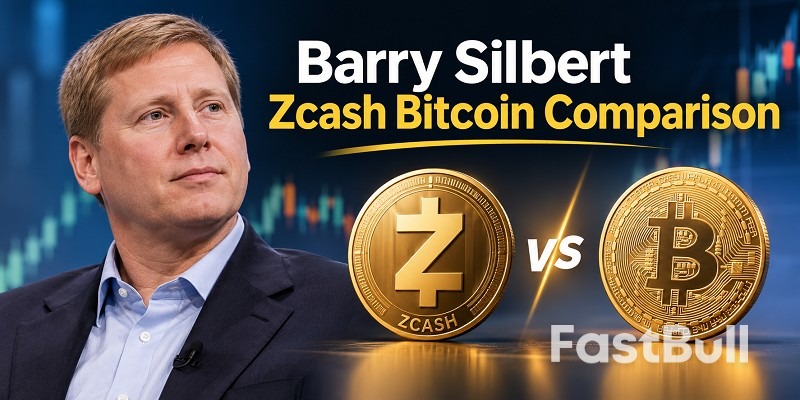
Apa Pendapat Barry Silbert Tentang Zcash dan Bitcoin?
Barry Silbert, pendiri dan CEO Digital Currency Group (DCG), tetap optimis tentang Bitcoin sambil mengidentifikasi Zcash sebagai peluang potensial dalam mata uang kripto yang berfokus pada privasi. Perspektif investasinya berpusat pada perbedaan mendasar: Bitcoin telah memantapkan dirinya sebagai aset digital terkemuka, sementara Zcash menjawab meningkatnya permintaan akan privasi keuangan.
Pandangan Barry Silbert tentang Zcash
Silbert telah mendukung Bitcoin selama bertahun-tahun, tetapi komentar terbarunya menunjukkan bahwa ia melihat peluang tambahan di luar mata uang kripto terbesar tersebut. Pada Bitcoin Investor Week di Februari 2026, ia menggambarkan aset digital yang berfokus pada privasi sebagai tema investasi dengan potensi yang besar.
Menurut laporan The Block tentang pandangan Barry Silbert terhadap Zcash , ia memperkirakan bahwa modal yang setara dengan 5% hingga 10% dari nilai Bitcoin dapat mengalir ke mata uang kripto yang berfokus pada privasi selama beberapa tahun mendatang. Ia secara khusus mengidentifikasi Zcash sebagai peluang pertumbuhan yang berpotensi tinggi.
Argumennya mencerminkan perbedaan antara posisi pasar Bitcoin yang mapan dan pasar yang lebih kecil untuk mata uang digital yang berorientasi pada privasi. Bitcoin menawarkan jaringan moneter yang diakui secara luas, sedangkan Zcash menyediakan teknologi yang dirancang untuk melindungi informasi transaksi yang sensitif.
Dukungan Silbert terhadap Zcash bukan berarti dia telah meninggalkan Bitcoin. Sebaliknya, dia melihat peluang di berbagai area pasar mata uang kripto. Ekspektasinya tentang aliran modal dan keuntungan di masa depan bersifat spekulatif, bukan perkiraan harga yang dapat diandalkan.
Tesis Investasinya dan Peran DCG
Ketertarikan Silbert pada Zcash juga terkait dengan keterlibatan Digital Currency Group dalam infrastruktur mata uang kripto dan produk investasi. DCG telah mendukung perusahaan dan proyek di seluruh industri aset digital, termasuk Grayscale, yang menawarkan instrumen investasi yang terkait dengan mata uang kripto.
Grayscale mendirikan reksa dana investasi Zcash pada tahun 2017. Pada tanggal 25 Agustus 2026, produk tersebut mulai diperdagangkan di NYSE Arca sebagai The Zcash ETF dengan kode saham ZCSH, memberikan investor cara lain untuk mendapatkan eksposur ke ZEC melalui akun pialang tradisional.
Struktur dan pencatatan produk didokumentasikan dalam pengajuan SEC ETF Zcash . Tidak seperti memegang ZEC secara langsung di dompet mata uang kripto, kepemilikan saham ETF memberikan eksposur tidak langsung melalui tempat perdagangan pasar sekuritas yang teregulasi. Produk ini tidak terdaftar berdasarkan Undang-Undang Perusahaan Investasi tahun 1940 dan membawa risiko investasi yang substansial.
These developments reflect institutional interest in Zcash, but they should not be confused with Silbert's personal investment decisions. His public statements, DCG's business activities, and Grayscale's investment products represent related but distinct aspects of the Zcash ecosystem.
Zcash vs Bitcoin: Key Differences
The biggest difference between Zcash and Bitcoin is transaction privacy. Bitcoin uses a transparent blockchain that allows transactions to be publicly verified, while Zcash offers optional shielded transactions designed to conceal sensitive payment information.
Both cryptocurrencies use proof-of-work consensus and have a maximum supply of 21 million coins. However, they differ in cryptographic technology, network development, market adoption, and overall investment characteristics.
| Feature | Zcash (ZEC) | Bitcoin (BTC) |
|---|---|---|
| Launch Year | 2016 | 2009 |
| Primary Focus | Financial privacy and digital payments | Decentralized digital money and store of value |
| Transaction Privacy | Optional shielded transactions | Transparent base-layer transactions |
| Consensus Mechanism | Proof of Work | Proof of Work |
| Mining Algorithm | Equihash | SHA-256 |
| Maximum Supply | 21 million ZEC | 21 million BTC |
| Target Block Time | 25 seconds following NU7 | 10 minutes |
| Market Liquidity | Generally lower | Generally higher |
| Market Position | Privacy-focused cryptocurrency | Largest cryptocurrency by market capitalization |
Privacy and Transaction Transparency
Bitcoin transactions are recorded on a public blockchain. Anyone can examine transaction amounts, wallet addresses, and transaction histories using blockchain explorers. Although Bitcoin addresses are pseudonymous, transaction patterns can sometimes be connected to real-world identities through blockchain analytics.
Zcash was developed to address these privacy limitations. It uses zero-knowledge cryptography, including zk-SNARKs, to verify certain transactions without publicly revealing their underlying financial details.
Zcash shielded transactions can conceal sender information, recipient information, and transaction amounts. This makes Zcash different from Bitcoin's transparent base-layer transaction model.
However, Zcash does not make every transaction private automatically. Users can also perform transparent transactions, and privacy depends on the transaction type, wallet configuration, and information exposed elsewhere.
This distinction is important when comparing cryptocurrency privacy. Bitcoin emphasizes public auditability, while Zcash provides additional confidentiality options without removing the ability to verify valid transactions.
Technology and Network Security
Bitcoin and Zcash both rely on proof-of-work mining to secure their networks. Miners perform computational work to produce blocks, validate transaction data, and maintain consensus among network participants.
Bitcoin uses the SHA-256 mining algorithm, supported by a large global mining industry. Its network targets an average block interval of approximately ten minutes and has operated since 2009.
Zcash uses the Equihash mining algorithm and has undergone multiple network upgrades to improve its functionality. Its NU7 upgrade, activated in November 2026, reduced the target block interval from 75 seconds to 25 seconds.
The upgrade was designed to improve transaction confirmation speed and make private payments more practical. However, shorter block intervals do not automatically guarantee stronger security or immediate transaction finality.
Actual confirmation times depend on network conditions, wallet implementations, and the requirements of exchanges or payment services.
Supply and Token Economics
Both Bitcoin and Zcash have a maximum supply of 21 million coins. Their issuance mechanisms gradually reduce the creation of new coins, creating predictable long-term supply constraints.
Bitcoin distributes newly created coins to miners through block rewards. Its reward reductions, commonly known as halvings, occur approximately every four years.
Zcash follows a similar scarcity model but uses a different funding structure. Portions of newly issued ZEC have historically supported network development and ecosystem initiatives, alongside miner compensation.
The November 2026 NU7 upgrade also introduced a Network Sustainability Mechanism that reserves part of transaction fees for future network security incentives, without changing Zcash's 21 million coin supply cap.
A limited supply does not automatically create investment value. Demand, market accessibility, network security, and practical utility remain important factors affecting both cryptocurrencies.
Market Adoption and Liquidity
Bitcoin holds a substantial advantage in global recognition and market infrastructure. It is supported by major cryptocurrency exchanges, institutional investment products, payment services, and custody providers.
Its larger market capitalization and broader participation generally provide deeper liquidity, making it easier to execute larger trades without significantly affecting market prices.
Zcash operates in a smaller and more specialized segment of the cryptocurrency market. Its adoption depends on demand for private transactions, wallet compatibility, exchange support, and continued development.
Products such as the Zcash ETF have expanded access through traditional investment accounts. Nevertheless, access to an investment product does not necessarily indicate widespread use of the underlying cryptocurrency for payments.
For investors, Bitcoin's established market position offers different characteristics from Zcash's smaller, privacy-focused ecosystem. These differences influence both potential opportunities and investment risks.
What Could Influence Zcash's Future Growth?
Zcash's future growth will depend on whether its privacy technology attracts sustained user demand, broader institutional interest, and practical adoption. Although its smaller market may create opportunities for expansion, successful growth requires more than technological advantages or favorable investor predictions.
Growing Demand for Financial Privacy
Financial privacy is becoming an increasingly relevant issue as payments, investments, and financial records move onto digital platforms. Public blockchain transactions can expose financial relationships and transaction histories to outside observers.
Zcash provides an alternative by allowing users to protect sensitive payment information through shielded transactions. These features may appeal to individuals and organizations that value confidentiality in legitimate financial activities.
Privacy-focused technologies may also attract interest as blockchain analytics and automated data analysis become more sophisticated. Users who want to avoid unnecessary disclosure of financial information could consider systems offering stronger confidentiality.
However, increasing interest in financial privacy does not necessarily guarantee increasing demand for ZEC. Competing technologies, regulatory restrictions, and the availability of alternative payment systems may influence whether Zcash captures meaningful adoption.
The long-term opportunity depends on whether its privacy features become useful to a growing number of real-world users rather than remaining primarily an investment narrative.
Institutional Interest and Market Adoption
Institutional accessibility could influence Zcash's future development. Investment products offering exposure to ZEC may make the asset more accessible to investors who prefer conventional brokerage accounts over direct cryptocurrency custody.
The launch of The Zcash ETF represents one example of improved market access. Such products can broaden participation, but investment demand may fluctuate significantly with market conditions.
Continued development also matters. Improvements in wallet usability, transaction efficiency, and network reliability can make Zcash more practical for everyday transactions.
Barry Silbert's favorable outlook reflects the belief that privacy-focused cryptocurrencies could attract additional attention and capital. Nevertheless, institutional interest alone cannot establish whether Zcash will achieve lasting adoption or outperform Bitcoin.
Ultimately, Zcash's growth prospects depend on sustained demand, accessible infrastructure, continued innovation, and its ability to operate within changing regulatory environments.
Zcash vs Bitcoin: Investment Risks
Both Zcash and Bitcoin involve substantial investment risks, including market volatility, regulatory uncertainty, and potential capital losses. Zcash also faces additional challenges associated with privacy-focused transactions, while Bitcoin's established market position does not eliminate cryptocurrency investment risks.
Regulatory and Compliance Risks
Privacy-focused cryptocurrencies can face regulatory challenges because certain transactions conceal information that financial authorities and trading platforms may need for compliance purposes.
Regulators must balance financial privacy with requirements involving anti-money laundering controls, sanctions screening, and financial transparency.
For example, Article 76 of the European Union's MiCA framework restricts the admission of crypto-assets with built-in anonymization functions to trading platforms unless the relevant holders and transaction histories can be identified by the service provider.
Such requirements may create challenges for exchanges supporting privacy-oriented cryptocurrencies, although their practical effects depend on the asset, service provider, and applicable legal framework.
Zcash has experienced exchange restrictions in certain markets, demonstrating how compliance concerns can affect accessibility and liquidity.
Bitcoin faces regulatory questions involving taxation, custody, trading, and financial products. However, its transparent base-layer blockchain generally presents fewer concerns specifically associated with concealed transaction histories.
Price Volatility and Liquidity
Cryptocurrency markets are highly volatile, and both Bitcoin and Zcash can experience significant price movements over short periods.
Bitcoin benefits from broader trading activity and deeper liquidity across global markets. These characteristics can make it easier to enter or exit positions, although sudden market movements can still produce substantial losses.
Zcash generally has lower liquidity and a smaller market capitalization. Consequently, changes in investor demand or trading activity may have a greater percentage impact on its market price.
This can create opportunities during periods of strong demand, but it also increases exposure to sharp declines and unfavorable trading conditions.
Higher potential returns should not be confused with a higher probability of investment success. Investors need to consider downside risk, trading costs, and the possibility of substantial losses.
Long-Term Adoption Challenges
Cryptocurrency adoption depends on reliable infrastructure, developer activity, accessible services, and practical applications.
For Zcash, widespread adoption requires privacy features that are convenient to use while remaining compatible with wallets, exchanges, and applicable compliance requirements.
The network also faces competition from other privacy-preserving technologies and alternative digital payment systems.
Bitcoin benefits from stronger network effects and wider recognition, but its development involves ongoing discussions about scalability, transaction fees, and the sustainability of long-term network security incentives.
Neither cryptocurrency can rely exclusively on its current technology or historical reputation to guarantee future adoption. Long-term success depends on continued usefulness, security, and market demand.
Which Is Better: Zcash or Bitcoin?
Bitcoin is generally better established in terms of liquidity, market recognition, and institutional participation, while Zcash offers a more specialized opportunity focused on financial privacy.
Bitcoin may appeal to investors seeking exposure to the most established cryptocurrency network. Its longer operating history, larger market capitalization, and broader infrastructure provide advantages compared with smaller digital assets.
However, Bitcoin remains a highly volatile investment and should not be considered risk-free.
Zcash may appeal to investors who believe demand for private digital transactions will increase. Its optional shielded transactions offer functionality that Bitcoin's base layer does not provide.
Nevertheless, Zcash's smaller market, regulatory exposure, and uncertain adoption create additional investment risks. Potential growth opportunities must be evaluated alongside those limitations.
Barry Silbert's perspective highlights this distinction. He remains positive about Bitcoin while identifying Zcash as a potentially attractive opportunity within the privacy-focused cryptocurrency sector.
Ultimately, the appropriate choice depends on investment objectives, risk tolerance, and confidence in each network's future adoption.
Conclusion: The Barry Silbert Zcash Bitcoin comparison highlights two different investment opportunities. Bitcoin offers greater market maturity and liquidity, while Zcash emphasizes financial privacy and potential growth. Neither guarantees returns. Investors should consider regulatory developments, adoption trends, and personal risk tolerance before making decisions.
Frequently Asked Questions
Does Barry Silbert Own Zcash?
Barry Silbert has publicly supported Zcash and has had disclosed investment exposure through Grayscale's Zcash investment vehicle. However, ownership of investment product shares does not necessarily establish direct ownership of ZEC tokens. His current personal ZEC holdings cannot be reliably determined from those disclosures alone.
Is Zcash More Private Than Bitcoin?
Yes. Zcash offers optional shielded transactions that can conceal sender information, recipient information, and transaction amounts using zero-knowledge cryptography. Bitcoin's base-layer transactions are publicly visible, although addresses are pseudonymous. Zcash privacy depends on using appropriate transaction types and avoiding the exposure of identifying information through wallets or other services.
Could Zcash Outperform Bitcoin?
Zcash berpotensi mengungguli Bitcoin selama periode peningkatan permintaan untuk mata uang kripto yang berfokus pada privasi. Pasarnya yang lebih kecil mungkin menghasilkan pergerakan harga persentase yang lebih besar, tetapi ini juga menciptakan risiko penurunan yang substansial. Pembatasan regulasi, keterbatasan likuiditas, dan adopsi yang tidak pasti membuat kinerja di masa depan sulit diprediksi. Pandangan positif Barry Silbert tidak menjamin bahwa ZEC akan mengungguli BTC.


