


- XAUUSD
- XAGUSD
- WTI
- USDX



Kutipan
Analisis
Pengguna
24/7
Kalender Ekonomi
Pendidikan
Data
- Nama
- Nilai Terbaru
- Sblm.









Bagaimana cara kerja mesin replikasi perdagangan? Jelajahi penyalinan perdagangan, pemrosesan sinyal, eksekusi pesanan, kontrol risiko, latensi, dan tantangan umum.
Mesin replikasi perdagangan secara otomatis menyalin aktivitas perdagangan dari akun utama ke beberapa akun pengikut. Tetapi bagaimana cara kerja mesin replikasi perdagangan di balik layar? Artikel ini menjelaskan bagaimana sinyal perdagangan dideteksi, diproses, dan dieksekusi, beserta teknologi, pengendalian risiko, dan potensi tantangan yang terlibat dalam replikasi perdagangan.
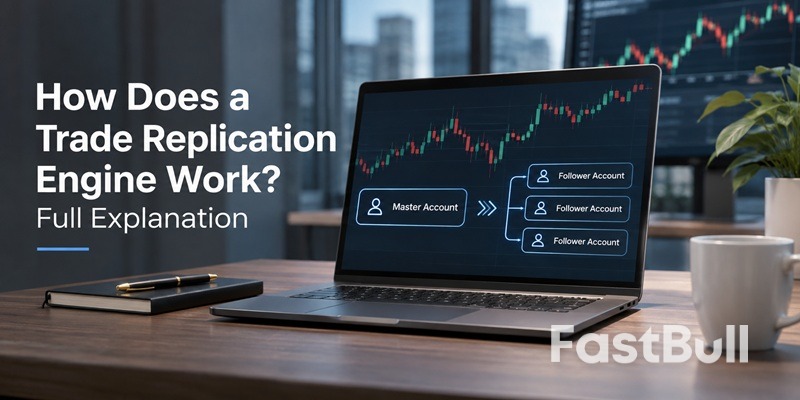
Mesin replikasi perdagangan adalah sistem otomatis yang memantau aktivitas perdagangan di akun utama dan mereproduksi perdagangan yang sesuai di satu atau lebih akun pengikut yang terhubung.
Alih-alih menempatkan pesanan identik secara manual di banyak akun, para trader dapat menggunakan mesin replikasi untuk mendistribusikan tindakan perdagangan secara otomatis. Tergantung pada sistemnya, tindakan ini dapat mencakup membuka posisi, memodifikasi level stop-loss dan take-profit, menyesuaikan pesanan yang ada, dan menutup perdagangan.
Sistem replikasi perdagangan yang umum melibatkan tiga elemen:
Mesin replikasi perdagangan umumnya digunakan di pasar forex, berjangka, dan pasar lainnya di mana platform perdagangan atau koneksi broker yang kompatibel mendukung eksekusi pesanan otomatis.
Namun, replikasi tidak menjamin hasil perdagangan yang identik. Perbedaan dalam kecepatan eksekusi, likuiditas, pengaturan akun, dan harga broker dapat menghasilkan variasi antara akun master dan akun follower.
Mesin replikasi perdagangan bekerja dengan menangkap peristiwa perdagangan dari akun utama, mengubahnya menjadi instruksi yang dapat dieksekusi, menerapkan aturan khusus akun, dan mengirimkan pesanan yang sesuai ke akun pengikut.
Proses lengkapnya biasanya melibatkan lima langkah.
Proses replikasi dimulai ketika akun utama mengeksekusi perdagangan atau menghasilkan peristiwa perdagangan lain yang didukung.
Mesin tersebut memantau akun utama melalui API broker, integrasi platform perdagangan, atau koneksi lain yang didukung. Tergantung pada arsitekturnya, mesin tersebut dapat menerima pemberitahuan peristiwa secara real-time atau secara berkala memeriksa perubahan.
Ketika peristiwa perdagangan baru terdeteksi, mesin akan menangkap informasi yang relevan, seperti:
Sebagai contoh, jika akun utama membuka posisi beli EUR/USD sebanyak 1 lot, sistem akan mengidentifikasi peristiwa perdagangan tersebut dan menyiapkan informasi untuk replikasi.
After receiving the trading event, the replication engine determines how the trade should be reproduced in each follower account.
The system may need to translate trading symbols, check instrument compatibility, and calculate the appropriate position size.
Common position-sizing methods include:
For example, suppose the master account opens a 1-lot position. A follower account configured with a 0.5 lot multiplier would receive an instruction to open 0.5 lots, subject to broker restrictions and other settings.
This processing stage allows different accounts to follow the same trading strategy without necessarily using identical position sizes.
Before submitting an order, the engine evaluates the trade against the risk management rules configured for each follower account.
These controls help prevent trades from exceeding predefined account limits or violating execution requirements.
Depending on the software, risk management settings may include:
For instance, if a replicated order exceeds a follower account's configured position-size limit, the engine may reject, skip, or adjust the instruction depending on its supported risk rules.
Risk controls reduce certain operational risks but cannot eliminate trading losses or guarantee that replicated positions perform as expected.
Once the trading instructions pass the applicable checks, the replication engine sends orders to the connected follower accounts.
Order transmission generally occurs through broker APIs, trading platform interfaces, or supported execution gateways.
Each follower account receives an instruction based on its own configuration. The receiving broker then processes the order according to current market conditions and account permissions.
Although orders may be transmitted within milliseconds in some systems, execution times vary depending on network latency, infrastructure, broker response times, and market liquidity.
Consequently, follower accounts may receive different execution prices even when they replicate the same master trade.
Submitting an order does not necessarily mean it has been successfully executed. The replication engine must also process the execution response from each follower account.
Possible outcomes include successful execution, partial fills, rejected orders, or execution failures.
Once the results are received, the system records the corresponding order information and updates its view of follower positions.
When supported, the engine also monitors subsequent changes to the master position, including:
Position reconciliation helps the engine identify differences between intended and actual follower positions. However, synchronization capabilities vary between systems, and not every discrepancy can be resolved automatically.
A trade replication engine relies on several technical components to transmit trading instructions and manage execution across connected accounts.
The signal detection component identifies relevant trading events from the master account, while the processing component converts those events into instructions suitable for follower accounts.
Some systems use event-driven processing, responding when a trading platform reports a new event. Others use polling, repeatedly checking the account for trading updates.
Event-driven architectures can reduce detection delays, while polling frequency influences how quickly a system discovers new trades.
Broker API integration enables the replication engine to exchange trading information with supported brokers and trading platforms.
Through these connections, the system can retrieve account information, submit orders, receive execution results, and monitor position changes.
Cross-broker replication may require additional processing because brokers can use different instrument symbols, contract specifications, minimum trade sizes, and execution rules.
Therefore, API compatibility alone does not guarantee that trades can be copied identically between different brokers.
The order execution component converts processed trading instructions into actual orders for follower accounts.
It works alongside the risk management component, which determines whether the instructions meet predefined trading conditions.
A reliable execution system should also track order status, identify failed requests, and avoid unintended duplicate orders when recovering from connection interruptions.
Together, these components determine how accurately and consistently a replication engine can translate master-account activity into follower-account positions.
Trade replication speed depends on how quickly the engine detects trading events, processes instructions, and submits orders to follower accounts. Although some systems can transmit instructions within milliseconds, actual execution times vary across brokers, platforms, and market conditions.
Latency refers to the time delay between a trading event and its corresponding action in a follower account. Slippage occurs when an order executes at a price different from the expected price.
Several factors can influence replication performance:
For example, if the master account buys EUR/USD at 1.08500 but a follower account executes at 1.08505, the follower experiences a five-pipette price difference.
Even small differences can affect trading performance, particularly for strategies that rely on frequent execution or narrow profit targets.
Trade replication can fail because of connectivity problems, broker restrictions, insufficient margin, invalid order parameters, or temporary platform outages.
Common failure scenarios include:
Some replication systems address these problems through execution logging, connection monitoring, controlled retry mechanisms, and position reconciliation.
However, retrying orders without verifying their execution status can introduce duplicate positions. Reliable systems must distinguish between failed orders and orders that were executed but not immediately confirmed.
Replicated trades are not guaranteed to execute at the same price because each follower order is processed independently.
Consider a master account that opens a buy position at 1.10000. By the time the follower order reaches its broker, the available price may have changed to 1.10003.
Different spreads, liquidity conditions, execution methods, and order transmission delays can all contribute to pricing differences.
As a result, trade replication aims to reproduce trading instructions and position changes rather than guarantee identical execution prices or financial outcomes.
A trade replication engine and a trade copier are closely related, but the terms emphasize different aspects of automated trade copying.
A trade replication engine generally refers to the underlying technology that detects trading events, processes instructions, manages account-specific rules, and coordinates order execution.
A trade copier usually refers to a software application or service that traders use to copy positions between accounts. Many trade copiers rely on a replication engine to perform their core operations.
| Feature | Trade Replication Engine | Trade Copier |
|---|---|---|
| Primary Role | Processes and coordinates trade replication | Provides automated trade-copying functionality |
| Main Focus | Signal processing, execution, synchronization, and risk controls | Copying trades between connected accounts |
| Integration | May connect to multiple brokers, APIs, and execution systems | Depends on supported platforms and brokers |
| Customization | May support configurable execution logic and account-specific rules | Typically provides user-facing copying and risk settings |
| Typical Users | Software developers, trading technology providers, and trading operations | Individual traders, account managers, and trading teams |
These categories are not mutually exclusive. A trade copier may include a sophisticated replication engine, while a replication engine may operate as part of a broader trading platform without being marketed as a standalone copier.
Yes. Some trade replication engines support cross-broker copying through compatible APIs or trading platform integrations. However, differences in instrument specifications, trading permissions, execution rules, and contract sizes may require additional configuration.
Yes. A replication engine can distribute trading instructions from one master account to multiple follower accounts. Each follower may use different position-sizing rules, symbol filters, and risk limits, depending on the system's capabilities.
Not exactly. Trade replication describes the technology or process of reproducing trades across accounts. Copy trading generally describes a trading arrangement in which investors follow another trader's activity. Copy trading platforms may use trade replication technology to execute copied trades.
Risiko utama meliputi penundaan eksekusi, slippage, kegagalan konektivitas, penentuan ukuran posisi yang salah, dan posisi akun yang tidak sesuai. Replikasi juga mereproduksi eksposur terhadap strategi perdagangan yang mendasarinya, yang berarti akun pengikut dapat mengalami kerugian besar bahkan ketika teknologi beroperasi dengan benar.
Memahami cara kerja mesin replikasi perdagangan membantu menjelaskan teknologi di balik penyalinan perdagangan otomatis. Dengan menggabungkan deteksi sinyal, pemrosesan pesanan, kontrol risiko, dan sinkronisasi posisi, sistem ini dapat mengoordinasikan perdagangan di berbagai akun. Namun, perbedaan eksekusi, kegagalan teknis, dan risiko pasar berarti perdagangan yang direplikasi tidak dapat menjamin hasil yang identik.

728 RM B 7/F GEE LOK IND BLDG NO 34 HUNG TO RD KWUN TONG KLN HONG KONG


Berdagang Instrumen Keuangan Seperti Saham, Mata Uang, Komoditas, Kontrak Berjangka, Obligasi, Dana, Atau Mata Uang Kripto Adalah Perilaku Berisiko Tinggi, Termasuk Kehilangan Sebagian Atau Seluruh Jumlah Investasi Anda, Sehingga Perdagangan Tidak Cocok Untuk Semua Investor.
Anda Harus Melakukan Uji Tuntas Anda Sendiri, Menggunakan Penilaian Anda Sendiri, Dan Berkonsultasi Dengan Penasihat Yang Memenuhi Syarat Saat Membuat Keputusan Keuangan Apa Pun. Konten Situs Web Ini Tidak Ditujukan Kepada Anda, Situasi Keuangan Atau Kebutuhan Anda Juga Tidak Diperhitungkan. Informasi Yang Terdapat Di Situs Web Ini Belum Tentu Tersedia Secara Waktu Nyata, Juga Belum Tentu Akurat. Setiap Pesanan Atau Keputusan Keuangan Lainnya Yang Anda Buat Sepenuhnya Menjadi Tanggung Jawab Anda Dan Anda Tidak Boleh Bergantung Pada Informasi Apa Pun Yang Disediakan Melalui Situs Web. Kami Tidak Memberikan Jaminan Apa Pun Untuk Informasi Apa Pun Di Situs Web Dan Tidak Bertanggung Jawab Atas Kerugian Transaksi Apa Pun Yang Mungkin Timbul Dari Penggunaan Informasi Apa Pun Di Situs Web.
Dilarang Menggunakan, Menyimpan, Menggandakan, Menampilkan, Memodifikasi, Menyebarluaskan Atau Mendistribusikan Data Yang Terdapat Dalam Situs Web Ini Tanpa Izin Tertulis Dari Situs Web Ini. Semua Hak Kekayaan Intelektual Dilindungi Oleh Pemasok Dan Bursa Yang Menyediakan Data Yang Terdapat Di Situs Web Ini.
Tidak Masuk
Masuk untuk mengakses lebih banyak fitur


Masuk
Daftar


