


Singapore Woman Loses $110,000 in Cash Investment Scam Linked to Fake Apps and Group Chats
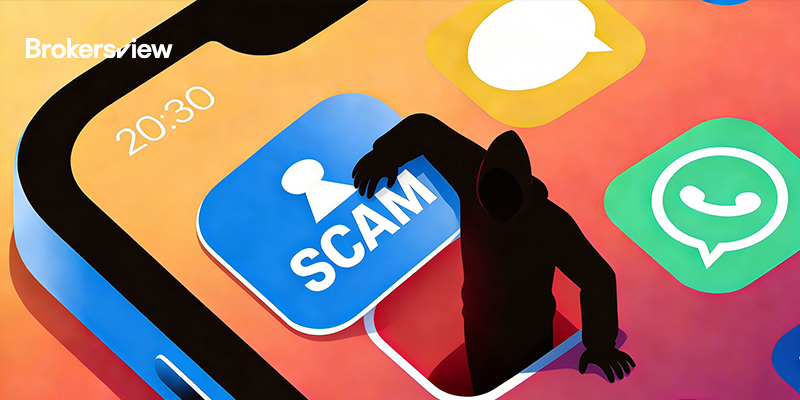
A Singapore woman lost more than $110,000 after falling victim to an investment scam involving fraudulent mobile applications, group chats and in-person cash handovers, according to police and court documents.
Ms Lim was targeted by a scam variant that used investment apps to promote fake investment products. Since October 2025, police have recorded at least 20 reported cases involving similar applications, with total losses of at least $1.7 million.
Speaking to the media in an interview facilitated by police on Jan 29, Ms Lim said she was added to a group chat titled "Lion Capital Circle" in August 2025. She did not initially suspect a scam, as she had contacted the customer service of a legitimate investment platform around the same time.
The group chat appeared credible, she said, as the members used local mobile phone numbers. Ms Lim added that she had been investing in stocks and bonds since her 20s and was active on another legitimate platform, leading her to believe the timing was a coincidence.
Scammers instructed her to download an application from the Apple Store, which she described as "legitimate and professional-looking," to access what they claimed was an investment platform linked to a Hong Kong-based company.
After creating a profile, Ms Lim deposited $3,000 by scanning a QR code generated by a mobile wallet account. For subsequent transactions, she received receipts bearing the name of a Singapore-registered company.
"I thought I had transferred money to a local company, and since Singapore has the Monetary Authority of Singapore and anti-money laundering laws, I didn't think it was a scam," she said.
To further reassure her, the scammers provided a website link and encouraged her to verify the company's legitimacy. Ms Lim said she also searched online and consulted other group members, who repeatedly convinced her that the investment was genuine. Group members frequently messaged her and treated her like a friend, which lowered her guard.
When she sought to invest a larger sum, the scammers told her she needed to provide cash to speed up processing. They instructed her to tell bank staff that the withdrawal was for family expenses to avoid suspicion.
Ms Lim withdrew a total of $110,000 in cash on two occasions and handed the money to two men near her home. During the first meeting, she asked whether accepting cash was legal.
"He told me: 'Who would dare to break the law in Singapore?'" she said.
She realised she had been scammed in early November 2025, when she attempted to withdraw her funds and was told she had to pay $150,000 in tax. With no money left to comply, she made a police report.
In the first half of 2025, scam losses in Singapore reached $456.4 million across nearly 20,000 cases. In 2024, total losses hit a record $1.1 billion.
Inspector Norashikin Hussein from the police's Anti-Scam Command warned that even apps available on official app stores may not be legitimate. "Scammers might use such apps to promote fraudulent investment products," she said.
Despite the loss, Ms Lim said she continues to receive support from her family. "Life has to go on," she said, adding that she shared her experience to prevent others from going through the same ordeal.
Hottest


Copyright © 2026 FastBull Ltd


Risk Warning
FX trading is of high risk and may not be suitable for all investors. Leverage will create additional risks and loss. Before trading, please carefully consider your investment objectives, experience level and risk tolerance. You may lose part or all of your initial investment; do not invest money that you cannot afford. Educate yourself about the risks associated with FX trading. If you have any questions, please consult an independent financial or tax advisor. Any data and information are provided "as is" and only for information purpose, not for trading or recommendations. Past performance does not predict future results.
Disclaimer
The data contained in this website may not be real-time and accurate. The data and prices on this site are not necessarily provided by the market or exchange, but may be provided by market makers, so prices may be inaccurate and differ from actual market prices. Namely, this price is indicative price only to reflect market trend, and is unfavorable for trading purpose. The provider of the data contained in the Website shall not be liable for any loss incurred by you as a result of your trading activities or reliance on the information contained in the Website.