


Singapore Police Alerts Public on Several Types of Phishing Scams

Recently, the Singapore Police Force (SPF) issued warnings on several types of phishing scams through its official website, reminding the public not to fall prey to them.
Government Official Impersonation Scams
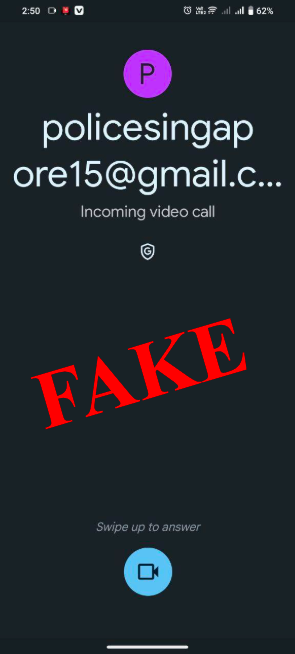
Screenshots of scam calls
According to the SPF, scammers in police uniforms posing as police officers called potential victims on Google Meet Video Call. During the call, the scammers falsely claimed that the victim's bank account had an anomaly and needed to be investigated.
The fraudsters then asked the victim to provide personal information, banking credentials, and one-time passwords under the pretext of cooperating with the investigation.
Public Transportation Card Promotion Scam
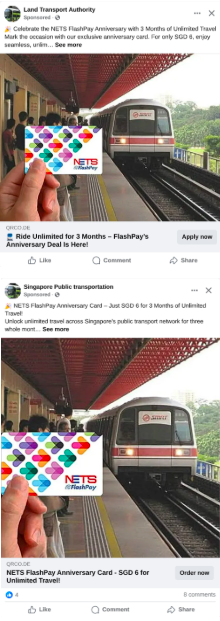
Screenshots of scam advertisements relating to NETS Flashpay Cards
In addition, the police also found scammers posing as EZ-Link, SimplyGo, or the Land Transport Authority (LTA) posting advertisements on Facebook, Instagram, and other social media platforms about the EZ-Link and NETS Flashpay cards.
The links attached led visitors to phishing websites and prompted them to provide their card details under the pretext of purchasing an EZ-Link crad or a NETS Flashpay cards.
To make the lies convincing, criminals sometimes ask victims to participate in online games or fill out questionnaires, and claim that they have won a “gift box” with a “free EZ-link card”. To get the free Ez-link or NETS Flashpay card, the victim enters sensitive information into the phishing website.
However, according to the police, this promotion does not exist. And it is just a phishing scam that fraudsters use to obtain bank details.
Fake AXS Website Scam
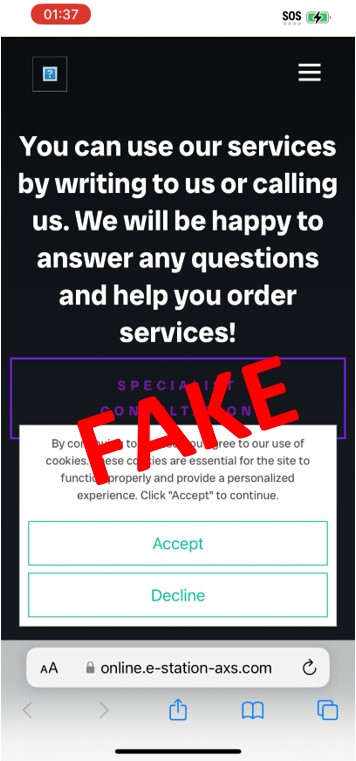
Phishing scams involving a fake ACS website
Websites posing as AXS, a payment service provider, appeared in Google search engine and asked victims to pay outstanding bills. To “pay the bill,” the victims gave their personal information and bank card information.
Victims of these phishing scams realized they had been scammed when unauthorized transactions, sometimes involving foreign crrency, were made in their bank accounts.
The stolen money was transferred by the scammers from the victims' accounts to the e-wallet GrabPay Wallet or other bank accounts, and the victims were unable to contact the scammers.
According to the police, more than 50 cases of such phishing scams have been reported since April, with victims reporting losses of more than $60,000.








Copyright © 2026 FastBull Ltd


Risk Warning
FX trading is of high risk and may not be suitable for all investors. Leverage will create additional risks and loss. Before trading, please carefully consider your investment objectives, experience level and risk tolerance. You may lose part or all of your initial investment; do not invest money that you cannot afford. Educate yourself about the risks associated with FX trading. If you have any questions, please consult an independent financial or tax advisor. Any data and information are provided "as is" and only for information purpose, not for trading or recommendations. Past performance does not predict future results.
Disclaimer
The data contained in this website may not be real-time and accurate. The data and prices on this site are not necessarily provided by the market or exchange, but may be provided by market makers, so prices may be inaccurate and differ from actual market prices. Namely, this price is indicative price only to reflect market trend, and is unfavorable for trading purpose. The provider of the data contained in the Website shall not be liable for any loss incurred by you as a result of your trading activities or reliance on the information contained in the Website.