


Robinhood Executive Says Stablecoin Yield Should Flow to Users With Clear Risk Disclosure
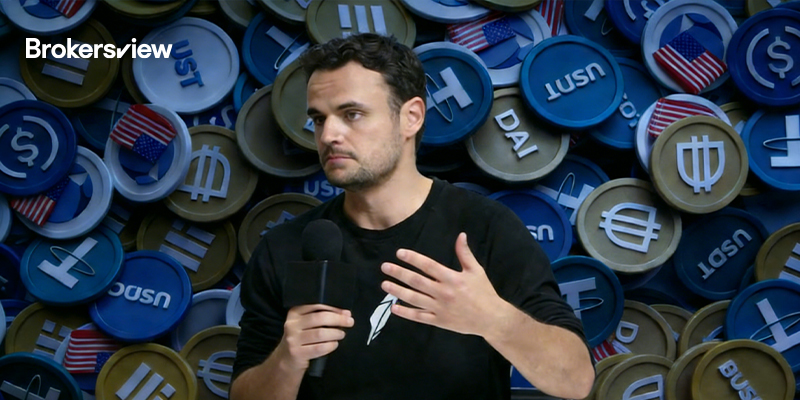
Robinhood General Manager Johann Kerbrat said stablecoin issuers and trading platforms should be allowed to pass yield on to customers, provided that risks and the absence of traditional protections—such as FDIC insurance—are clearly disclosed.
Speaking Wednesday at CoinDesk's Consensus Hong Kong conference, Kerbrat argued that consumers should not be restricted to stablecoins that generate no return when yield-bearing alternatives exist. In his view, the key issue is transparency rather than prohibition.
"We think that we should be able to pass the yield to the consumer," Kerbrat said. "They don't want to be locked into a stablecoin earning no interest if they can do it on a high-yield savings account."
At the same time, Kerbrat emphasized that stablecoins differ fundamentally from bank deposits. Unlike savings accounts, stablecoins are not insured by the Federal Deposit Insurance Corporation, a distinction he said platforms must communicate clearly and prominently.
Once users understand what protections apply—and what protections do not—Kerbrat said they should be free to decide how to allocate their money, whether through traditional bank products, stablecoins, or tokenized payment systems.
The question of yield-bearing stablecoins sits at the center of ongoing debates around US crypto market structure legislation, including proposals such as the CLARITY Act. Crypto firms argue that interest generated from reserve assets should accrue to users, while banks warn that such products could weaken the deposit base that supports lending and credit creation.
From a regulatory perspective, the issue extends beyond competition. Introducing yield can blur consumer expectations around safety, liquidity, and risk. Kerbrat framed the solution as disclosure-driven: empower users with clear information and allow them to choose.
Kerbrat also used the forum to criticize traditional market infrastructure, calling the current T+1 equity settlement cycle an "antiquated relic." He argued that even the recent shift from T+2 to T+1 leaves unnecessary counterparty and operational risk in the system.
According to Kerbrat, blockchain-based systems enable atomic settlement, where asset transfer and payment occur simultaneously, eliminating settlement delays altogether. Such a shift, he said, would materially reduce systemic risk embedded in legacy clearing models.
Robinhood is positioning itself around tokenization and continuous trading. The company recently announced plans for an Ethereum Layer 2 network built on the Arbitrum stack, aimed at supporting tokenized real-world assets such as US stocks and ETFs.
The long-term goal is to enable around-the-clock trading, similar to crypto markets. Industry sources suggest that full 24/7 tokenized equity trading is unlikely before late 2026, when major US exchanges roll out digital asset platforms capable of supporting continuous settlement.
Kerbrat said recent market volatility has shown changing retail behavior. Even during sharp drawdowns, he noted, Robinhood has seen users buying into weakness rather than exiting positions, signaling a shift in how retail investors engage with risk.
Whether yield-bearing stablecoins and tokenized equities move into the mainstream will depend on regulatory alignment and exchange readiness. For platforms like Robinhood, the bet is that combining blockchain settlement with familiar assets will ultimately reshape how markets operate.






Copyright © 2026 FastBull Ltd


Risk Warning
FX trading is of high risk and may not be suitable for all investors. Leverage will create additional risks and loss. Before trading, please carefully consider your investment objectives, experience level and risk tolerance. You may lose part or all of your initial investment; do not invest money that you cannot afford. Educate yourself about the risks associated with FX trading. If you have any questions, please consult an independent financial or tax advisor. Any data and information are provided "as is" and only for information purpose, not for trading or recommendations. Past performance does not predict future results.
Disclaimer
The data contained in this website may not be real-time and accurate. The data and prices on this site are not necessarily provided by the market or exchange, but may be provided by market makers, so prices may be inaccurate and differ from actual market prices. Namely, this price is indicative price only to reflect market trend, and is unfavorable for trading purpose. The provider of the data contained in the Website shall not be liable for any loss incurred by you as a result of your trading activities or reliance on the information contained in the Website.