


How to Trade Inverse Head and Shoulders
When it comes to forex trading, having a solid grasp of technical analysis can significantly enhance your ability to predict market movements and make informed trading decisions. One valuable tool in the arsenal of technical analysis is the Inverse Head and Shoulders pattern. This pattern can provide traders with insights into potential bullish reversals, allowing them to seize opportunities for profit in the dynamic forex market.
Understanding the Inverse Head and Shoulders Pattern
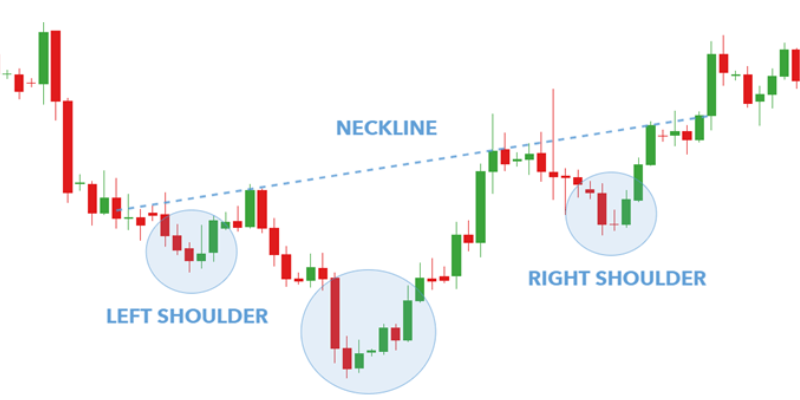
The Inverse Head and Shoulders pattern is a significant technical chart pattern often utilized by traders to identify potential bullish reversals in a downtrend. As the name suggests, it is the reverse of the standard Head and Shoulders pattern. This pattern is characterized by three main components:
1. Left Shoulder: This forms the first trough during a downtrend.
2. Head: The head is the lowest point in the pattern and typically marks the end of the downtrend.
3. Right Shoulder: The right shoulder is a smaller trough that follows the head.
These components are connected by a trendline called the neckline, which acts as a key support level. The Inverse Head and Shoulders pattern suggests a transition from a bearish trend to a potentially bullish one, making it a crucial tool for traders seeking trend reversal opportunities.
Traders often observe the following features when analyzing the Inverse Head and Shoulders pattern:
1. Confirmation of Trend Reversal: The pattern usually appears after an extended downtrend, indicating a potential reversal.
2. Left Shoulder and Head: The left shoulder and head exhibit successive lower lows.
3. Right Shoulder: The right shoulder should have a lower low than the head but higher than the left shoulder.
4. Neckline: Connecting the lows of the left shoulder, head, and right shoulder creates the neckline.
The breakout of the neckline is a key event in this pattern. Traders often wait for the price to breach the neckline before considering entering a trade. This breakout signals a potential shift from bearish to bullish sentiment, and traders may look for opportunities to enter long positions.
By understanding the Inverse Head and Shoulders pattern and its components, traders can enhance their ability to identify potential trend reversals and capitalize on favorable forex trading opportunities in the forex market.
Identifying the Pattern
Recognizing the Inverse Head and Shoulders pattern is a crucial step in successfully trading it. Traders must be able to distinguish the pattern from other price movements to capitalize on potential bullish opportunities. Here's a step-by-step guide to identifying the Inverse Head and Shoulders pattern on a price chart:
- Downtrend Confirmation: The Inverse Head and Shoulders pattern typically forms after a prolonged downtrend. Look for a series of lower lows and lower highs, indicating bearish momentum.
- Left Shoulder Formation: The pattern starts with the formation of the left shoulder. This occurs when prices decline to a low point, followed by a minor upward correction. The low point of the left shoulder is the first point to consider.
- Head Formation: After the left shoulder, prices experience another decline, creating the lowest point in the pattern, known as the head. The head is typically deeper than the left shoulder and forms a distinct trough on the chart.
- Right Shoulder Formation: Following the formation of the head, there is a minor upward movement in prices, creating the right shoulder. The right shoulder's high point should be lower than the head's high point, and it should resemble the left shoulder's shape.
- Neckline Identification: The neckline connects the highs of the left shoulder, head, and right shoulder. It serves as a resistance level that needs to be breached for the pattern to be confirmed. The neckline can be horizontal, ascending, or descending.
- Volume Analysis: Volume plays a crucial role in confirming the validity of the pattern. Ideally, volume should be higher during the formation of the head compared to the left shoulder and right shoulder. Additionally, volume should expand as prices break above the neckline.
- Symmetry and Proportions: One key characteristic of a reliable Inverse Head and Shoulders pattern is symmetry and proportions. The distances between the head and shoulders, as well as the depth of the troughs, should be relatively consistent.
- Confirmation: The pattern is confirmed when prices break decisively above the neckline. This breakout signals a potential reversal of the downtrend and the beginning of a bullish trend.
It's important to note that not all patterns that resemble the Inverse Head and Shoulders are reliable. Traders should wait for a confirmed breakout above the neckline and consider using additional technical indicators or tools to strengthen their analysis before making trading decisions based on this pattern. By mastering the art of identifying the Inverse Head and Shoulders pattern, traders can enhance their ability to spot potential trend reversals and make informed trading choices.
How Do You Trade an Inverse Head and Shoulders Pattern?
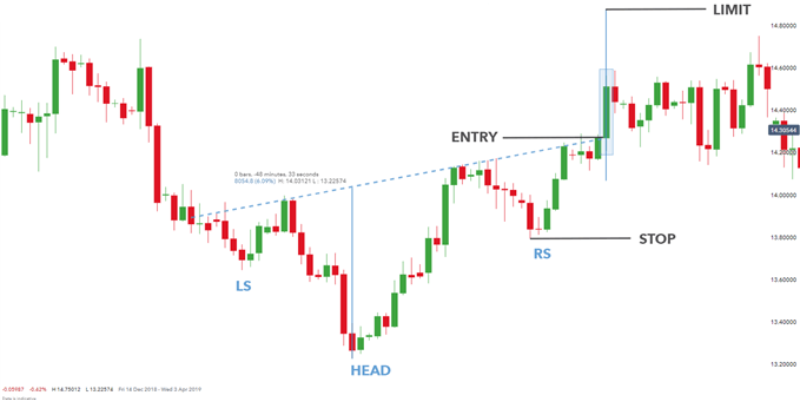
Trading the Inverse Head and Shoulders pattern involves a systematic approach to take advantage of potential bullish price movements. Once you've successfully identified the pattern and confirmed its validity, here's how you can trade it:
Entry Point: The optimal entry point is after the pattern is confirmed with a breakout above the neckline. As prices breach the neckline, it indicates a potential reversal of the previous downtrend and the start of a new uptrend. Traders often wait for a candlestick to close above the neckline to ensure a valid breakout.
Stop Loss Placement: Place a stop loss order below the neckline, slightly below the breakout point. This level acts as a support-turned-resistance, and if prices fall back below it, it could indicate a false breakout.
Price Target: To determine the potential price target, measure the distance between the lowest point of the head and the neckline. Then, project this distance from the breakout point above the neckline. This projection gives an estimate of how much the price could rise after the breakout.
Trailing Stop: As prices move in your favor, consider using a trailing stop to protect profits. A trailing stop adjusts automatically as prices move higher, allowing you to lock in gains while giving the trade room to breathe.
Confirmation from Other Indicators: While the Inverse Head and Shoulders pattern can provide valuable insights, it's wise to confirm your analysis using other technical indicators. Look for supporting signals from momentum indicators like the Relative Strength Index (RSI), Moving Averages, and volume.
Candlestick Patterns: Pay attention to bullish candlestick patterns that align with the pattern's breakout. Bullish engulfing, hammer, and piercing line patterns can enhance the strength of your entry signal.
Risk Management: Always follow proper risk management techniques. Only allocate a portion of your trading capital to each trade, and avoid overleveraging. This ensures that potential losses are controlled and don't significantly impact your account.
Remember that no trading strategy is foolproof, and there is always a risk of losses. It's essential to practice on demo accounts, backtest your strategy, and continuously refine your approach based on your experiences. Trading the Inverse Head and Shoulders pattern requires a combination of technical analysis, risk management, and patience to increase the likelihood of successful trades.
.png)
Risk Management
While trading the Inverse Head and Shoulders pattern can offer promising opportunities, it's crucial to prioritize risk management to protect your capital. Here are some risk management strategies to consider:
Stop Loss Orders: Place a stop loss order below the neckline, at a level that aligns with your risk tolerance. The stop loss should be set at a point where, if triggered, it confirms that the pattern has failed. Avoid moving the stop loss further away after entering the trade, as it can increase potential losses.
Risk-Reward Ratio: Evaluate the potential risk and reward of each trade. A common approach is to aim for a risk-reward ratio of at least 1:2. This means that the potential reward should be at least twice the potential risk. This way, even if not all trades are successful, profitable trades can still outweigh losing ones.
Diversification: Don't put all your eggs in one basket. Diversify your trading portfolio by considering different trading strategies, asset classes, and timeframes. This can help mitigate the impact of a single trade's outcome on your overall portfolio.
Avoid Overleveraging: While leverage can amplify potential gains, it can also magnify losses. Use leverage prudently and avoid overleveraging, especially when trading patterns with potential breakout points. High leverage increases the risk of getting stopped out prematurely.
Emotional Discipline: Emotional control is a fundamental aspect of risk management. Avoid making impulsive decisions based on emotions such as fear or greed. Stick to your trading plan, and avoid chasing losses or deviating from your strategy due to emotional reactions.
Demo Trading: Before implementing your trading strategy with real money, practice on a demo account. This allows you to refine your approach, test different risk management techniques, and gain confidence without risking your capital.
Long-Term Perspective: Approach trading as a long-term endeavor. One trade's outcome does not define your overall success. Keep your focus on consistently executing your strategy over time.
By incorporating these risk management principles into your trading plan, you can minimize the potential impact of losses and create a more sustainable and disciplined trading approach. Remember that preserving your capital is as important as generating profits, and a well-structured risk management strategy is an essential tool for achieving long-term success in trading.
Conclusion
Trading the Inverse Head and Shoulders pattern can be a valuable addition to your technical analysis toolkit. This pattern offers traders the opportunity to identify potential trend reversals and profit from upward price movements. However, successful trading requires a thorough understanding of the pattern, careful identification, and effective execution of trades.
Remember, while the Inverse Head and Shoulders pattern can provide strong signals, no trading strategy is foolproof. It's essential to combine pattern recognition with proper risk management techniques to protect your capital. By setting clear entry and exit points, managing your risk exposure, and continuously learning from your trades, you can enhance your trading skills and increase your chances of success.
As with any trading strategy, practice and experience are key. Start by using demo accounts to refine your skills before trading with real money. Additionally, stay informed about market news and events that could impact your trades, and be prepared to adapt your strategy accordingly.
Ultimately, trading the Inverse Head and Shoulders pattern requires patience, discipline, and a commitment to ongoing learning. By following the steps outlined in this guide and consistently applying them to your trading decisions, you can improve your ability to identify and capitalize on this powerful pattern in the dynamic world of forex trading.








Copyright © 2026 FastBull Ltd


Risk Warning
FX trading is of high risk and may not be suitable for all investors. Leverage will create additional risks and loss. Before trading, please carefully consider your investment objectives, experience level and risk tolerance. You may lose part or all of your initial investment; do not invest money that you cannot afford. Educate yourself about the risks associated with FX trading. If you have any questions, please consult an independent financial or tax advisor. Any data and information are provided "as is" and only for information purpose, not for trading or recommendations. Past performance does not predict future results.
Disclaimer
The data contained in this website may not be real-time and accurate. The data and prices on this site are not necessarily provided by the market or exchange, but may be provided by market makers, so prices may be inaccurate and differ from actual market prices. Namely, this price is indicative price only to reflect market trend, and is unfavorable for trading purpose. The provider of the data contained in the Website shall not be liable for any loss incurred by you as a result of your trading activities or reliance on the information contained in the Website.