


EU Considers Broad Crypto Restrictions to Close Sanctions Loopholes Linked to Russia
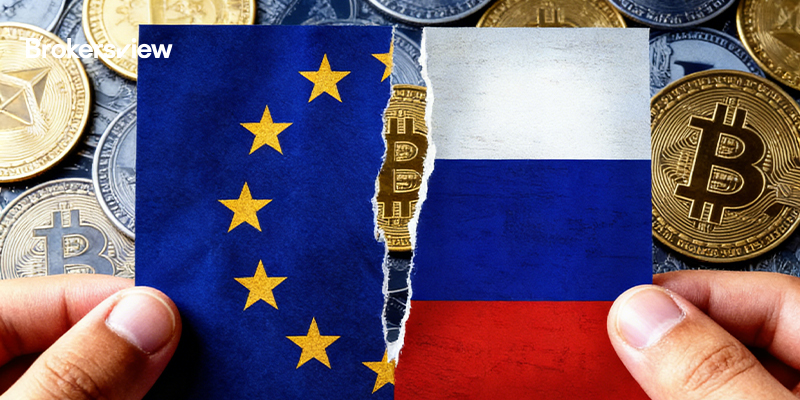
The European Union is weighing a far-reaching expansion of its sanctions regime that could effectively ban cryptocurrency transactions involving Russia, as policymakers seek to prevent digital assets from being used to bypass restrictions tied to the war in Ukraine.
According to a policy document seen by the Financial Times, the proposals focus not only on already sanctioned crypto platforms, but also on what EU officials describe as "successor" or "copycat" entities—new exchanges and services that mirror the ownership, infrastructure, or transaction flows of blacklisted firms.
At the center of the discussion is Garantex, a Russian crypto exchange sanctioned by the EU last year and later redesignated by the United States. European officials argue that targeting individual platforms has proven insufficient, as new entities can quickly emerge to continue operations under different branding while maintaining similar backend structures.
If adopted, the proposals would represent one of the EU's most aggressive moves yet to curb crypto-based sanctions evasion. Rather than focusing on named exchanges or wallets alone, the approach would extend scrutiny to networks of related entities that regulators believe function as extensions of previously sanctioned platforms.
EU officials cited concerns that sanctioned exchanges are being replaced by structurally similar platforms designed to preserve transaction flows. These successor entities may reuse technical infrastructure, customer networks, or operational models, allowing activity to persist with minimal disruption despite formal sanctions.
Blockchain intelligence firms have reinforced those concerns. TRM Labs has reported that Garantex, together with Iran-based exchange Nobitex, accounted for more than 85% of inflows to sanctioned entities and jurisdictions in 2024. U.S. authorities have also alleged that a significant share of funds reaching Garantex originated from crypto exchanges linked to criminal activity.
For EU policymakers, such data supports a shift away from entity-by-entity enforcement toward pattern-based sanctions. Under this logic, platforms that replicate the structure or function of sanctioned exchanges may be treated as part of the same prohibited ecosystem, even if they operate under new names.
The document also highlights Kyrgyzstan as a jurisdiction of concern, linking crypto measures to broader efforts to block indirect trade routes that could support Russia. Alongside digital asset restrictions, the EU is proposing tighter controls on exports of dual-use goods, citing allegations that companies in Kyrgyzstan have supplied electronics used in drones and weapons systems.
Trade figures included in the document underscore the scale of the issue. Imports of high-priority items from the EU to Kyrgyzstan have reportedly increased nearly eightfold since the war began, while exports from Kyrgyzstan to Russia have risen by more than 1,200%, raising what officials call a "particularly high risk" of circumvention.
Although the crypto measures and export controls target different sectors, both reflect a broader EU strategy aimed at shutting down indirect channels—whether financial or commercial—that allow sanctioned activity to continue through third countries.
Under the most expansive version of the proposal, the EU could move toward banning virtually all crypto transactions involving Russia. Such a step would significantly broaden compliance obligations for exchanges, custodians, payment providers, and potentially even decentralized services with identifiable EU touchpoints.
Any final decision would require unanimous approval from all 27 EU member states. According to the Financial Times, at least three countries have expressed reservations about a blanket ban, suggesting that the final package could include narrower wording, phased implementation, or targeted exemptions.
Even so, the focus on successor crypto entities signals a clear direction: future sanctions frameworks are likely to leave less room for technical workarounds and indirect exposure to Russian-linked digital asset flows.





Copyright © 2026 FastBull Ltd


Risk Warning
FX trading is of high risk and may not be suitable for all investors. Leverage will create additional risks and loss. Before trading, please carefully consider your investment objectives, experience level and risk tolerance. You may lose part or all of your initial investment; do not invest money that you cannot afford. Educate yourself about the risks associated with FX trading. If you have any questions, please consult an independent financial or tax advisor. Any data and information are provided "as is" and only for information purpose, not for trading or recommendations. Past performance does not predict future results.
Disclaimer
The data contained in this website may not be real-time and accurate. The data and prices on this site are not necessarily provided by the market or exchange, but may be provided by market makers, so prices may be inaccurate and differ from actual market prices. Namely, this price is indicative price only to reflect market trend, and is unfavorable for trading purpose. The provider of the data contained in the Website shall not be liable for any loss incurred by you as a result of your trading activities or reliance on the information contained in the Website.