


Bangladesh Raid Seizes 1,938 iPhones in Suspected Scam Network
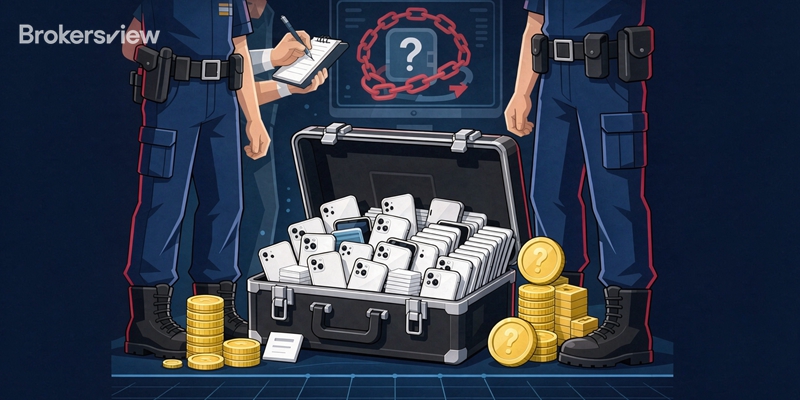
Bangladesh police have arrested six people in Cox’s Bazar in a suspected cross-border investment fraud operation, seizing 1,938 iPhones, laptops and other equipment from properties linked to the investigation. The arrests have raised concerns over the possible expansion of organised cyber-fraud networks into Bangladesh.
The six suspects — five Chinese nationals and one Taiwanese national — were arrested during a September 3 raid on two hotels in the Kolatoli area. They appeared before a court on September 4 and were sent to jail after being charged with online fraud and cybercrime.
Police said another 250 to 300 people, mostly Chinese and Taiwanese nationals, remain at large. Several named fugitives are also believed to be organisers of the network.
Police Find Dedicated Computer Facility
The investigation began with an unsuccessful police operation at Marina Beach Villas Resort in the Marine Drive area on August 25. Officers reportedly saw dozens of suspects flee across the beach, but a search of the property uncovered a hall that had been converted into a computer facility.
Police later found six soundproof rooms, 1,938 older-model iPhones, around 50 monitors, 44 CPUs, 30 keyboards, two laptops, two printers and 24 connection boards.
The equipment indicates that the premises may have been designed to manage a large number of digital identities simultaneously. Police initially suspected online gambling, but the Counter Terrorism and Transnational Crime (CTTC) unit is now investigating suspected investment fraud involving fabricated market analysis, deceptive investment offers, cloned trading platforms and “exit fraud.”
The CTTC said forensic examination of the seized devices is still required to establish the exact nature of the activities.
The suspected methods resemble so-called “pig-butchering” scams, in which victims are gradually encouraged to trust fraudsters before being persuaded to invest increasing amounts through fraudulent platforms.
Police also recovered two Chinese national flags, a Chinese police rank badge and a tie bearing a police insignia. Investigators have considered whether these items could have been used in scams involving the impersonation of Chinese law-enforcement authorities, although the investigation has not established this connection.
Investigation Extends Across Multiple Properties
Police said the operation was not limited to one property. Marina Beach Villas was allegedly taken over by the group, while Dream Holiday Resort, Orchid Blue in Ukhiya’s Inani area and a residential building known as “Ilyas Brothers” were reportedly used to accommodate additional members.
Many Chinese and Taiwanese nationals are believed to have been staying across the four properties since March, although police are still determining how many were directly involved in the suspected fraud.
The main property was reportedly leased in April by a Chinese national using the alias “Babor Ali”. Another individual allegedly claimed to represent a construction company called “Jin Shin Construction,” but investigators found no evidence that such a company exists.
Police also reportedly found that the foreign guests had not submitted the required passport and visa information to the district Special Branch. The property owners also allegedly failed to notify police about leasing the property to foreign nationals.
The case has raised broader concerns about whether organised fraud networks could establish smaller, temporary bases in Bangladesh using rented hotels, resorts and residential properties.
Regional Scam Networks Are Becoming More Mobile
The Cox’s Bazar investigation comes as authorities across South and Southeast Asia increase pressure on large-scale cyber-fraud networks.
The supplied investigation cites similar developments in Sri Lanka and Malaysia, where foreign nationals have been arrested in cybercrime-related cases. In Sri Lanka, 1,093 foreign nationals had been arrested in cybercrime-related cases by August 14, compared with 573 during the whole of 2024.
Malaysia has faced similar cases. In Malaysia, police reportedly raided online centres in Forest City on July 28 and arrested 335 people, including 309 Chinese nationals.
The broader concern is that scam operations may become increasingly dispersed as authorities target established centres. Recruiters, managers, financial intermediaries, technology providers and other facilitators can potentially move across borders instead of operating from large, fixed compounds.
For Bangladesh, the Cox’s Bazar case does not by itself establish that the country has become a major regional scam hub. However, the investigation highlights the importance of identifying whether apparently separate operations are developing common infrastructure and local support networks.
Investor Warning
For forex, CFD and cryptocurrency investors, the case is another reminder to verify a broker’s regulatory status, legal entity and trading platform before depositing funds.
Investors should check whether the broker is authorised by the relevant financial regulator and whether the website, company name and licence details match the regulator’s official records. Be particularly cautious of cloned trading platforms, fabricated market analysis, unrealistic investment offers and platforms that become inaccessible when withdrawals are requested.
Before opening an account, investors can also use our Broker Check page to review the broker’s regulatory information and risk profile.
Related Reading
Taiwan Investment Scam: Woman Saves NT$1.5M, Helps Police Arrest Suspect


Hottest







Copyright © 2026 FastBull Ltd


Risk Warning
FX trading is of high risk and may not be suitable for all investors. Leverage will create additional risks and loss. Before trading, please carefully consider your investment objectives, experience level and risk tolerance. You may lose part or all of your initial investment; do not invest money that you cannot afford. Educate yourself about the risks associated with FX trading. If you have any questions, please consult an independent financial or tax advisor. Any data and information are provided "as is" and only for information purpose, not for trading or recommendations. Past performance does not predict future results.
Disclaimer
The data contained in this website may not be real-time and accurate. The data and prices on this site are not necessarily provided by the market or exchange, but may be provided by market makers, so prices may be inaccurate and differ from actual market prices. Namely, this price is indicative price only to reflect market trend, and is unfavorable for trading purpose. The provider of the data contained in the Website shall not be liable for any loss incurred by you as a result of your trading activities or reliance on the information contained in the Website.