


AI Forex Trading: Unlocking Profit Potential with Advanced Intelligence
The foreign exchange (forex) market is the largest and most liquid financial market in the world, with an estimated daily trading volume exceeding $6 trillion. With such enormous potential for profit, traders are continuously seeking innovative strategies and tools to gain an edge in this highly competitive market.
In recent years, the advent of artificial intelligence (AI) has transformed the landscape of forex trading, empowering traders with advanced analytical capabilities and enhancing decision-making processes. This article explores the remarkable impact of AI forex trading, highlighting its benefits, applications, and future potential.
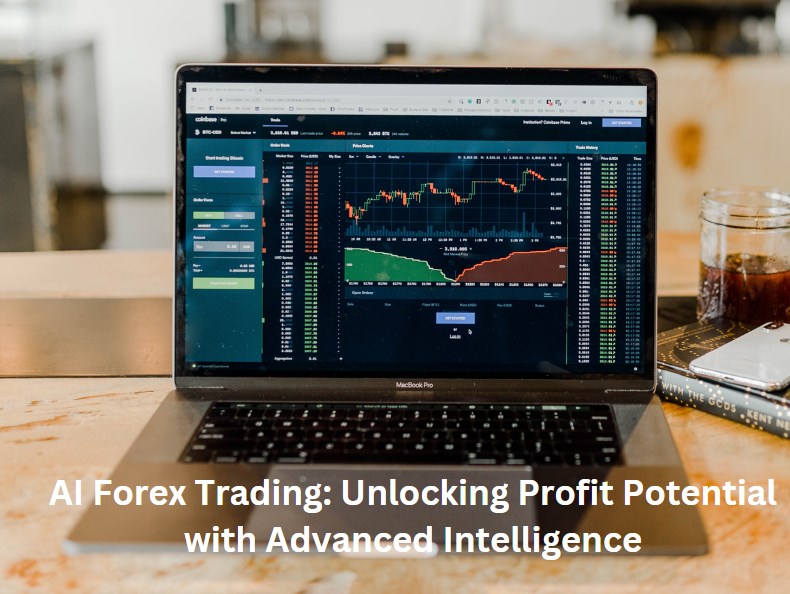
What is AI Forex Trading?
AI refers to the development of computer systems capable of performing tasks that would typically require human intelligence. In forex trading, AI algorithms analyze vast amounts of financial data, identify patterns, and make predictions to inform trading decisions. These algorithms are designed to learn from historical data and adapt their strategies to changing market conditions.
Benefits of AI in Forex Trading
a. Increased Efficiency: AI-powered trading systems can process and analyze large volumes of data in real time, enabling faster decision-making. These systems can monitor multiple currency pairs simultaneously and execute trades with high speed and precision.
b. Enhanced Accuracy: AI algorithms can detect patterns and trends that human traders may overlook, leading to more accurate predictions and better trade execution. By analyzing historical data, AI models can identify profitable trading opportunities and optimize entry and exit points.
c. Emotion-Free Trading: AI eliminates emotional biases and psychological factors that often impact human decision-making, ensuring more disciplined and objective trading strategies. By relying on data-driven analysis, AI systems can make rational decisions based on predefined rules and parameters.
AI Techniques in Forex Trading
Machine Learning (ML) in Forex Trading
Machine learning algorithms enable AI systems to learn from historical data and adapt their trading strategies accordingly. By analyzing patterns and relationships within the data, ML models can identify profitable trading signals and optimize trading parameters. ML techniques commonly used in forex trading include decision trees, random forests, support vector machines, and ensemble methods.
Natural Language Processing (NLP) in Forex Trading
Natural Language Processing algorithms process and analyze vast amounts of news articles, social media posts, and other textual data to gauge market sentiment. By extracting relevant information and sentiment from these sources, NLP can help traders interpret news events, identify market-moving factors, and adjust trading strategies accordingly. Sentiment analysis and news sentiment scoring are common applications of NLP in forex trading.
Deep Learning (DL) in Forex Trading
Deep Learning algorithms, such as neural networks, can analyze complex data sets, including images, audio, and textual data, to make informed trading decisions. DL models excel in recognizing intricate patterns and can provide valuable insights into market behavior. In forex trading, DL algorithms are often used for price prediction, anomaly detection, and risk assessment.
Applications of AI in Forex Trading
Automated Trading Systems:
AI-powered trading bots can execute trades autonomously based on predefined rules and strategies. These systems use AI algorithms to monitor market conditions, analyze price movements, and identify trading opportunities. Automated trading systems can operate 24/7 and react quickly to market changes, enabling traders to take advantage of even the smallest price movements.
Risk Management:
AI algorithms can assess risk levels, predict market volatility, and provide insights to optimize risk management strategies. By analyzing historical data and market conditions, AI systems can generate risk models and alert traders to potential risks. Real-time risk assessment helps traders minimize losses and protect their capital by adjusting position sizes, setting stop-loss orders, and diversifying portfolios.
Sentiment Analysis:
NLP algorithms can analyze social media sentiment, news sentiment, and economic indicators to gauge market sentiment accurately. By monitoring the collective sentiment of market participants, sentiment analysis can provide valuable insights into potential market movements. Traders can use this information to anticipate market reactions and make informed trading decisions.
High-Frequency Trading (HFT):
AI has revolutionized high-frequency trading by enabling traders to execute a large number of trades within milliseconds. HFT algorithms leverage AI techniques to identify and exploit market inefficiencies, such as price discrepancies between different exchanges or variations in order book dynamics. By executing trades at lightning-fast speeds, HFT powered by AI can capitalize on small price differentials to generate profits.
Also Read:
What it takes to make a living in forex trading
How to make a passive income with forex trading
8 Best eBooks for Forex Trading
Future Potential and Considerations
Advanced AI Techniques:
Ongoing advancements in AI, such as reinforcement learning and generative adversarial networks, hold promising potential for further enhancing forex trading strategies. Reinforcement learning can enable AI systems to learn optimal trading policies through trial and error, adapting to changing market dynamics. Generative adversarial networks can be used to generate synthetic financial data for training AI models, providing more diverse and comprehensive datasets.
Ethical Considerations:
As AI becomes more prevalent in forex trading, ethical considerations such as transparency, fairness, and accountability must be carefully addressed. Regulators and market participants need to collaborate to ensure the responsible and ethical use of AI in financial markets. Transparency in AI decision-making processes, data privacy, and mitigation of algorithmic biases are crucial aspects that need to be addressed to maintain market integrity and investor confidence.
Conclusion
AI forex trading has revolutionized the way traders analyze markets, make decisions, and execute trades. AI-powered systems offer increased efficiency, enhanced accuracy, and emotion-free trading, providing traders with a competitive advantage in the fast-paced forex market.
As AI technologies continue to evolve, the future holds immense potential for further advancements in forex trading strategies. However, ethical considerations must be at the forefront of these developments to ensure the responsible and sustainable use of AI in financial markets. By leveraging the power of AI, traders can navigate the complexities of the forex market with greater confidence and precision, unlocking new possibilities for profitability and success.

Hottest




Copyright © 2026 FastBull Ltd


Risk Warning
FX trading is of high risk and may not be suitable for all investors. Leverage will create additional risks and loss. Before trading, please carefully consider your investment objectives, experience level and risk tolerance. You may lose part or all of your initial investment; do not invest money that you cannot afford. Educate yourself about the risks associated with FX trading. If you have any questions, please consult an independent financial or tax advisor. Any data and information are provided "as is" and only for information purpose, not for trading or recommendations. Past performance does not predict future results.
Disclaimer
The data contained in this website may not be real-time and accurate. The data and prices on this site are not necessarily provided by the market or exchange, but may be provided by market makers, so prices may be inaccurate and differ from actual market prices. Namely, this price is indicative price only to reflect market trend, and is unfavorable for trading purpose. The provider of the data contained in the Website shall not be liable for any loss incurred by you as a result of your trading activities or reliance on the information contained in the Website.