





 WELL-PERFORMING BROKER












This PU Prime review delivers an objective analysis of the broker's regulatory standing, trading fees, and platform execution speed. By examining these core features, we help you determine: is PU Prime a good broker for your specific financial goals?
Is PU Prime Legit and Safe?
PU Prime operates as a multi-regulated brokerage brand offering trading services globally, though the level of investor protection varies significantly depending on the regional entity you trade under.

What Is PU Prime? Company Background
PU Prime, originally founded in 2015 as Pacific Union, is an international online brokerage and fintech firm serving retail and institutional clients [1]. Headquartered in Mauritius and Seychelles, the broker provides market access to retail traders through modern platforms, fast execution, and structured risk controls. Over its history, the broker has transitioned from a localized broker to a global platform with significant daily trading volumes.
- Tradable asset classes: forex, indices, commodities, stocks, cryptos, ETFs, bonds, and metals.
- Established in 2015 — providing the brand with over a decade of operational history in the global financial markets [1].
- Active client base exceeds 700,000 traders — reflecting the broker's broad global reach across 190 countries.
PU Prime Regulation
PU Prime is regulated by the Australian Securities and Investments Commission (ASIC), the Capital Market Authority (CMA) of the United Arab Emirates, the Financial Sector Conduct Authority (FSCA) of South Africa, the Financial Services Commission (FSC) of Mauritius, and the Financial Services Authority (FSA) of Seychelles. These regulatory bodies range from highly strict Tier-1 and Tier-2 authorities to offshore jurisdictions with lighter oversight. Traders can consult the ASIC official register to examine the company's active standing. To verify PU Prime's license independently, you can search their registry database for Australian Financial Services License (AFSL) number 410681.
The table below breaks down the various corporate entities operated by the PU Prime brand along with their licensing authorities, tiers, and customer safeguards.
| Entity Name | Regulator | License Number | Regulatory Tier | Investor Protection |
|---|---|---|---|---|
| PU Prime Trading Pty Ltd | Australian Securities and Investments Commission (ASIC) | 410681 | Tier 1 | Segregated funds, leverage limits, strict domestic regulatory oversight |
| PU Prime Financial Services LLC | Capital Market Authority (CMA) of the UAE | 20200000388 | Tier 2 | Advisory and introductory license only; no client fund custody |
| PU Prime (Pty) Ltd | Financial Sector Conduct Authority (FSCA) of South Africa | FSP 52218 | Tier 2 | Local financial conduct compliance, local dispute resolution |
| PU Prime Ltd | Financial Services Commission (FSC) of Mauritius | GB23202672 | Tier 3 (Offshore) | Segregated client funds, dispute resolution, up to 1:1000 leverage |
| PU Prime Limited | Financial Services Authority (FSA) of Seychelles | SD050 | Tier 3 (Offshore) | Segregated accounts, Financial Commission dispute access, up to 1:1000 leverage |
While registration under the Tier-1 ASIC entity offers maximum regulatory safety for domestic traders, international clients onboarded via offshore subsidiaries must accept significantly reduced consumer protections in exchange for flexible trading conditions.
Which PU Prime Entity Serves Your Region?
Onboarding processes and regulatory assignments are determined strictly by your country of residence. Australian residents are served by the domestic ASIC-regulated branch, PU Prime Trading Pty Ltd. Meanwhile, most global retail clients register under the offshore divisions, specifically PU Prime Limited (Seychelles) or PU Prime Ltd (Mauritius).
The main onboarding and protection differences across these jurisdictions include:
- Leverage Limits: Australian clients are restricted to a maximum leverage of 1:30 for major currencies under ASIC guidelines, while global clients registered offshore can utilize leverage up to 1:1000.
- Regulatory Redress: Clients under the ASIC branch can escalate disputes to the Australian Financial Complaints Authority (AFCA). Offshore clients do not have access to a national ombudsman, although they can utilize alternative private arbitration systems.
- Account Opening: Offshore registration features a streamlined, less rigorous Know-Your-Customer (KYC) procedure compared to the stricter requirements mandated by Australian regulators.
Restricted Countries
PU Prime does not offer services to residents of certain jurisdictions due to local regulatory barriers and international sanctions lists. The restricted countries include:
- United States, China, Singapore, and the Philippines.
- North Korea, Iran, Cuba, and other regions listed on the FATF blacklist or global sanctions databases.
These regional limitations exist because local watchdogs—such as the SEC and CFTC in the US, MAS in Singapore, or the SEC in the Philippines—prohibit offshore brokers from operating within their markets without specific domestic authorizations.
Client Fund Protection
Regardless of the entity retail clients register under, PU Prime offers several operational and private financial protections to secure client capital:
- Segregated banking: PU Prime stores all retail investor capital in separate accounts with top-tier international banks, ensuring client deposits are never used for corporate operations.
- Negative balance protection: This automatic risk safeguard ensures that retail traders can never lose more than their deposited capital during extreme market gaps.
- Private insurance backup: The broker offers client fund coverage of up to $1,000,000 through its policy with Lloyd’s of London, providing a substantial safety net in the event of broker insolvency.
- Alternative dispute resolution: Membership in the Financial Commission gives retail clients recourse to independent arbitration, with an insurance fund covering up to €20,000 per claim.
PU Prime User Reviews and Trustpilot Rating
PU Prime displays a Trustpilot rating of 3.3 out of 5 stars based on approximately 1,800 reviews as of July 2026, representing mixed and increasingly cautious trader sentiment. This rating reflects a significant downward shift from previous years, largely due to Trustpilot's platform-level interventions and automated review audits. You can See PU Prime reviews on Trustpilot to view individual trader testimonies and ongoing feedback.
While some clients express satisfaction with their day-to-day experience, the community remains heavily divided.
Key Positive Themes:
- Slick Mobile Interface: Many users appreciate the proprietary PU Prime app, citing its modern design, ease of use, and simple execution mechanics.
- Responsive Account Managers: Multiple traders praise individual customer service representatives for providing helpful, step-by-step guidance during initial account setups.
- Straightforward Crypto Onboarding: Clients frequently note that depositing funds via cryptocurrency is fast, direct, and hassle-free.
Key Negative Themes:
- Withdrawal Failures and "Internal Control" Blocks: A recurring complaint involves the cancellation of pending payouts, with the broker freezing accounts or rejecting transactions under the blanket explanation of "internal control" audits.
- Restrictions on Profitable Accounts: Several users report that after making rapid short-term profits, their trading access was suddenly restricted or their accounts were locked entirely.
- Support Communication Gaps: Reviewers point out that while basic live chat support is quick, complex disputes regarding deleted profits or blocked withdrawals suffer from vague timelines and unresolved tickets.
Crucially, Trustpilot has highlighted a formal notice on the broker's profile indicating that they have detected and removed a significant volume of fake reviews intended to artificially inflate the score, urging traders to perform thorough due diligence before committing real capital.
PU Prime Account Types
PU Prime scales its trading conditions across four primary account structures, accommodating budget-conscious beginners with low entry thresholds while restricting its lowest trading costs to high-net-worth clients.
PU Prime Account Types and Minimum Deposit Requirements
To appeal to a broad spectrum of the trading public, PU Prime segments its platform offerings into four main categories: the Cent, Standard, Prime, and ECN accounts. These structures differ fundamentally by minimum deposit requirements, pricing mechanics (spreads vs. commissions), and optimal user profiles.
- The Cent Account ($20 Minimum Deposit): Designed specifically as a low-risk sandbox, this account is ideal for novices transitioning from virtual demo environments to real-money trading, or for developers testing automated expert advisors (EAs). By displaying balances and execution values in United States Cents (where $20 registers as 2,000 USC), traders can execute micro-lot positions with minimal exposure. The pricing is commission-free with variable spreads starting at 1.3 pips, and leverage scales up to a maximum of 1:1000 under offshore oversight.
- The Standard Account ($50 Minimum Deposit): Acting as the broker's primary retail entry point, the Standard account provides a balance of low capital requirements and straightforward pricing. With a modest deposit of $50, clients gain access to the complete suite of more than 1,000 CFD instruments. This account operates on a commission-free pricing model, meaning the broker's compensation is entirely embedded within the spread, which starts at a baseline of 1.3 pips on the EUR/USD pair. This setup prevents unexpected fees and is ideal for casual swing traders.
- The Prime Account ($1,000 Minimum Deposit): Unlocking institutional-style raw spreads requires a step up to the Prime tier, which demands a deposit of $1,000. This account is built for high-volume day traders and scalpers whose strategies depend on narrow bid-ask gaps. It offers raw spreads starting from 0.0 pips, coupled with a fixed commission of $3.50 per standard lot per side (a total of $7.00 per round turn). The narrow spreads help reduce slippage and overall transaction friction during high-frequency sessions.
- The ECN Account ($10,000 Minimum Deposit): The pinnacle of PU Prime's offering is the ECN account, a highly competitive tier that is unfortunately locked behind a steep capital barrier of $10,000. It targets professional, institutional, and high-frequency algorithmic traders. Spreads start at 0.0 pips, and the commission is slashed to an industry-leading $1.00 per standard lot per side (a total of $2.00 per round turn). This tier provides direct, unfiltered routing to tier-1 liquidity pools, offering superior fill rates and minimal execution delays.
For all accounts opened under the broker's offshore entities, a default leverage of up to 1:500 or 1:1000 is permitted. However, if an account's equity surpasses $20,000, PU Prime automatically scales the maximum leverage back to 1:500 as an internal risk management safeguard.
Does PU Prime Offer an Islamic Account?
PU Prime offers fully compliant, swap-free Islamic accounts designed specifically for Muslim traders who must adhere to Shariah law's strict prohibition on earning or paying interest. Instead of standard overnight swap rates, clients holding positions past the daily market close are charged a fixed daily administration fee. This swap-free setting can be applied to multiple account types, but the broker strictly monitors these accounts to ensure compliance and prevent non-religious traders from exploiting the swap-free framework for speculative carry-trade strategies.
PU Prime Fees and Trading Costs
PU Prime's pricing structure sits in the mid-range of retail CFD brokers, pairing zero-commission options on standard accounts with competitive raw-spread commissions of $7.00 per round turn.
PU Prime Trading Fees (Spreads / Commission Fees / Swap and Overnight Fees)
Trading costs at PU Prime are structured differently depending on the account type chosen, directly influencing daily transaction expenses for retail traders.
- Spreads: On commission-free Cent and Standard accounts, spreads are variable and start at a baseline of 1.3 pips for major currency pairs such as the EUR/USD. For Prime and ECN accounts, the broker provides institutional raw spreads starting from 0.0 pips, which fluctuate dynamically according to interbank liquidity conditions.
- Commissions: Accounts that offer raw spreads charge fixed commissions per transaction. The Prime account requires a flat commission of $3.50 per side ($7.00 round turn) per standard lot traded, which aligns closely with industry averages. In contrast, the professional ECN account offers a highly discounted commission of $1.00 per side ($2.00 round turn) per standard lot, though it is restricted by a high minimum deposit.
- Swap and Overnight Fees: Positions held open past the daily market close (5:00 PM EST) are subject to swap charges, which are determined by the interest rate differential between the two currencies. For example, a buy position on the EUR/USD may incur an overnight charge of roughly $9.19 per standard lot, while a sell position can yield a swap credit of approximately $4.69. These swap rates change daily in response to global monetary policies, except on Islamic accounts where standard swaps are waived in exchange for a flat administrative fee.
PU Prime Non-Trading Fees (Inactivity Fees / Currency Conversion Fees)
In addition to direct transactional charges, traders must account for secondary costs related to account maintenance and currency processing.
- Archive-only policy: PU Prime does not charge an inactivity fee for dormant accounts; however, accounts with no trading activity for 90 days and a balance under $10 are archived, requiring manual support to reactivate.
- Currency conversion charges: When trading instruments denominated in a currency different from the account's base currency, a conversion fee is calculated dynamically based on real-time market rates.
- Maintenance costs: The broker charges zero administrative fees for account creation, platform access, or profile upkeep.
PU Prime Deposits & Withdrawals (Deposit and Withdrawal Methods / Withdrawal Speed and Minimum Limits / Deposit and Withdrawal Fees / Withdrawal Issues and User Complaints)
PU Prime provides a flexible payment suite with zero-fee deposit options and fast local bank transfers, though bank-wire withdrawals are subject to transaction fees after your first monthly payout.
Traders can manage their transaction requirements using multiple payment methods, processing structures, and financial limitations:
- Deposit Methods and Processing: Account funding can be initiated using various payment methods.
- Supported funding channels: credit/debit cards, international wire transfers, local bank transfers, cryptocurrencies, and e-wallets like Skrill, Neteller, and Bitwallet.
- Deposit processing speed: E-wallet transactions and local bank transfers are processed instantly, card deposits take up to several minutes, and international bank wires require 2 to 5 business days.
- Deposit Fees and Minimums: PU Prime charges zero internal handling fees on deposits across all methods, though intermediary banks or third-party gateways may impose their own transactional fees. The baseline minimum deposit is $50 for local banks, credit cards, and e-wallets, dropping to $20 (or 2,000 USC) specifically for the beginner-focused Cent account.
- Withdrawal Speeds and Limits: Withdrawal options generally mirror the deposit methods. Approved e-wallet withdrawals are processed within 24 hours and often settle the same day. Local bank transfers take 1 to 2 business days, credit card payouts take 2 to 3 business days, and international bank wires take 2 to 5 business days. The minimum withdrawal threshold is $40 per request, with no maximum limits applied as long as the amount is within the account's free margin.
- Withdrawal Fees: Credit cards, local bank transfers, and e-wallet withdrawals are entirely free of charge. For international bank transfers, the broker covers the bank fees for the first transaction of each calendar month; any subsequent international wire withdrawals within the same month incur a standard handling fee of $20 (or currency equivalent).
- Withdrawal Issues and User Complaints: Genuine user testimonies on Trustpilot and similar public forums reveal recurrent friction surrounding withdrawal requests. A common issue is the broker's compliance department cancelling pending payouts or freezing accounts, citing "internal control" reviews. These audits and fund freezes are frequently triggered when traders register large profits in a short timeframe, leading to disputes over profit adjustments and restricted access to account balances.
PU Prime Trading Platforms, Conditions & Experience
PU Prime provides a comprehensive technology and trading environment featuring standard MetaTrader platforms alongside its custom mobile application, though its newly introduced dynamic leverage rules restrict exposure during highly volatile news events.
Does PU Prime Support MT4, MT5 & Mobile Trading?
PU Prime supports the industry-standard MetaTrader 4 and MetaTrader 5 platforms alongside its custom PU Web Trader and the proprietary PU Prime mobile application. This software suite is tailored to cover everything from classic algorithmic trading to modern mobile-first execution.
- MetaTrader 4 (MT4): The classic retail trading platform, offering 30 built-in indicators and standard charting tools, highly favored for its simplicity and EA automated trading compatibility.
- MetaTrader 5 (MT5): The advanced, multi-asset successor to MT4, offering depth of market data, 38 technical indicators, and a wider variety of pending order types.
- PU Web Trader: A custom browser-based dashboard that delivers enhanced, fluid charting tools directly through any web browser, eliminating the need to install desktop software.
- PU Prime App: A proprietary mobile application for iOS and Android that integrates account management, real-time market tracking, and native copy-trading functionalities in one place.
The inclusion of both MetaTrader channels ensures that developers can easily run their legacy Expert Advisors (EAs), while casual traders can utilize the modern, simplified design of the broker’s in-house application.
What Can You Trade on PU Prime? (markets and instruments)
PU Prime hosts a diverse library of over 1,000 Contract for Difference (CFD) instruments spanning forex, shares, indices, metals, commodities, bonds, and ETFs. This broad market access allows retail clients to build diversified multi-asset portfolios under a single login.
Traders can speculate on price movements across several primary asset classes:
- Forex: Over 50 currency pairs, including major pairs like EUR/USD, GBP/USD, and USD/JPY, alongside a variety of minors and emerging-market exotics.
- Shares (Equities): More than 800 individual stock CFDs covering major publicly traded companies across the United States, Europe, and Hong Kong markets.
- Indices: Major global stock benchmarks such as the US30 (Dow Jones), SPX500 (S&P 500), NAS100 (Nasdaq), and major European/Asian indices.
- Commodities & Metals: Hard assets including gold, silver, platinum, palladium, crude oil (WTI and Brent), natural gas, and soft agricultural products like cocoa and coffee.
- ETFs & Bonds: A selection of global Exchange-Traded Funds and government treasury bonds for macro-hedging purposes.
- Cryptocurrencies: High-liquidity crypto-to-fiat CFDs, featuring major digital assets like Bitcoin (BTCUSD) and Ethereum.
PU Prime Leverage, Margin & Order Execution
PU Prime utilizes a hybrid STP and ECN execution model that supports high leverage up to 1:1000 offshore, though it employs dynamic leverage reductions during periods of high market volatility. The broker operates a tiered routing system, utilizing Straight-Through Processing (STP) to execute trades for Standard account holders, while raw accounts route orders directly to institutional Tier-1 liquidity pools.
- Tiered leverage limits: ASIC-regulated retail accounts in Australia are restricted to a maximum leverage of 1:30, whereas global accounts opened under offshore subsidiaries can utilize leverage up to 1:1000.
- Dynamic leverage policies: Effective March 16, 2026, the broker temporarily reduces leverage (e.g., capping forex at 1:200, silver at 1:50) during high-impact news windows to protect traders and infrastructure from extreme volatility.
- Risk clearance thresholds: A margin call is triggered once account equity falls to 50% of the required margin, while an automatic stop-out is executed to liquidate open positions if equity drops to 20%.
- Execution transparency: Prime and ECN accounts offer transparent order-routing with separate spreads and commissions, minimizing conflicts of interest compared to traditional market-maker brokers.
PU Prime Research Tools & Educational Resources
PU Prime delivers a robust suite of educational resources and analytical software, featuring Autochartist integration, a structured trading academy, and the interactive PU Community platform. The broker actively focuses on narrowing the gap between basic market theory and disciplined live execution.
- Autochartist integration: A premium market-scanning tool provided free to all live account holders to automate chart pattern recognition and key support/resistance detection.
- PU Prime Academy: A structured online knowledge base that breaks down technical concepts into beginner, intermediate, and advanced levels through text and video guides.
- PU Community ecosystem: Launched in April 2026, this interactive portal bridges theoretical trading education with direct, professional mentorship led by market strategists.
- Regular live webinars: Weekly interactive online seminars hosted by market analysts to discuss macroeconomic trends, live technical setups, and risk management.
How Good Is PU Prime Customer Support?
PU Prime provides round-the-clock customer support in more than a dozen languages through live chat, email, and phone hotlines. Support is organized locally to give traders direct access to regional desk managers.
- Multi-lingual coverage: Support is offered in English, French, Spanish, German, Portuguese, Italian, Chinese, Japanese, Thai, Vietnamese, Malay, Tagalog, and Arabic.
- Communication channels: Clients can contact representatives via 24/5 local phone hotlines (+1 888 884 3983), email support, and 24/7 web-based live chat.
- Operational feedback: While basic technical issues and deposit queries are answered quickly by support agents, more complex compliance or withdrawal disputes are occasionally delayed or suffer from uneven communication quality.
Who Is PU Prime Best For?
PU Prime is best suited for beginner-level traders looking for low capital barriers and structured copy-trading ecosystems, while it remains less ideal for high-volume scalpers who cannot meet the steep $10,000 threshold for its lowest ECN commissions.
Is PU Prime Good for Beginners?
PU Prime is highly suitable for beginners due to its low $20 minimum deposit entry barriers and comprehensive educational ecosystem. By offering a dedicated Cent account, the broker allows first-time investors to transition safely from virtual demo environments to live market conditions with minimal financial risk.
- Low entry thresholds: The $20 Cent and $50 Standard account requirements make live trading accessible to individuals with limited initial capital.
- Interactive mentorship: The interactive "PU Community" portal offers beginner-friendly tutorials, market analysis, and direct interaction with the broker's research strategists.
- Simple risk controls: Built-in negative balance protection ensures that inexperienced retail clients cannot lose more than their initial cash deposit.
This blend of cheap real-money trading and structured, guided education helps novices build necessary risk-management habits before trading larger account balances.
Is PU Prime Good for Copy Trading?
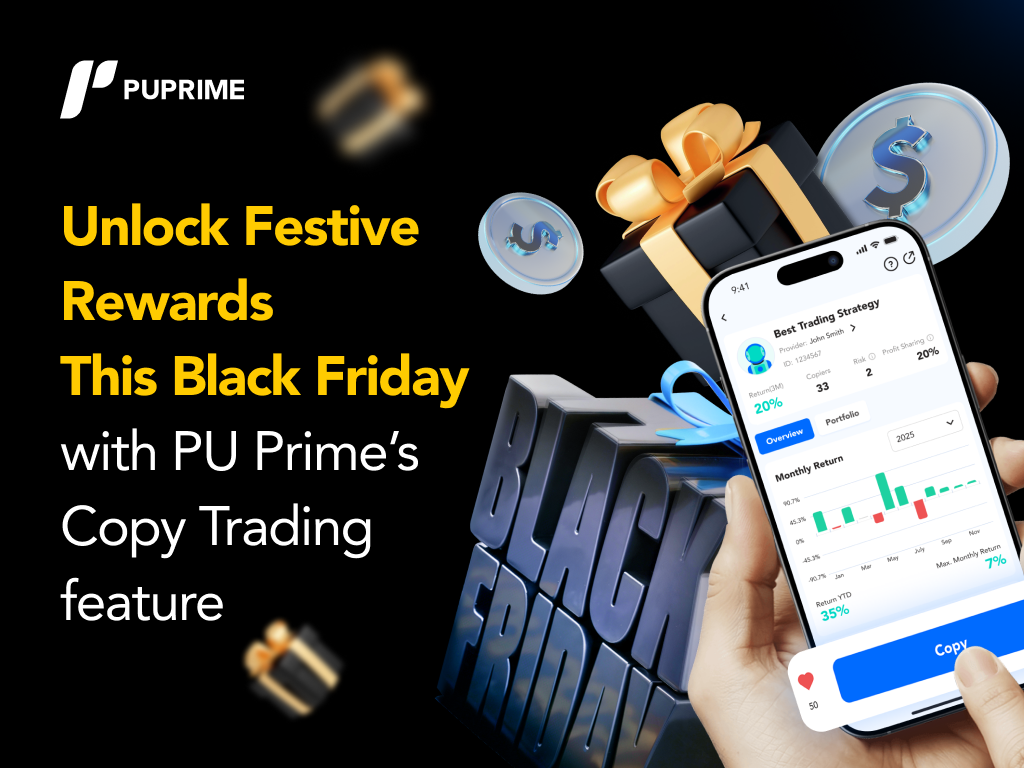
PU Prime provides an excellent environment for copy and social trading through its proprietary, highly-rated mobile app. The broker has prioritized its social trading infrastructure, building an active network of retail investors and verified signal providers.
- Integrated copy app: Clients can research, filter, and replicate the real-time strategies of veteran traders directly within the main PU Prime application.
- Strategy provider monetization: Experienced traders can easily broadcast their trades to a wide audience and earn fee-sharing revenue from successful followers.
- Transparent metrics: The platform displays detailed performance trackers for signal providers, including maximum drawdown, historical win rates, and overall risk levels.
For retail clients who lack the time to master complex technical charts, the social trading ecosystem offers a robust, hands-off mechanism to participate in active markets.
Is PU Prime Good for Scalpers and Day Traders?
PU Prime is only moderately suitable for high-frequency scalpers, as its most competitive trading costs are locked behind a steep $10,000 ECN deposit barrier. While intraday traders can utilize the mid-tier Prime account ($1,000 minimum deposit) to trade raw spreads starting from 0.0 pips, they are still charged a standard $7.00 per-lot commission.
- Restrictive premium pricing: To secure the broker's lowest commission rate of $2.00 per round turn, clients must commit a massive $10,000 starting deposit.
- Dynamic leverage risks: The automatic scaling down of leverage during high-impact economic news can lead to unexpected margin requirements and forced stop-outs for news scalpers.
- Mid-range standard spreads: The variable 1.3-pip spread on standard and Cent accounts is too wide for strategies that rely on capturing fractional-pip market movements.
For professional, capital-heavy traders who can clear the $10,000 hurdle, the ECN execution model is highly efficient; however, retail day traders with moderate balances will find better pricing structures elsewhere.
Best for: Beginners seeking low-cost live accounts, social/copy trading enthusiasts, and offshore clients prioritizing high-leverage options.
Less ideal for: Professional day traders requiring low commissions without high capital requirements, news-scalping traders, and residents of restricted jurisdictions such as the United States.
Compare PU Prime with Other Popular Brokers
PU Prime operates within a highly competitive segment of the retail brokerage market, matching up closely against prominent raw-spread and low-barrier competitors but offering distinct trade-offs in leverage limits and platform variety.
PU Prime vs XM
PU Prime provides tighter raw pricing on premium accounts than XM, whereas XM delivers far more robust regulatory safeguards under tier-1 European authorities. While PU Prime's Standard account spreads start at 1.3 pips, XM manages to offer standard spreads of around 1.0 pip without charging any trade commission. Furthermore, XM is regulated by highly reputable authorities such as CySEC across its international accounts; by contrast, PU Prime routes the majority of its global retail base through its offshore Seychelles and Mauritius entities. Additionally, the minimum deposit for XM sits at an extremely accessible $5 compared to PU Prime's $50 standard threshold; however, PU Prime offers a more feature-rich copy trading ecosystem.
Takeaway: PU Prime is the better choice for integrated copy trading; XM suits risk-averse traders prioritizing tier-1 regulation.
PU Prime vs Exness
PU Prime features a much more advanced and structured proprietary copy trading mobile app than Exness, although Exness remains the dominant player for overall pricing efficiency and flexible payment terms. Traders utilizing Exness benefit from unique trading conditions, such as unlimited leverage and automated, instant withdrawal processing even during weekends. PU Prime, on the other hand, enforces a rigid withdrawal approval period of up to 24 hours and imposes dynamic leverage limits that restrict margin sizes during high-impact news. Additionally, Exness features a lower minimum deposit of just $10 and offers spread-free accounts with lower commission costs; however, senders of copy signals may prefer PU Prime's custom interface and community features over the more basic social options at Exness.
Takeaway: PU Prime is the better choice for community-focused social copy trading; Exness is superior for low-cost, high-leverage algorithmic execution.
PU Prime vs Vantage
PU Prime provides a significantly more robust suite of educational tools and interactive community support than Vantage, whereas Vantage excels at delivering raw-spread pricing with lower financial barriers. Both brokers share similar offshore roots and offer leverage up to 1:1000 alongside MetaTrader integration. Vantage has a competitive edge on raw pricing, allowing traders to access spreads starting from 0.0 pips on its Raw account with a $50 deposit; conversely, PU Prime locks its comparable Prime account behind a $1,000 threshold. In terms of platform usability, PU Prime's proprietary mobile app is often praised as more intuitive; however, Vantage has broader global licensing coverage, holding tier-1 regulatory approvals in the UK and Australia.
Takeaway: PU Prime is the better choice for beginners requiring guided educational resources; Vantage is the superior option for intermediate raw-spread traders.
PU Prime Broker Quick Verdict
Our comprehensive PU Prime review concludes that the broker is a solid choice for beginners and social copy traders who benefit from low capital barriers and a highly polished proprietary mobile app, though high-volume professionals will find its best pricing structures locked behind a steep $10,000 ECN deposit threshold and subjected to offshore regulatory limitations.
Editorial Transparency: This PU Prime review is based on information from the official PU Prime website, current regulatory filings, and independent third-party sources such as Trustpilot. We cross-checked the broker's regulation and license details, account types, trading and non-trading fees, deposit and withdrawal terms, platforms, and real user feedback to ensure accuracy and objectivity. This content is for educational purposes only and does not constitute financial advice; trading CFDs carries a high risk of losing money. Last updated: July 2026.