


- WTI
- XAUUSD
- XAGUSD
- USDX


견적
분석
사용자
7x24
경제 일정
교육
데이터
- 이름
- 최신 값
- 이전












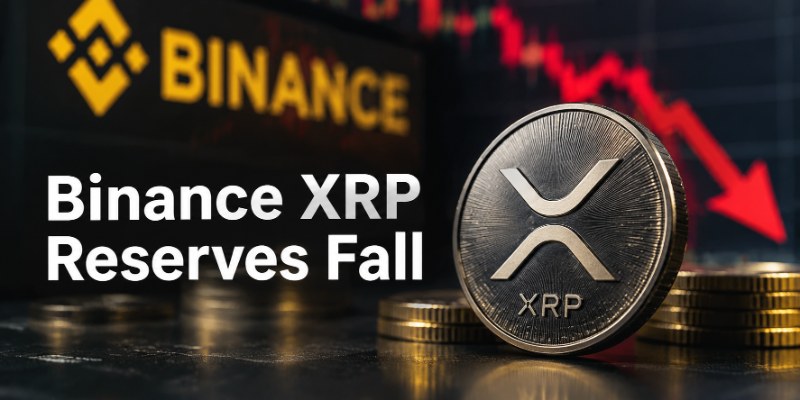
XRP 거래소 보유량은 중앙 집중식 거래 플랫폼에 얼마나 많은 암호화폐가 보유되어 있고 잠재적으로 얼마나 이용 가능한지를 이해하는 데 중요한 지표입니다.
XRP 거래소 보유량은 중앙 집중식 거래 플랫폼에 얼마나 많은 XRP가 보유되어 있고 잠재적으로 거래 가능한지 파악하는 데 중요한 지표입니다. 바이낸스의 XRP 보유량이 감소하면 투자자들은 종종 보유자들이 토큰을 인출하거나, 즉시 거래 가능한 공급량을 줄이거나, 자산을 장기 보관 시설로 옮기고 있다는 신호로 해석합니다. 그러나 보유량 감소와 XRP 가격 사이의 관계는 겉으로 보이는 것보다 훨씬 복잡합니다.
목차
최근 데이터는 이러한 추세를 특히 흥미롭게 만들고 있습니다. 바이낸스의 XRP 보유량은 10월 말에 급격히 감소했다가 11월 초에 반등했습니다. 이러한 움직임은 거래소 보안에 대한 우려가 고조되고 시장 유동성에 상당한 변화가 있었던 시기에 발생했습니다. 이러한 현상을 이해하려면 표면적인 보유량 수치 이상의 것을 살펴봐야 합니다.
2026년 10월 말 바이낸스의 XRP 보유량이 눈에 띄게 감소하면서 암호화폐 거래자와 온체인 분석가들의 주목을 받았습니다.
U.Today가 보도한 수치에 따르면, 바이낸스의 XRP 보유량은 10월 28일 약 26억 9천만 XRP에서 10월 30일 24억 7천만 XRP로 감소했습니다. 이는 이틀 만에 약 2억 2천만 XRP, 즉 8.18% 감소한 수치입니다.
이러한 하락세는 비교적 짧은 기간 동안 상당량의 XRP가 바이낸스에서 빠져나갔음을 시사합니다.
하지만 이러한 추세는 중단 없이 계속되지는 않았습니다.
크립토 베이직(The Crypto Basic)의 후속 보도에 따르면, 바이낸스의 XRP 보유량은 11월 3일 약 23억 5천만 XRP에서 11월 5일 26억 3천만 XRP로 증가했습니다. 이는 약 2억 8천만 XRP, 즉 11.9% 증가한 수치입니다.
이 수치들은 중요한 차이점을 보여줍니다. 외환보유액은 빠르게 변동할 수 있으며, 특정 기간 동안의 감소가 반드시 외환보유액의 지속적인 감소를 의미하는 것은 아닙니다.
바이낸스를 둘러싼 여러 가지 상황 변화, 특히 10월 29일에 발생한 거래소 보안 사고와 그 이후 피해 자산 복구가 이러한 움직임에 영향을 미쳤을 가능성이 있습니다.
따라서 전체적인 상황은 단순히 XRP 공급량 감소라는 설명보다 훨씬 더 복잡합니다.
바이낸스의 XRP 보유량이 감소하는 데에는 여러 가지 요인이 있을 수 있습니다. 이러한 요인들을 이해하면 투자자들은 보유 행태의 진정한 변화와 일시적인 유동성 변동을 구분하는 데 도움이 됩니다.
한 가지 가능한 설명은 투자자들이 중앙 집중식 거래소에서 XRP를 인출하여 개인 지갑으로 옮기고 있다는 것입니다.
Long-term holders may prefer self-custody because it gives them direct control over their assets without relying on an exchange account.
When XRP leaves Binance for private wallets, the exchange's recorded balance decreases. If these tokens remain outside trading platforms, they may become less immediately accessible to exchange-based buyers and sellers.
This does not necessarily mean investors intend to hold XRP indefinitely, but it can indicate a change in custody preferences.
Another possible explanation is accumulation.
Some investors withdraw XRP when they believe its current market price offers an attractive entry point. Rather than keeping their holdings on Binance, they may transfer them to cold wallets or other storage solutions.
If this behavior becomes widespread, exchange reserves can decline even while investor demand remains relatively strong.
However, withdrawals alone cannot establish whether accumulation is taking place. Analysts need to examine wallet activity, transaction patterns, and subsequent market behavior to confirm the interpretation.
Not every reserve decline represents a genuine withdrawal by an investor.
Cryptocurrency exchanges regularly reorganize their wallet infrastructure, move assets between hot and cold wallets, and consolidate addresses.
Depending on how an analytics provider identifies exchange-controlled addresses, these internal movements can affect reported reserve figures.
Transfers between exchanges can also create temporary changes in individual platform balances.
For this reason, Binance XRP reserves should be compared with broader exchange-reserve data rather than interpreted in isolation.
The October 29 security incident added another important factor to the equation.
Following the incident, Binance temporarily suspended withdrawals while investigating the situation. The exchange subsequently began restoring withdrawal services and replenishing affected assets.
Binance stated in its November 2 recovery update that XRP was among ten assets fully backed at a 1:1 ratio in its October 31 Proof of Reserves snapshot.
On November 4, the exchange also announced an expanded snapshot covering 44 tokens.
The incident may have encouraged some customers to reconsider how they store their cryptocurrency, while the restoration process could have contributed to changes in Binance's recorded XRP holdings.
Consequently, the recent reserve movements should not automatically be interpreted as evidence of a coordinated XRP accumulation trend.
A decline in Binance XRP reserves can create a potentially favorable supply-side environment, but it does not guarantee a price increase.
The basic relationship is straightforward.
When fewer XRP tokens are held on exchanges, the amount of immediately accessible supply may decrease. If demand remains stable or increases, buyers could face a smaller pool of available tokens.
Under certain conditions, this can contribute to upward price pressure.
However, several factors determine whether that effect becomes visible in the market.
Reduced exchange supply matters most when accompanied by consistent buying demand.
For example, if investors withdraw XRP while institutional and retail demand increases, the available supply on trading platforms could tighten.
Conversely, if demand weakens at the same time, declining reserves may have little positive effect on prices.
The market can also experience falling reserves alongside declining prices, demonstrating that exchange balances are not a standalone bullish indicator.
XRP price movements are also influenced by futures and perpetual contracts.
If leveraged traders increase short positions, derivatives-related selling pressure can outweigh the effect of declining spot exchange reserves.
Similarly, liquidations can trigger substantial price movements even when the amount of XRP held on exchanges remains relatively stable.
Investors should therefore monitor spot trading volume, open interest, funding rates, and liquidation activity alongside reserve data.
Exchange reserves and market liquidity are related, but they measure different things.
Exchange reserves represent the amount of XRP attributed to exchange-controlled wallets. Liquidity refers to how easily traders can buy or sell XRP without significantly affecting its price.
A decline in Binance XRP reserves could reduce the amount of tokens immediately available on the platform. Nevertheless, it does not automatically mean that market liquidity has deteriorated.
Several indicators help provide a clearer picture.
| Indicator | What It Reveals |
|---|---|
| XRP exchange reserves | XRP held in exchange-controlled wallets |
| Spot trading volume | Actual trading activity |
| Order book depth | Available buy and sell liquidity |
| Bid-ask spread | Cost of executing trades |
| Exchange netflows | Difference between deposits and withdrawals |
| Futures open interest | Outstanding derivatives positions |
For example, declining Binance reserves combined with increasing spot trading volume could suggest that demand remains active despite a reduction in exchange-held supply.
On the other hand, falling reserves accompanied by weak trading volume may simply reflect reduced participation.
CryptoQuant's exchange analytics are useful for examining these relationships. Its October 13, 2026, analysis also highlighted diverging XRP reserve trends across Binance, Upbit, and Bithumb, showing why individual exchange balances should not be confused with the broader market supply picture.
The next stage of XRP's market development will depend on whether the recent reserve movements develop into a sustained trend.
Several indicators deserve particular attention.
Investors should monitor whether Binance XRP reserves resume declining after the early-November increase.
A sustained decline across multiple reporting periods would provide stronger evidence of a continuing reduction in exchange-held supply than a single large withdrawal.
It is also important to compare Binance with other major exchanges, including Upbit and Bithumb.
Netflows provide another perspective on market behavior.
Positive netflows generally indicate that more XRP is entering exchanges than leaving them. This can increase the amount of cryptocurrency available for potential selling.
Negative netflows indicate that withdrawals exceed deposits.
However, netflows should be interpreted alongside transaction size and wallet ownership information. Large transfers do not necessarily represent immediate buying or selling intentions.
Institutional investment products can also influence XRP demand.
Investors should monitor reported fund inflows and outflows, product assets under management, and changes in institutional exposure.
Consistent inflows could provide additional demand support, particularly if exchange-held supply continues to decline.
However, fund flows and exchange withdrawals represent different market activities and should not be treated as interchangeable indicators.
Binance's Proof of Reserves updates are particularly relevant following its October security incident.
The exchange has stated that its October 31 snapshot demonstrated at least 1:1 backing for XRP and other covered assets.
Its November 4 snapshot expanded coverage to 44 tokens, with the updated zero-knowledge verification process expected to take approximately 50 to 60 hours.
Investors can use these disclosures to examine customer-asset backing, although Proof of Reserves and exchange-reserve analytics answer different questions.
Binance XRP reserves can provide useful information about potential changes in exchange-side supply, but they are not a reliable standalone price-prediction tool.
A sustained reduction in reserves may indicate that investors are moving XRP away from centralized trading platforms. If this coincides with stronger demand, improving market sentiment, and rising spot volume, it could support a bullish market structure.
However, reserve declines can also result from internal wallet transfers, exchange redistribution, and changes in custody arrangements.
The recent October-November movements demonstrate why context matters. Binance's reported XRP holdings initially declined sharply before increasing again, making it difficult to interpret the entire movement as straightforward accumulation.
보다 완벽한 평가를 위해서는 투자자들이 외환보유액과 순유입액, 현물 유동성, 파생상품 포지셔닝, 기관 수요를 종합적으로 고려해야 합니다.
궁극적으로 가장 의미 있는 신호는 바이낸스의 XRP 보유량 감소 그 자체가 아니라, 거래소 공급량 감소가 지속되는 동안 진정한 시장 수요가 강화되는지 여부일 것입니다.
바이낸스의 XRP 보유량은 투자자 인출, 개인 지갑 이체, 거래소 간 이동 또는 거래소 지갑 관리 변경으로 인해 감소할 수 있습니다. 지속적인 감소는 거래소 보유량이 줄어들었음을 나타낼 수 있지만, 그 자체로 XRP 축적을 확증하는 것은 아닙니다.
매수 수요가 강해지고 순매도가 지속될 경우 XRP 가격이 상승할 가능성이 있습니다. 하지만 보유량 감소가 XRP 가격 상승을 보장하는 것은 아닙니다. 시장 수요, 파생상품 거래, 그리고 전반적인 암호화폐 시장 심리 또한 가격 변동에 영향을 미치기 때문입니다.
바이낸스의 XRP 보유량은 시간에 따라 변동합니다. 최근 시장 보고서에 따르면 2026년 10월 30일 기준 바이낸스의 XRP 보유량은 약 24억 7천만 XRP였으나, 11월 5일에는 약 26억 3천만 XRP로 회복된 것으로 나타났습니다.
이 수치는 추적된 거래소 보유량을 나타내는 것이며, 거래소가 모든 지갑에서 보유하고 있는 XRP의 총량을 반드시 의미하는 것은 아닙니다.
반드시 그런 것은 아닙니다. 외환보유고가 줄어들면 즉시 거래 가능한 XRP 공급량은 감소할 수 있지만, 다른 거래소, 개인 보유자, 시장 조성자 및 장외 거래 채널을 통해 여전히 XRP를 구할 수 있습니다.
투자자들은 CryptoQuant 와 같은 분석 플랫폼을 통해 XRP 거래소 준비금 데이터를 모니터링할 수 있습니다 . 바이낸스 또한 자체 준비금 증명(Proof of Reserves) 정보를 공개하여 사용자들이 고객 자산의 뒷받침 여부를 확인할 수 있도록 지원합니다.
네. 출금량이 지속적으로 입금량을 초과할 경우, 바이낸스에서 추적하는 XRP 보유량이 더욱 감소할 수 있습니다. 하지만 향후 변동은 투자자 행동, 거래소 유동성 수요, 그리고 전반적인 시장 상황에 따라 달라질 것입니다.

728 RM B 7/F GEE LOK IND BLDG NO 34 HUNG TO RD KWUN TONG KLN HONG KONG


주식, FX, 상품, 선물, 채권, ETF 또는 암호화폐와 같은 금융 자산 거래의 손실 위험은 상당할 수 있습니다. 중개인에게 자금을 예치할 경우, 이 자금이 전부 손실될 수도 있습니다. 따라서 귀하의 상황과 재정 상황에 비추어 그러한 거래가 귀하에게 적합한지 신중하게 고려해야 합니다.
본인 스스로 나름대로 철저히 조사를 하거나 재무 관련 상담가와 상의하지 않고는 이러한 투자는 고려해서는 안됩니다. 이런 절차 없이 투자할 경우, 귀하의 재정 상태와 투자 요구 사항을 알지 못한 상태에서 하는 투자이기 때문에 당사의 웹 콘텐츠는 귀하에게 적합하지 않을 수 있습니다. 당사의 재무 정보가 최신으로 업데이트 되는 데는 지연이 있을 수 있고, 부정확한 내용이 포함될 수도 있으므로 모든 거래 및 투자 결정에 대한 책임은 투자자 본인의 몫입니다. 회사는 귀하의 자본 손실에 대해 책임을 지지 않습니다.
웹사이트의 허가 없이 웹사이트 그래픽, 텍스트 또는 상표를 복사할 수 없습니다. 이 웹사이트에 포함된 콘텐츠 또는 데이터에 대한 지적 재산권은 해당 공급자 및 거래소 판매자에게 있습니다.




