





- GBPUSD
- XAUUSD
- XAGUSD
- WTI
- USDX











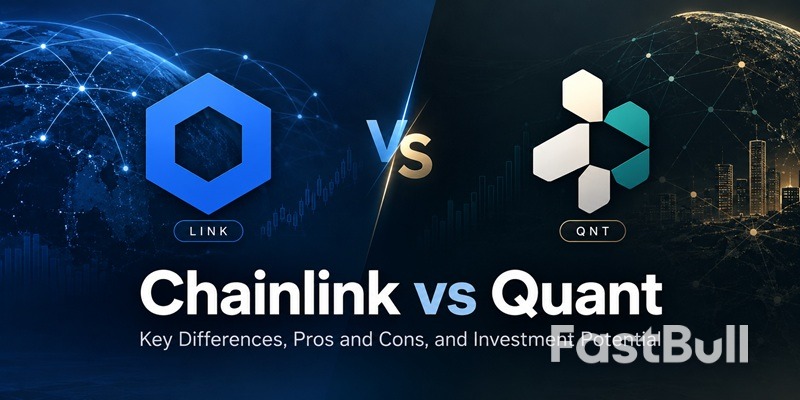
체인링크와 퀀트는 블록체인 인프라에서 서로 다른 문제를 해결하고 있습니다. 체인링크는 블록체인이 신뢰할 수 있는 데이터에 접근하고 네트워크 간 통신을 할 수 있도록 지원하는 반면, 퀀트는 블록체인들을 서로 연결하고 기존 금융 시스템과 연결하는 데 집중하고 있습니다.
금융 활동이 온체인으로 더 많이 이동함에 따라 두 코인 모두 수혜를 입을 수 있지만, 투자 관점은 다릅니다. LINK와 QNT를 비교하고, 가치를 상승시킬 수 있는 요인과 투자자들이 주의해야 할 사항을 살펴보겠습니다.
체인링크와 퀀트는 무엇인가요?
체인링크(LINK)란 무엇인가요?
체인링크는 스마트 계약을 실제 데이터 및 외부 시스템과 연결하는 탈중앙화 오라클 네트워크입니다. 체인링크는 DeFi 애플리케이션을 위한 가격 피드, 자산 담보 검증을 위한 준비금 증명(Proof of Reserve), 지원되는 블록체인 간 데이터 및 토큰 전송을 위한 크로스체인 상호운용성 프로토콜(CCIP) 등의 서비스를 제공합니다.
LINK 토큰은 네트워크 경제를 지원합니다. 서비스 결제에 사용될 수 있으며 스테이킹에도 활용됩니다. 또한, 체인링크 리저브는 적격한 오프체인 기업 수익과 온체인 서비스 수익을 LINK로 전환합니다.
투자 논리는 간단합니다. 더 많은 애플리케이션과 금융 기관이 체인링크를 사용하게 되면 서비스 수요가 증가할 수 있습니다. 관건은 이러한 성장이 얼마나 지속적인 수요로 이어질 것인가입니다.
퀀트(QNT)란 무엇인가?
Quant는 기업 및 금융 기관을 위한 블록체인 상호운용성 기술을 개발합니다. 이 회사의 Overledger 플랫폼은 공통 소프트웨어 계층을 통해 다양한 분산 원장 기술과 기존 시스템을 연결하여 개발자가 여러 네트워크에서 작동하는 애플리케이션을 구축할 수 있도록 지원합니다.
Quant는 또한 기존의 래핑 토큰 방식에 의존하지 않고 블록체인 네트워크를 연결하도록 설계된 멀티레저 롤업인 Quant Fusion을 통해 기관 결제 인프라로 사업을 확장했습니다.
QNT는 Quant 생태계 내에서 플랫폼 서비스에 사용됩니다. 또한 Quant Fusion에 참여하는 신뢰 노드를 위한 네이티브 토큰이자 스테이킹 메커니즘으로도 사용됩니다.
체인링크와 달리 퀀트는 기업 인프라 및 금융 워크플로우에 더욱 집중하고 있습니다. 퀀트의 장기적인 전망은 기관들이 이러한 기능을 널리 사용되는 상용 서비스로 전환하는지 여부에 달려 있습니다.
출처: Quant Overledger 및 Quant Fusion .
LINK와 QNT 비교 분석
| 특징 | 체인링크(LINK) | 퀀트(QNT) |
|---|---|---|
| 주요 초점 | 오라클 서비스 및 크로스체인 인프라 | 기업 블록체인 상호운용성 |
| 핵심 기술 | 데이터 피드, CCIP, 준비금 증명 | 오버레저, 퀀트 퓨전 |
| 대상 사용자 | DeFi 개발자, 기관, 자산 발행자 | 은행, 기업, 금융기관 |
| 토큰 유틸리티 | 서비스 결제, 스테이킹 및 네트워크 경제학 | 플랫폼 서비스 및 퓨전 스테이킹 |
| 최대 공급 | 10억 링크 | 14,612,493 QNT |
Sources: Chainlink supply data and the QNT token contract on Etherscan.
Chainlink vs Quant: Key Differences
Technology and Use Cases
The main difference is what each project connects.
Chainlink provides data and services that smart contracts need to operate reliably. For example, a lending protocol can use its price feeds to determine collateral values, while CCIP can help an application move tokens between supported networks.
Quant focuses on interoperability between different ledger systems and financial infrastructure. A bank exploring tokenized deposits, for instance, needs a way to connect its existing systems with blockchain-based applications without rebuilding its entire technology stack.
There is overlap in cross-chain infrastructure, but the projects approach the problem from different directions.
Adoption and Partnerships
Chainlink has demonstrated its technology in institutional finance. In November 2024, Swift, UBS Asset Management and Chainlink announced the successful completion of a pilot for settling tokenized fund subscriptions and redemptions using Swift’s network.
Quant has made progress in a different area. According to UK Finance, its platform was used for the Great British Tokenised Deposit initiative, which completed its first live customer transactions in September 2026.
These are meaningful developments, but neither should be treated as proof of widespread commercial adoption. Pilots demonstrate that technology can work in specific settings; recurring usage and revenue are what investors need to see next.
Sources: Swift’s announcement on Chainlink and UBS and UK Finance.
Token Utility and Supply
LINK has a maximum supply of 1 billion tokens. QNT has a much smaller fixed supply of 14,612,493 tokens.
That difference often attracts investors to QNT, but a lower token supply does not automatically make it more valuable. Market capitalization, demand and the amount of economic activity captured by each token matter more than the number of tokens alone.
LINK has several potential sources of demand, including service payments, staking and the Chainlink Reserve. QNT’s value proposition depends more on demand for Quant’s enterprise services and its role in Quant Fusion.
For both tokens, the key question is whether actual usage creates enough demand to support their valuations.
Chainlink Pros and Cons
Pros of Chainlink
- Broad range of applications: Chainlink serves DeFi, tokenized assets, data delivery and cross-chain transactions.
- Institutional traction: Its work with Swift and UBS shows that its technology has been tested in established financial workflows.
- Potential token demand: Service payments, staking and the Reserve provide several possible links between network activity and LINK demand.
Cons of Chainlink
- Adoption does not guarantee price gains: More integrations do not necessarily mean proportionately higher demand for LINK.
- Supply pressure: LINK has a large maximum supply, and token releases can affect market dynamics.
- Competition: Other oracle and interoperability solutions are competing for developers and institutional customers.
Quant Pros and Cons
Pros of Quant
- Clear enterprise focus: Overledger is designed to connect existing financial systems with multiple blockchains.
- Real-world testing: The UK’s tokenized deposit initiative gives Quant a concrete institutional use case beyond a product announcement.
- Limited supply: QNT’s fixed maximum supply could become relevant if demand for Quant’s services grows significantly.
Cons of Quant
- Commercial adoption remains the key test: Pilot transactions must lead to repeat usage and sustainable business activity.
- Less visible public activity: Investors may find it harder to assess enterprise usage through public blockchain data alone.
- Controlled infrastructure: Quant’s trusted-node model offers institutions greater control, but investors should understand that this differs from the permissionless design of many public blockchain networks.
LINK vs QNT: Investment Potential
What Could Drive LINK Higher?
LINK could benefit from growing demand for oracle services, cross-chain transfers and tokenized financial assets. If more institutions use Chainlink infrastructure in production, service activity could expand beyond its existing DeFi base.
The Chainlink Reserve offers another potential source of demand by converting eligible service revenue into LINK. However, investors should monitor actual revenue conversion, service usage and token supply rather than assume that every new partnership will push the price higher.
What Could Drive QNT Higher?
QNT’s upside depends on Quant turning its enterprise technology into infrastructure that financial institutions use regularly.
Growth in tokenized deposits, digital securities and cross-border settlement could create opportunities for Overledger and Quant Fusion. If that activity generates sustained demand for QNT, its limited supply could become a more important part of the investment case.
The risk is that institutional projects take time to scale. A successful pilot is encouraging, but it does not establish how much recurring demand for QNT will ultimately result.
Risks to Consider Before Investing
Both tokens remain exposed to crypto market volatility, regulatory changes and competition. Even strong project developments may not prevent prices from falling during a broader market downturn.
LINK 투자자는 토큰 공급량과 네트워크 활동이 실질적인 수요로 이어지는지 여부에 주목해야 합니다. QNT 투자자는 기업의 도입, Quant 서비스의 경제성, 그리고 해당 사업에서 QNT가 수행하는 역할에 집중해야 합니다.
국제결제은행의 토큰화와 금융 안정성에 관한 연구 에서 논의된 바와 같이, 더 넓은 토큰화 시장은 거버넌스, 법률 및 운영상의 문제에 직면해 있습니다 .
체인링크와 퀀트, 어느 쪽이 더 나은 투자일까요?
LINK와 QNT는 서로 다른 투자 논리에 부합합니다.
체인링크는 탈중앙화 금융(DeFi), 데이터 서비스, 크로스체인 애플리케이션, 토큰화된 자산 등 광범위한 블록체인 인프라에 투자하고자 하는 투자자에게 적합할 수 있습니다. 다양한 활용 사례는 여러 잠재적 성장 동력을 제공하지만, LINK의 기업 가치는 여전히 토큰 수요로 뒷받침되어야 합니다.
퀀트는 은행 및 기타 금융 기관이 상호 운용 가능한 블록체인 인프라에 점점 더 의존할 것이라고 믿는 투자자들에게 매력적일 수 있습니다. 고정된 공급량이 적다는 점도 일부 투자자에게는 매력적이지만, QNT의 성공 여부는 상업적 채택과 토큰의 경제적 역할에 달려 있습니다.
제 생각에는 LINK는 광범위한 인프라 투자 관점에서 매력적이고, QNT는 기관의 블록체인 도입에 더욱 집중된 투자입니다. 어느 쪽이 항상 더 나은 투자 대상이라고 단정 지을 수는 없습니다. 공급량이나 파트너십 발표보다는 기업 가치, 실제 사용량, 토큰 수요가 훨씬 더 중요합니다.
체인링크와 퀀트 비교 관련 FAQ
체인링크는 퀀트의 경쟁업체인가요?
두 회사는 크로스체인 인프라 측면에서 공통점이 있지만, 핵심 초점은 다릅니다. 체인링크는 오라클 서비스와 크로스체인 연결성을 강조하는 반면, 퀀트는 블록체인과 기업 시스템 간의 상호 운용성에 중점을 둡니다.
체인링크와 퀀트는 협력할 수 있을까요?
체인링크는 데이터와 크로스체인 서비스를 제공하고 퀀트는 다양한 원장 환경을 연결하는 등 두 회사의 기술은 상호 보완적일 수 있습니다. 그러나 잠재적인 호환성을 실제 통합으로 오해해서는 안 됩니다.
Quant에는 스테이킹 기능이 있나요?
네. Quant는 Quant Fusion에서 신뢰할 수 있는 노드를 위한 스테이킹 메커니즘으로 QNT를 사용합니다. 이는 노드 참여 및 네트워크 활동과 연관되어 있으므로, 모든 QNT 보유자가 스테이킹 보상을 받을 수 있다고 가정하기보다는 공식 프로그램 요건을 확인해야 합니다.
출처: Quant의 Fusion 인프라 설명 .
QNT의 공급량이 왜 이렇게 제한적일까요?
QNT는 최대 공급량이 14,612,493개로 고정되어 있습니다. 공급량 제한은 수요 증가 효과를 증폭시킬 수 있지만, 채택률과 수요가 약한 상태로 유지될 경우 가격 상승을 보장하지는 않습니다.


