


- GBPUSD
- XAUUSD
- XAGUSD
- WTI
- USDX


견적
분석
사용자
7x24
경제 일정
교육
데이터
- 이름
- 최신 값
- 이전






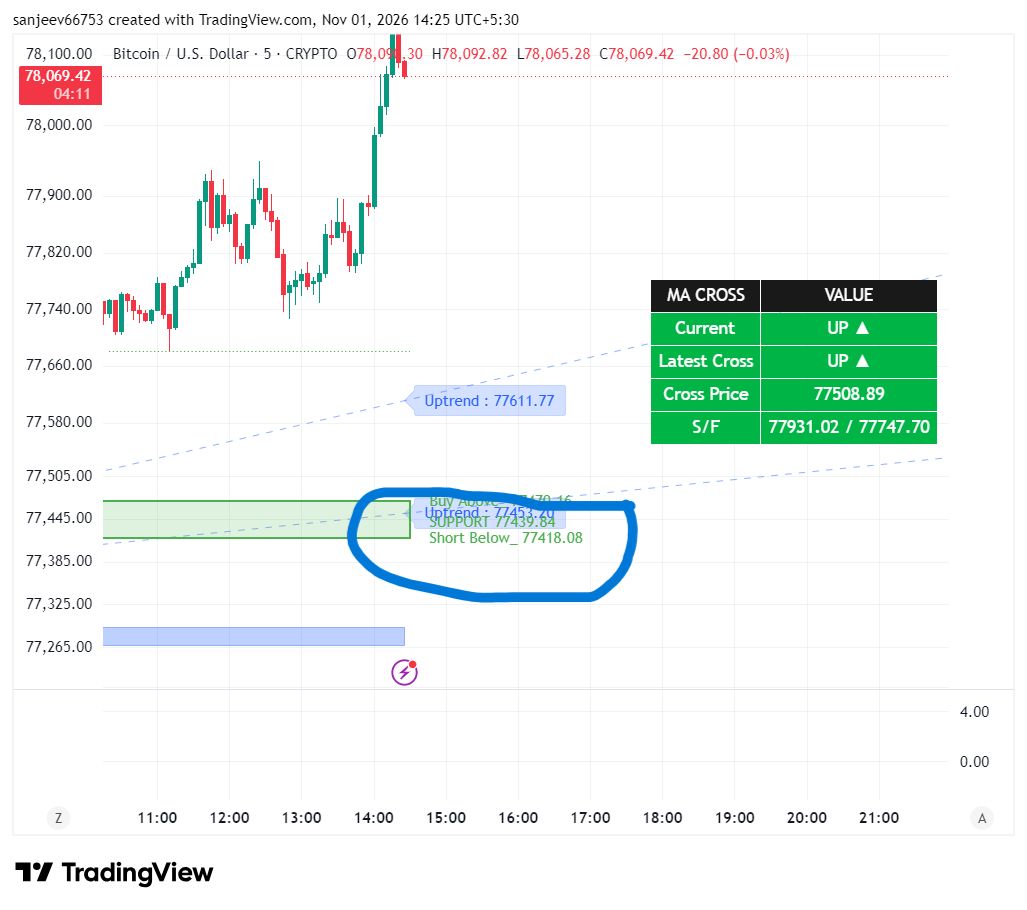
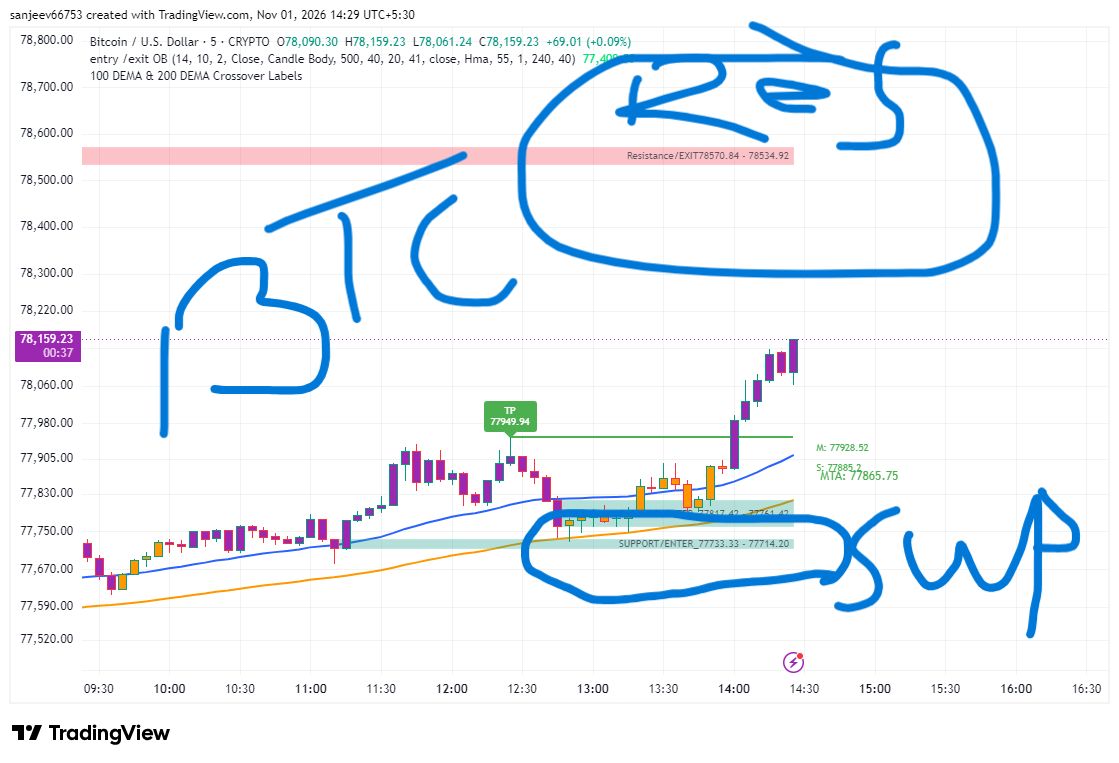



지금 비트코인을 사야 할까요, 아니면 더 나은 가격을 기다려야 할까요? 2026년 비트코인 전망, ETF 자금 유입, 연준 정책, 주요 위험 요소, 그리고 투자자들이 고려해야 할 사항들을 살펴보세요.
비트코인 가격이 약 8만 달러에 거래되면서 투자자들은 늘 그렇듯 "지금 비트코인을 사야 할까, 아니면 추가 하락을 기다려야 할까?"라는 질문에 직면하게 되었습니다. 답은 현재 가격만으로는 판단할 수 없습니다. 연준이 높은 금리를 유지하고, 기관 투자 수요는 변동성이 크며, 시장 신뢰도 또한 여전히 불안정한 상황에서 2026년 후반에 비트코인을 매수하려면 기회와 위험 요소를 면밀히 검토해야 합니다.
목차
장기적인 관점을 가진 투자자라면 지금 비트코인을 매수하는 것이 좋을 수 있지만, 서둘러 큰 금액을 투자할 이유는 거의 없습니다. 단기 트레이더에게 시장은 여전히 불확실하며, 추가 하락 가능성도 충분히 있습니다.
비트코인 가격이 약 8만 달러에 도달하면서, 과거처럼 투자자들이 가격이 떨어질 때마다 매수하도록 부추겼던 상승세는 더 이상 이어지지 않고 있습니다. 매수자들은 더욱 신중하게 가격을 선택하고 있으며, 금리 인상과 전반적인 경제 상황에 대한 우려가 투자 심리에 계속해서 영향을 미치고 있습니다.
그것은 두 가지 다른 기회를 만들어냅니다.
비트코인의 미래를 믿는 장기 투자자들은 현재 가격을 점진적으로 투자 비중을 늘릴 수 있는 기회로 여길 수 있습니다. 하지만 단기 투자자들은 시장이 안정화되었다는 더 확실한 증거를 기다리는 것이 유리할 수 있습니다.
| 투자자 유형 | 지금이 구매하기 좋은 시기일까요? |
|---|---|
| 장기 투자자 (3~5년 이상) | 점진적인 구매가 합리적일 수 있습니다. |
| 단기 트레이더 | 확인을 기다리면 시간적 위험을 줄일 수 있습니다. |
| 비트코인 첫 구매자 | 소액 투자부터 시작하는 것을 고려해 보세요. |
| 투자자가 급히 자금이 필요합니다 | 비트코인은 변동성이 너무 클 수 있습니다. |
| 빠른 반등을 기대하는 투자자 | 완치 여부가 확인되지 않은 고위험군 |
핵심적인 차이점은 투자 계획에 부합해서 비트코인을 사는 것과 가격이 하락해서 사는 것 사이에 있습니다.
단순히 가격이 낮다고 해서 반드시 좋은 거래라는 보장은 없습니다.
비트코인이 직면한 가장 큰 어려움 중 하나는 더 넓은 금융 환경에서 비롯됩니다.
2026년 10월 28일, 연방준비제도는 기준금리를 3.75%~4.00%로 동결했습니다. 이번 결정은 9월에 금리가 다시 상승한 데 따른 것으로, 당시 인플레이션은 여전히 높은 수준을 유지하고 있었습니다.
연방준비제도의 공식 발표 에 따르면 경제 활동은 여전히 견조하지만, 정책 입안자들은 인플레이션을 목표치인 2%로 되돌리는 데 여전히 집중하고 있다.
비트코인의 경우, 금리가 높을수록 상대적으로 안전하고 이자를 지급하는 투자 상품이 더 매력적으로 보이기 때문에 이는 중요한 문제입니다.
투자자들이 국채에서 의미 있는 수익을 얻을 수 있다면, 암호화폐와 같은 자산에 투자하여 위험을 감수하려는 의지가 줄어들 수 있습니다.
Bitcoin does not always move in the opposite direction of interest rates. However, expectations about monetary policy can strongly influence demand, particularly during periods of uncertainty.
If inflation cools and the Fed eventually shifts toward easier policy, Bitcoin could benefit from improving liquidity and investor confidence.
If interest rates remain elevated or rise further, the recovery could take longer.
Institutional investment has become an important part of Bitcoin's market structure.
Since U.S. spot Bitcoin exchange-traded funds launched in January 2024, investors have gained a more convenient way to obtain Bitcoin exposure through traditional brokerage accounts.
These funds can generate substantial buying demand, but they can also amplify selling pressure when investors withdraw capital.
Recent activity illustrates the uncertainty.
U.S. spot Bitcoin ETFs experienced approximately $635.6 million in net outflows on October 22, 2026. However, flows subsequently improved, with roughly $137.3 million entering the funds on October 28.
The latest three-session inflow streak totaled approximately $424 million.
These figures suggest institutional demand has not disappeared, but it remains inconsistent.
For investors considering whether to buy Bitcoin now, the direction of ETF flows over several weeks is more useful than any single trading day.
Consistent inflows could support a recovery. Renewed heavy outflows would suggest that investors remain cautious.
Bitcoin's price is influenced not only by economic conditions but also by expectations.
When prices rise quickly, investors often become more willing to buy, believing that further gains are likely. During downturns, the opposite happens.
Even relatively positive developments may fail to produce sustained rallies when market confidence is weak.
This is one reason Bitcoin can remain under pressure despite continued institutional participation.
A meaningful recovery would likely require more than a few positive trading sessions. Buyers need to demonstrate that they can absorb selling pressure and maintain higher prices.
Bitcoin's strongest investment argument remains its limited supply and established position within the cryptocurrency market.
Its maximum supply is capped at 21 million coins, and new issuance declines through periodic halving events.
Unlike traditional currencies, Bitcoin's issuance schedule is governed by its protocol rather than discretionary central-bank decisions.
This scarcity has helped support its reputation as a potential long-term store of value.
Bitcoin also benefits from several developments that were less established in earlier market cycles:
These developments do not guarantee higher prices, but they make Bitcoin's market fundamentally different from its early years.
For investors who believe adoption will continue expanding, a multi-year holding period may be more appropriate than attempting to predict the next weekly move.
Bitcoin's current price must also be considered against market conditions.
A decline from previous highs does not necessarily mean an asset is undervalued. Bitcoin has no conventional earnings or cash flows that investors can use to calculate a stock-style valuation.
Instead, its price depends heavily on supply, demand, liquidity, and expectations about future adoption.
On October 21, blockchain analytics firm Glassnode identified an important area of overhead supply between approximately $85,000 and $87,500.
That region could become a challenge if Bitcoin attempts another recovery.
A sustained move above it would strengthen the argument that buyers are regaining control. Failure to break through could leave Bitcoin vulnerable to further selling.
Meanwhile, the $80,000 area has attracted buying interest, but support levels are not guaranteed to hold.
Investors should treat these prices as reference points rather than precise predictions.
Bitcoin's next major move will likely depend on a combination of institutional demand, monetary policy, and investor sentiment.
| Factor | Bullish Scenario | Bearish Scenario |
|---|---|---|
| Federal Reserve | Inflation cools and policy becomes more supportive | Rates stay elevated or rise |
| Spot Bitcoin ETFs | Sustained net inflows | Persistent net outflows |
| Market sentiment | Buyers regain confidence | Risk aversion intensifies |
| Bitcoin price action | BTC reclaims key resistance | BTC loses important support |
| Global liquidity | Financial conditions ease | Liquidity tightens |
A stronger recovery could emerge if inflation moderates, ETF inflows become more consistent, and Bitcoin begins holding above important resistance levels.
Improving demand from institutional investors would be particularly encouraging because it could provide buying pressure beyond short-term speculative trading.
A broader recovery in risk appetite could also help.
However, these factors need to translate into sustained market demand. Positive headlines alone are unlikely to support a lasting rally.
The main downside risk is that economic conditions remain restrictive while demand weakens.
A renewed inflation problem could keep interest rates elevated. Heavy ETF withdrawals could add selling pressure, and a breakdown below the $80,000 region could encourage additional selling.
Bitcoin has historically experienced drawdowns exceeding 50% during major bear markets. Investors should not assume that institutional adoption has eliminated this possibility.
Even if Bitcoin's long-term outlook remains constructive, its price can fall substantially before recovering.
For investors who want Bitcoin exposure but are uncertain about the timing, dollar-cost averaging (DCA) offers an alternative to making a single large purchase.
Instead of investing all available capital immediately, DCA involves purchasing a fixed dollar amount at regular intervals.
For example, an investor planning to allocate $1,200 could compare the following approaches.
| Strategy | Example | Main Trade-Off |
|---|---|---|
| Lump-sum investment | Buy $1,200 immediately | Full exposure to the next price move |
| Monthly DCA | Buy $200 monthly for six months | Reduces dependence on one entry price |
| Gradual entry | Buy $400 now and spread $800 over four months | Combines immediate exposure with flexibility |
| Wait for confirmation | Hold cash until the trend improves | May avoid further declines but miss a rebound |
DCA does not guarantee profits or prevent losses. If Bitcoin continues falling, regular purchases will still lose value.
It can, however, reduce the pressure of choosing a single entry point.
For someone investing over several years, that may be more practical than trying to identify the exact market bottom.
Investors should also consider transaction fees, portfolio concentration, and whether they can afford to leave the money invested through prolonged downturns.
Some investors prefer to time Bitcoin purchases around its four-year halving cycle.
The most recent halving occurred in April 2024, reducing the block subsidy from 6.25 BTC to 3.125 BTC. The next halving is expected around 2028.
Historically, Bitcoin has experienced major bull markets following halvings, although each cycle has unfolded differently.
The difficulty is that halving events are widely anticipated. Their effects are not necessarily immediate, and prices can be influenced by many other factors.
The growth of spot Bitcoin ETFs, changing institutional participation, and macroeconomic conditions may also affect how future cycles develop.
Waiting until the next halving does not guarantee a better purchase price.
Likewise, buying today simply because another halving is approaching would overlook the risks that Bitcoin faces in the meantime.
For long-term investors, portfolio allocation and entry discipline may matter more than the halving calendar.
Rather than trying to predict Bitcoin's next price movement, investors can evaluate whether buying makes sense under their own circumstances.
Consider four questions before making a decision.
1. Can you hold Bitcoin for at least three to five years?
A longer investment horizon provides more time to withstand volatility, although it does not guarantee recovery.
2. Could you tolerate a 30%–50% decline?
Bitcoin can experience severe drawdowns. If such a loss would force you to sell or create financial hardship, your position may be too large.
3. 비상시를 대비한 충분한 자금을 이미 마련해 두셨나요?
필수적인 지출이나 단기적인 의무 이행에 필요한 자금은 일반적으로 비트코인 가격 변동에 좌우되어서는 안 됩니다.
4. 계획에 따라 구매하시나요, 아니면 놓칠까 봐 두려워서 구매하시나요?
명확한 투자 전략은 투자 규모, 투자 비중 확대 시점, 그리고 투자 비중 축소를 정당화할 수 있는 상황을 명확히 정의해야 합니다.
오늘 가격이 올해 최저치가 될지 여부를 판단하려는 것보다 이러한 질문들이 훨씬 더 유용합니다.
장기 투자자라면 지금 비트코인을 매수하는 것이 합리적일 수 있지만, 현재 시장 상황은 모든 자금을 투자하기에 적절한 시기라는 명확한 신호를 주지 않습니다.
약 8만 달러 수준에서 비트코인은 제한된 공급량, 기관 투자자의 접근성, 그리고 확고한 시장 지위를 바탕으로 여전히 유망한 장기 투자 대상으로 여겨지고 있습니다.
하지만 단기 전망은 여전히 불확실합니다. 높은 금리, 불균형적인 ETF 수요, 그리고 불안정한 투자 심리가 가격 변동성을 지속시킬 수 있습니다.
장기적인 투자 목표를 가진 투자자는 최적의 진입 가격을 기다리기보다는 점진적인 매수를 선호할 수 있습니다. 반면 단기 수익에 초점을 맞춘 투자자는 확실한 경기 회복세를 기다리는 것이 더 나을 수 있습니다.
궁극적으로 투자 결정은 다음 주 비트코인 가격이 오를지 여부보다는 투자 대상 선정 기준, 투자 기간, 위험 감수 능력에 부합하는지 여부에 더 달려 있어야 합니다.
본 기사는 정보 제공 목적으로만 작성되었으며 투자 조언을 구성하지 않습니다.

728 RM B 7/F GEE LOK IND BLDG NO 34 HUNG TO RD KWUN TONG KLN HONG KONG


주식, FX, 상품, 선물, 채권, ETF 또는 암호화폐와 같은 금융 자산 거래의 손실 위험은 상당할 수 있습니다. 중개인에게 자금을 예치할 경우, 이 자금이 전부 손실될 수도 있습니다. 따라서 귀하의 상황과 재정 상황에 비추어 그러한 거래가 귀하에게 적합한지 신중하게 고려해야 합니다.
본인 스스로 나름대로 철저히 조사를 하거나 재무 관련 상담가와 상의하지 않고는 이러한 투자는 고려해서는 안됩니다. 이런 절차 없이 투자할 경우, 귀하의 재정 상태와 투자 요구 사항을 알지 못한 상태에서 하는 투자이기 때문에 당사의 웹 콘텐츠는 귀하에게 적합하지 않을 수 있습니다. 당사의 재무 정보가 최신으로 업데이트 되는 데는 지연이 있을 수 있고, 부정확한 내용이 포함될 수도 있으므로 모든 거래 및 투자 결정에 대한 책임은 투자자 본인의 몫입니다. 회사는 귀하의 자본 손실에 대해 책임을 지지 않습니다.
웹사이트의 허가 없이 웹사이트 그래픽, 텍스트 또는 상표를 복사할 수 없습니다. 이 웹사이트에 포함된 콘텐츠 또는 데이터에 대한 지적 재산권은 해당 공급자 및 거래소 판매자에게 있습니다.




