


- WTI
- XAUUSD
- XAGUSD
- USDX


견적
분석
사용자
7x24
경제 일정
교육
데이터
- 이름
- 최신 값
- 이전












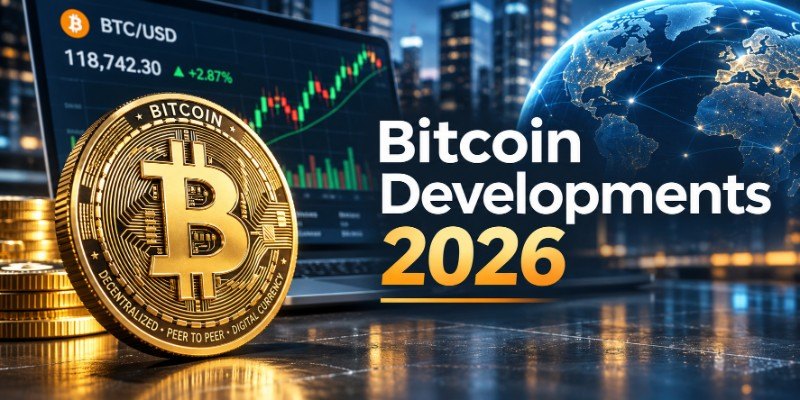
2026년 비트코인(BTC) 관련 주요 동향을 살펴보세요. ETF 유입, 미국 암호화폐 정책, 시장 변동성, 거래소 보안, 채굴 트렌드 등 다양한 주제를 다룹니다.
2026년에도 비트코인은 글로벌 금융 시장에서 가장 주목받는 자산 중 하나로 남겠지만, 그 미래는 더욱 복잡해지고 있습니다. 기관 투자 수요, 현물 ETF 유입, 미국 정치 상황, 시장 변동성, 그리고 보안 우려 등이 비트코인의 전망을 좌우하고 있으며, 투자자들은 장기적인 도입과 단기적인 위험 사이의 균형을 재평가하고 있습니다.
목차
비트코인은 11월 초 상당한 매도 압력에 직면했습니다. 11월 5일, BTC는 24시간 만에 약 5% 하락하여 7만 6천 달러를 약간 웃도는 수준에서 거래되며 9월 이후 최저치를 기록했습니다. 이러한 하락세는 전반적인 기술주 매도세와 맞물려 비트코인이 전통적인 금융 시장에 얼마나 민감한지를 보여주었습니다.
이러한 약세는 어려운 10월에 이은 것입니다. 비트코인은 10월을 약 77,500달러로 마감하며 약 7.3% 하락했고, 2025년 10월 최고치였던 122,000달러를 크게 밑도는 수준에 머물렀습니다. 기술주 가치 평가, 차입 비용 및 정치적 불확실성에 대한 우려가 위험 자산에 대한 수요를 약화시켰습니다.
비트코인은 종종 대안 금융 자산으로 소개되지만, 단기적인 가격 변동은 전반적인 투자자 심리를 반영하는 경우가 많습니다. 투자자들이 성장주나 투기성 투자에 대한 비중을 줄이면 암호화폐 시장도 비슷한 매도 압력에 직면할 수 있습니다.
이는 비트코인의 장기 투자 가치가 사라졌다는 의미는 아닙니다. 다만 기관 투자 참여가 비트코인을 거시 경제 상황, 유동성 변화 또는 시장 심리 변화로부터 보호해주지 못했다는 것을 보여줄 뿐입니다. 월스트리트저널은 11월 5일자 보도에서 기술주 매도세와 비트코인 하락 사이의 연관성을 강조했습니다.
비트코인 현물 상장지수펀드(ETF)는 암호화폐 시장에 영향을 미치는 가장 중요한 요소 중 하나로 남아 있습니다. 투자자들은 ETF를 통해 개인 키를 직접 관리하거나 개인 지갑에 비트코인을 보유하지 않고도 기존 증권 계좌를 이용하여 비트코인에 투자할 수 있습니다.
21Shares의 11월 2일 분석에 따르면, 미국 현물 비트코인 ETF는 2026년 7월부터 9월까지 약 79,800 BTC(약 62억 달러 상당)를 축적했습니다. 이는 같은 기간 신규 채굴된 41,300 BTC의 거의 두 배에 달하는 수치입니다.
해당 펀드들은 2분기에 약 48억 달러의 순유출을 경험했기 때문에 3분기의 매수세 회복은 주목할 만합니다. 그러나 비트코인 기준으로 측정한 3분기 매수량의 약 91%가 비교적 짧은 두 기간에 집중되었습니다. 따라서 수요는 상당했지만 고르게 분포되지 않았습니다.
ETF flows are useful indicators of market confidence, but they do not prove that demand will remain permanent. Fund purchases can absorb part of the newly issued supply and coins sold by existing holders, while sustained redemptions can add selling pressure.
The key question is whether institutional demand can remain resilient during volatility. 21Shares' Q3 2026 Bitcoin analysis provides further details on ETF accumulation and newly mined supply.
US political developments have become another important factor for Bitcoin in November 2026. The midterm elections resulted in Democrats gaining control of both chambers of Congress, creating a different political environment for the cryptocurrency industry during the remainder of Donald Trump's presidency.
The Trump administration has pursued a relatively supportive approach toward digital assets. Its initiatives have included establishing a strategic Bitcoin reserve, expanding access to cryptocurrency-related financial products and introducing a federal regulatory framework for stablecoins.
A different balance of power in Congress could complicate additional crypto-friendly legislation. Lawmakers can influence financial regulation through legislation, hearings, oversight and budget decisions. Investors will watch whether proposed frameworks receive sufficient bipartisan support and whether future oversight requirements become stricter.
A change in congressional control does not automatically reverse existing policies. Executive agencies retain important responsibilities in financial supervision and enforcement, so the regulatory outlook will depend on several institutions.
For Bitcoin, the main concern is regulatory uncertainty rather than an immediate change to its legal status. A slower legislative process could affect institutional participation, cryptocurrency businesses and financial products linked to BTC.
Security returned to the center of cryptocurrency market discussions following the reported Binance hack in late October 2026. The incident was particularly significant because Binance is one of the world's largest cryptocurrency exchanges and the reported theft reached approximately $6.3 billion.
The breach raised questions about exchange infrastructure, internal access controls and customer-asset protection. It also highlighted the distinction between Bitcoin as a decentralized network and the centralized platforms used to trade and store it.
An exchange security breach does not automatically indicate a vulnerability in Bitcoin's underlying blockchain. Instead, it raises questions about custody arrangements, operational controls, wallet security and the protection of customer funds.
These concerns matter to institutional investors because large Bitcoin positions often depend on professional custodians and third-party infrastructure. Even when the blockchain continues operating normally, weaknesses in the surrounding financial infrastructure can undermine confidence.
Bitcoin's November 5 decline reflected several pressures rather than one isolated event, with security concerns combining with political and macroeconomic uncertainty.
Bitcoin's network security remains strong, but mining profitability has become more complicated in 2026. Miners must balance electricity costs, hardware efficiency, competition and revenue from block rewards and transaction fees.
According to Hashrate Index's November 2 weekly report, Bitcoin's seven-day average network hashrate declined 2.7% to approximately 1,062 EH/s. Mining difficulty increased 5.5% to 148.36 trillion following the October 29 adjustment.
Mining revenue also weakened. Average hashprice fell 8.7% over the week to $32.86 per PH/s per day. Transaction fees contributed only around 0.55% of miners' block reward revenue during the reported week.
These figures highlight pressure on less efficient mining operations. Companies with cheaper electricity and newer equipment generally have more flexibility when Bitcoin prices decline, while operators with higher costs may struggle to remain profitable.
When competition increases, miners need more computing power to maintain their share of block rewards. Even if Bitcoin prices remain stable, higher difficulty and electricity expenses can reduce operating margins.
The next difficulty adjustment, estimated for around November 13, will provide another indication of mining competition. Hashrate Index projected a possible reduction of approximately 2.8%, although the estimate could change as additional blocks are produced.
Mining profitability influences the distribution of network computing power and the incentives supporting Bitcoin's security. However, short-term hashrate changes do not necessarily mean the network is becoming fundamentally less secure. Hashrate Index's November 2 report provides further details on mining conditions.
Bitcoin development in 2026 is not limited to price performance and institutional investment. Transaction infrastructure and long-term network security remain important areas of activity.
The Lightning Network, designed to facilitate faster and cheaper Bitcoin payments, recorded increased channel-opening activity toward the end of October. Amboss reported that 1,567 public channels were opened between October 26 and November 1, a 7.3% weekly increase.
However, public Lightning capacity declined 6.2% over the same period to 3,246 BTC. More channels do not necessarily mean greater payment liquidity or adoption, and private channels are excluded from public network statistics.
The Lightning Network aims to improve payment usability without requiring every transaction to be recorded directly on the main blockchain. Its development could support additional payment applications, although liquidity, user experience and network accessibility remain challenges.
Quantum computing security is another emerging issue. On November 5, Blockstream reported that researchers had advanced post-quantum signature work from a Liquid deployment to a draft Bitcoin proposal.
The proposal explores ways to protect digital signatures against potential future quantum computing threats. It remains a draft, not an adopted Bitcoin protocol upgrade. The research nevertheless shows that developers are considering longer-term security challenges.
Together, these developments address two aspects of Bitcoin's evolution: improving transaction efficiency and preparing for potential technological risks. Neither guarantees immediate price appreciation, but both contribute to discussions about long-term usefulness and resilience.
Several indicators can help investors assess Bitcoin's next move. Rather than relying only on price predictions, market participants can monitor institutional demand, regulation, mining and network activity.
These indicators should be considered together. Rising institutional demand may support BTC prices, but deteriorating macroeconomic conditions could still limit buying activity. Likewise, technology improvements do not necessarily translate into immediate market gains.
ETF 자금 유입, 정치적 발표, 거래소 사건과 같은 단기적인 촉매 요인은 가격에 빠르게 영향을 미칠 수 있습니다. 반면 채굴 인프라, 결제 시스템 도입, 프로토콜 연구는 일반적으로 더 오랜 기간에 걸쳐 발전합니다.
2026년 비트코인의 미래는 전통 금융, 암호화폐 인프라, 그리고 세계 경제 상황 간의 상호작용에 의해 점점 더 좌우될 것입니다.
현물 ETF는 기관 투자자들의 접근성을 강화했지만, 정치적 상황 변화와 거래소 보안 사고는 시장의 외부 위험을 드러냈습니다. 채굴 경제, 라이트닝 네트워크 활동, 양자 컴퓨팅 이후 보안 연구 또한 비트코인이 단순한 투기 자산의 역할을 넘어 지속적으로 진화하고 있음을 보여줍니다.
3분기 ETF 매수세는 기관 투자자들이 신규 비트코인 상당량을 흡수할 수 있음을 보여주었습니다. 그러나 집중 매수와 그에 따른 시장 약세는 투자자들이 비트코인 유입이 지속적으로 이어질 것이라고 가정해서는 안 된다는 점을 시사합니다.
2026년 비트코인(BTC) 최신 뉴스 및 주요 동향을 주시하는 투자자들에게 핵심 질문은 단순히 가격이 회복될 것인가 하는 문제가 아닙니다. 기관 투자 수요, 네트워크 개발, 그리고 시장 신뢰도가 지속 가능한 성장 사이클을 뒷받침할 만큼 충분히 강화될 수 있을지가 관건입니다.
비트코인의 장기적인 위상은 여전히 중요하지만, 향후 추세는 시장이 이러한 어려움에 얼마나 효과적으로 대처하느냐에 달려 있습니다. 앞으로 몇 주 동안 11월의 매도 압력이 일시적인 조정인지 아니면 더 장기적인 조정의 시작인지 드러날 수 있을 것입니다.

728 RM B 7/F GEE LOK IND BLDG NO 34 HUNG TO RD KWUN TONG KLN HONG KONG


주식, FX, 상품, 선물, 채권, ETF 또는 암호화폐와 같은 금융 자산 거래의 손실 위험은 상당할 수 있습니다. 중개인에게 자금을 예치할 경우, 이 자금이 전부 손실될 수도 있습니다. 따라서 귀하의 상황과 재정 상황에 비추어 그러한 거래가 귀하에게 적합한지 신중하게 고려해야 합니다.
본인 스스로 나름대로 철저히 조사를 하거나 재무 관련 상담가와 상의하지 않고는 이러한 투자는 고려해서는 안됩니다. 이런 절차 없이 투자할 경우, 귀하의 재정 상태와 투자 요구 사항을 알지 못한 상태에서 하는 투자이기 때문에 당사의 웹 콘텐츠는 귀하에게 적합하지 않을 수 있습니다. 당사의 재무 정보가 최신으로 업데이트 되는 데는 지연이 있을 수 있고, 부정확한 내용이 포함될 수도 있으므로 모든 거래 및 투자 결정에 대한 책임은 투자자 본인의 몫입니다. 회사는 귀하의 자본 손실에 대해 책임을 지지 않습니다.
웹사이트의 허가 없이 웹사이트 그래픽, 텍스트 또는 상표를 복사할 수 없습니다. 이 웹사이트에 포함된 콘텐츠 또는 데이터에 대한 지적 재산권은 해당 공급자 및 거래소 판매자에게 있습니다.




