


- GBPUSD
- XAUUSD
- XAGUSD
- WTI
- USDX


견적
분석
사용자
7x24
경제 일정
교육
데이터
- 이름
- 최신 값
- 이전











omodihot
ID: 5387652
 NULL_CELL

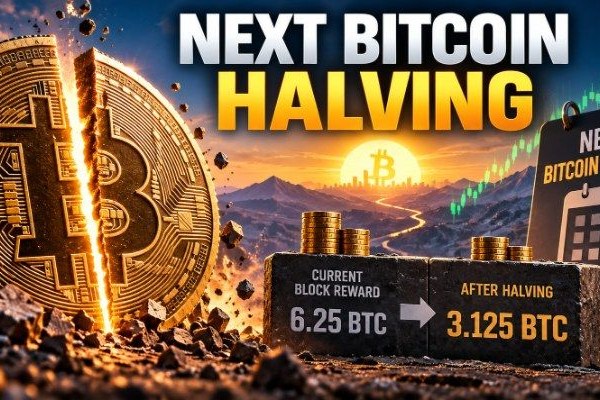
다음 비트코인 반감기는 언제일까요? 예상되는 2028년 날짜, 채굴 보상 변화, 과거 가격 추세, 그리고 다음 반감기가 비트코인에 미칠 영향에 대해 알아보세요.
다음 비트코인 반감기는 2028년 4월로 예상되며, 이때 채굴 보상은 블록당 3.125 BTC에서 1.5625 BTC로 감소할 것입니다. 이는 2024년 4월 이후 다섯 번째 비트코인 반감기입니다. 이전 반감기들은 종종 큰 가격 상승을 예고했지만, 이번 반감기는 기관 투자자, ETF, 그리고 글로벌 경제 상황의 영향이 점점 더 커지는 시장 환경에서 발생할 것입니다.
목차
다음 비트코인 반감기는 2028년 4월, 블록 높이 1,050,000에서 발생할 것으로 예상됩니다 . 비트코인 블록체인은 달력 시간이 아닌 블록 개수를 기준으로 반감기를 측정하기 때문에 정확한 날짜는 확정되지 않았습니다.
비트코인은 약 10분마다 새로운 블록을 생성하도록 설계되었습니다. 하지만 실제 블록 생성 시간은 변동이 심하기 때문에, 예상되는 반감기 날짜는 네트워크 진행 상황에 따라 달라질 수 있습니다.
다가오는 행사에 대한 주요 정보는 다음과 같습니다.
| 세부 사항 | 다음 비트코인 반감기 |
|---|---|
| 예상 날짜 | 2028년 4월 |
| 반감수 | 제오 |
| 블록 높이 | 1,050,000 |
| 현재 블록 보조금 | 3.125 BTC |
| 새로운 블록 보조금 | 1.5625 BTC |
| 절감 | 50% |
| 이전 반감기 | 2024년 4월 20일 |
| 반감기 이후 | 2032년 출시 예정 |
가장 중요한 숫자는 1,050,000입니다. 비트코인 블록 높이가 이 수치에 도달하면 네트워크 합의 규칙에 따라 보조금 감소가 자동으로 이루어집니다.
비트코인 반감기 일정은 예측 가능하지만, 달력상의 날짜는 추정치입니다.
네트워크는 평균 블록 생성 시간을 약 10분으로 유지하기 위해 2,016 블록마다 채굴 난이도를 조정합니다. 따라서 채굴 능력의 변화와 블록 생성 시간의 단기적인 변동으로 인해 예상 출시일이 앞당겨지거나 늦춰질 수 있습니다.
행사가 가까워질수록 예측은 더욱 정확해질 것입니다.
비트코인 반감기는 채굴자가 블록체인에 블록을 성공적으로 추가할 때 보상으로 받는 새로운 비트코인의 수를 줄입니다.
이 과정은 약 4년마다, 즉 21만 블록마다 자동으로 발생합니다. 이는 비트코인의 공급량을 조절하는 메커니즘 중 하나입니다.
비트코인이 2009년에 출시되었을 때 채굴자들은 블록당 50 BTC를 받았습니다. 이 보조금은 네 번에 걸쳐 절반으로 줄어들어 현재는 3.125 BTC입니다.
2028년 반감기로 인해 블록 보조금이 1.5625 BTC로 줄어들 것입니다.
비트코인의 목표 속도인 하루 144개 블록 생성을 기준으로 하면 변화는 다음과 같습니다.
| 공급 지표 | 반감 전 | 반감기 이후 |
|---|---|---|
| 블록당 BTC | 3.125 BTC | 1.5625 BTC |
| 일일 신규 BTC | 450 BTC | 225 BTC |
| 연간 신규 BTC | 약 164,250 BTC | 약 82,125 BTC |
| 연간 발행량 감소 | — | 50% |
실제 일일 블록 생산량은 변동이 있기 때문에 이 수치는 대략적인 값입니다.
The halving does not reduce the Bitcoin already held by investors. It only slows the creation of new coins.
Miners also continue collecting transaction fees, which are separate from the block subsidy.
Bitcoin has a maximum supply of 21 million coins. Halving gradually reduces new issuance until the final fraction of a bitcoin is expected to be mined around 2140.
After the 2028 event, annual new issuance will represent a smaller percentage of the circulating supply.
That increasing scarcity is central to Bitcoin's investment narrative. However, a slower supply increase does not automatically translate into higher prices. Demand still determines whether buyers are willing to pay more.
Bitcoin has experienced four halvings since its launch. Each reduced mining rewards by 50%, but the surrounding market conditions were very different.
| Halving Date | Block Height | Reward Before | Reward After |
|---|---|---|---|
| November 28, 2012 | 210,000 | 50 BTC | 25 BTC |
| July 9, 2016 | 420,000 | 25 BTC | 12.5 BTC |
| May 11, 2020 | 630,000 | 12.5 BTC | 6.25 BTC |
| April 20, 2024 | 840,000 | 6.25 BTC | 3.125 BTC |
| April 2028 (estimated) | 1,050,000 | 3.125 BTC | 1.5625 BTC |
Historical halving dates and reward changes can be checked against the Bitcoin blockchain explorer.
Bitcoin's first three halvings were followed by substantial bull markets, although the gains did not occur immediately.
These figures illustrate a historical pattern rather than a reliable formula for future returns.
The 2024 cycle was particularly important because the launch of US spot Bitcoin ETFs in January 2024 gave investors a new route into the market.
Bitcoin's price was no longer responding only to its traditional four-year supply cycle. Institutional flows, monetary policy, and broader financial-market conditions were also playing significant roles.
Will Bitcoin rise after the next halving?
A lower issuance rate could support prices if demand remains stable or increases. However, the halving itself does not guarantee a rally, and investors should be cautious about treating previous cycles as a forecast.
The impact will depend on how much buying demand exists when the new supply reduction takes effect.
In a bullish environment, strong ETF inflows, growing institutional adoption, and favorable financial conditions could amplify the impact of reduced issuance.
After the halving, miners will collectively receive approximately 225 fewer newly created BTC per day than before.
If demand rises while new supply falls, Bitcoin could face upward price pressure.
The strongest bullish case would involve sustained investment inflows rather than speculation around the halving date alone.
Bitcoin could also experience a relatively muted reaction.
Because the halving is known years in advance, some of its expected impact may already be reflected in market prices.
ETF inflows, interest rates, liquidity, and investor positioning could matter more than the mechanical supply reduction over shorter periods.
In this scenario, Bitcoin might trade sideways or experience substantial volatility before establishing a longer-term trend.
A halving cannot protect Bitcoin from falling demand.
If financial conditions tighten, investors reduce risk exposure, or institutional funds experience sustained outflows, Bitcoin could decline despite slower issuance.
Mining companies could also face financial pressure as their block subsidy revenue falls.
The important distinction is that Bitcoin's supply schedule is predictable, but its future demand is not.
A new all-time high is possible, but there is no dependable price target that can be calculated from the halving alone.
Bitcoin's historical cycles suggest that major rallies can develop over the months following a halving. Yet the sample size is small, and each cycle has involved different economic conditions.
Rather than relying on a specific prediction, investors should watch whether institutional demand, market liquidity, and broader risk appetite support a sustained increase in Bitcoin's market capitalization.
The fifth Bitcoin halving will occur in a more mature market than the early events of 2012 and 2016.
Three factors deserve particular attention.
Spot Bitcoin ETFs have made Bitcoin accessible through conventional brokerage and investment accounts.
By 2028, ETF flows could have a significant influence on Bitcoin demand. Large inflows might absorb newly issued coins and existing market supply, while outflows could create selling pressure.
Investors can follow US spot Bitcoin ETF developments through official SEC filings.
Bitcoin often reacts to changes in financial conditions.
Lower interest rates and improving liquidity may encourage investment in risk assets, including cryptocurrencies. Conversely, tighter monetary policy can weaken demand.
A halving that coincides with favorable economic conditions may produce a different market response from one occurring during a recession or financial crisis.
Mining companies will face another sharp reduction in block subsidy revenue in 2028.
Miners with expensive electricity, older equipment, or heavy debt may struggle if Bitcoin's price and transaction-fee revenue do not compensate for the decline.
Some could shut down equipment or sell BTC reserves to cover operating costs.
Bitcoin's difficulty adjustment helps the network adapt to changes in mining participation, but the transition may still affect mining profitability and industry competition.
Investors do not need to wait until the halving date to understand its potential impact.
Several indicators can provide a clearer picture of market conditions as 2028 approaches:
For long-term investors, the halving may be more useful as a supply milestone than as a precise trading signal.
Trying to buy immediately before the event or sell at an assumed cycle peak carries significant timing risk.
The next Bitcoin halving is expected in April 2028, at block height 1,050,000. The exact date will depend on how quickly new blocks are mined.
No. Bitcoin's next scheduled halving is in 2028. There was no halving in 2025 either; the previous event took place in April 2024.
The block subsidy will fall from 3.125 BTC to 1.5625 BTC. Miners will still receive transaction fees in addition to the subsidy.
Bitcoin has historically experienced major rallies following several halvings, but future gains are not guaranteed. Demand, institutional investment, and economic conditions will be crucial.
The following halving is expected around 2032, at block height 1,260,000, when the block subsidy will fall to 0.78125 BTC.
The next Bitcoin halving in April 2028 will cut new BTC issuance in half, reducing the block subsidy to 1.5625 BTC. It is a predictable change to Bitcoin's supply, not a guaranteed catalyst for higher prices.
더 중요한 질문은 투자 수요가 공급 감소를 의미 있게 만들 만큼 충분히 증가할 것인가 하는 점입니다. 2028년까지 ETF 유입, 기관 투자 참여, 그리고 글로벌 유동성은 비트코인 가격에 반감기 자체만큼이나 큰 영향을 미칠 수 있습니다.
투자자들에게 이번 행사는 주목할 만한 가치가 있지만, 날짜 자체보다는 행사를 둘러싼 전반적인 시장 상황이 더 중요할 것입니다.

728 RM B 7/F GEE LOK IND BLDG NO 34 HUNG TO RD KWUN TONG KLN HONG KONG


주식, FX, 상품, 선물, 채권, ETF 또는 암호화폐와 같은 금융 자산 거래의 손실 위험은 상당할 수 있습니다. 중개인에게 자금을 예치할 경우, 이 자금이 전부 손실될 수도 있습니다. 따라서 귀하의 상황과 재정 상황에 비추어 그러한 거래가 귀하에게 적합한지 신중하게 고려해야 합니다.
본인 스스로 나름대로 철저히 조사를 하거나 재무 관련 상담가와 상의하지 않고는 이러한 투자는 고려해서는 안됩니다. 이런 절차 없이 투자할 경우, 귀하의 재정 상태와 투자 요구 사항을 알지 못한 상태에서 하는 투자이기 때문에 당사의 웹 콘텐츠는 귀하에게 적합하지 않을 수 있습니다. 당사의 재무 정보가 최신으로 업데이트 되는 데는 지연이 있을 수 있고, 부정확한 내용이 포함될 수도 있으므로 모든 거래 및 투자 결정에 대한 책임은 투자자 본인의 몫입니다. 회사는 귀하의 자본 손실에 대해 책임을 지지 않습니다.
웹사이트의 허가 없이 웹사이트 그래픽, 텍스트 또는 상표를 복사할 수 없습니다. 이 웹사이트에 포함된 콘텐츠 또는 데이터에 대한 지적 재산권은 해당 공급자 및 거래소 판매자에게 있습니다.




