• commercio
  • Quotazioni
  • Copia
  • Concorso
  • 24/7
  • Calendario
  • FAQ
  • Chat
Filtro
SIMBOLO
ULTIMO
OFFERTA
CHIEDERE
ALTO
BASSO
VARIAZIONE NETTA.
%CHG.
SPREAD
FONTE
SPX
S&P 500 Index
7512.77
7512.77
7512.77
7621.78
7512.77
-79.63
-1.05%
--
--
DJI
Dow Jones Industrial Average
52098.41
52098.41
52098.41
52521.48
52096.38
-198.68
-0.38%
--
--
IXIC
NASDAQ Composite Index
24933.54
24933.54
24933.54
25423.09
24896.26
-432.54
-1.71%
--
--
USDX
US Dollar Index
103.090
103.090
103.170
103.173
102.940
+0.020
+ 0.02%
--
--
EURUSD
Euro / US Dollar
1.10478
1.10478
1.10486
1.10725
1.10426
-0.00064
-0.06%
--
--
GBPUSD
Pound Sterling / US Dollar
1.32359
1.32359
1.32370
1.32506
1.32177
+0.00012
+ 0.01%
--
--
XAUUSD
Gold / US Dollar
3881.74
3881.74
3882.15
3922.97
3872.76
+4.65
+ 0.12%
--
--
WTI
Light Sweet Crude Oil
88.121
88.121
88.151
88.576
86.859
+0.376
+ 0.43%
--
--

Account Comunità

Conti Segnale
--
Conti Redditizi
--
Conti in Perdita
--
Vedi altro

Diventa un fornitore di segnali

Vendi segnali e ottieni entrate

Vedi altro

Guida al Copy Trading

Inizia con facilità e fiducia

Vedi altro

Account di Segnale per Membri

Tutti gli Account di Segnale

Miglior Rendimento
  • Miglior Rendimento
  • Miglior P/L
  • Miglior MDD
Ultima 1 Settimana
  • Ultima 1 Settimana
  • Ultimo 1 Mese
  • Ultimo 1 Anno

Tutti i Contest

  • Tutto
  • Consiglia
  • Azioni
  • Criptovalute
  • Banche centrali
  • Aggiornamenti su Trump
  • Notizie in evidenza
Vedi solo notizie principali
Condividi

Il principale contratto future sull'argento di Shanghai ha perso il 2,00% durante la giornata, attestandosi attualmente a 11.815,00 yuan/kg.

Condividi

Il Ministero della Difesa russo ha dichiarato che le forze armate russe hanno attaccato una nave mercantile che trasportava rifornimenti militari in mare aperto e due locomotive ferroviarie nei pressi della stazione ferroviaria di Sherbika, nella regione di Odessa.

Condividi

Il Ministero della Difesa russo ha dichiarato che due sottostazioni nella regione di Sume sono state attaccate; queste sottostazioni fornivano energia elettrica ad aziende del settore della difesa e a centri logistici.

Condividi

L'indice S&P 500 è sceso dell'1,1%, mentre il Nasdaq Composite ha perso l'1,62%.

Condividi

I legislatori statunitensi hanno chiesto a Kessler, funzionario del Dipartimento del Commercio nominato dal presidente Trump, e al consulente legale generale di Nvidia di presenziare a un'audizione a Capitol Hill.

Condividi

Il presidente turco Erdogan: Continueremo a collaborare con il Qatar per prevenire la ripresa del conflitto nella regione del Golfo.

Condividi

L'ufficio del presidente turco Erdogan ha dichiarato che la Turchia e il Qatar hanno firmato un accordo di difesa congiunta.

Condividi

Dai documenti del tribunale emerge che è stato depositato un atto d'accusa sostitutivo nel caso di Cole Thomas Allen, il sospettato della sparatoria contro Trump.

Condividi

I funzionari dell'UE hanno fissato al 18 novembre la nuova scadenza per la nomina del nuovo capo economista e del nuovo responsabile dei mercati presso la Banca centrale europea.

Condividi

Secondo l'agenzia di stampa iraniana Tasnim, un'esplosione è stata udita a Jizan, nel sud dell'Arabia Saudita.

Condividi

Logan della Federal Reserve: La compensazione centralizzata delle operazioni di riacquisto della Fed consentirà ai fondi della Fed di fluire in modo più efficiente verso una gamma più ampia di mercati.

Condividi

Logan della Federal Reserve: La Federal Reserve dovrebbe estendere l'orario di apertura del suo sportello di sconto includendo i fine settimana e i giorni festivi.

Condividi

Logan della Federal Reserve: La Federal Reserve dovrebbe rafforzare ulteriormente la propria prontezza operativa per concedere prestiti agli istituti finanziari designati.

Condividi

Logan della Federal Reserve: Sono lieto di constatare i progressi compiuti dalle banche dal 2023 nel migliorare la loro preparazione operativa per accedere ai fondi di emergenza.

Condividi

Il presidente della Federal Reserve, Logan, ha affermato: "È prudente che il Federal Open Market Committee rafforzi gli strumenti a supporto del funzionamento del mercato senza però fornire stimoli economici non necessari".

Condividi

Logan della Federal Reserve: La Federal Reserve dovrebbe sviluppare e utilizzare le proprie capacità di compensazione centralizzata.

Condividi

Logan della Federal Reserve: Il mercato dei titoli del Tesoro statunitensi al momento funziona bene e le negoziazioni procedono senza intoppi, nonostante la significativa volatilità dei tassi di interesse.

Condividi

Il ministro degli Esteri iracheno ha affermato che le restrizioni statunitensi sui valichi di frontiera tra Iraq e Iran sono difficili da far rispettare per l'Iraq, e che tali restrizioni equivalgono a sanzioni contro il popolo iracheno.

Condividi

Fitch Ratings: I tassi di insolvenza per le società statunitensi che emettono titoli garantiti da mutui commerciali (CMBS) hanno raggiunto un livello record a ottobre.

Condividi

Le azioni di Nvidia hanno aperto in rialzo, ma poi sono crollate bruscamente, perdendo oltre l'1%, dopo aver raggiunto un picco di +1,6% nelle prime fasi di contrattazione.

TEMPO
ATTO
FCST
PREC
IMPATTO
Stati Uniti d'America Variazioni settimanali delle scorte di olio da riscaldamento EIA

A:--

F: --

P: --

WTI
  • WTI
  • XAUUSD
  • XAGUSD
  • USDX
Stati Uniti d'America Asta di obbligazioni a 30 anni Avg. Prodotto

A:--

F: --

P: --

XAUUSD
  • XAUUSD
  • XAGUSD
  • WTI
  • USDX
Stati Uniti d'America Saldo di bilancio (Ottobre)

A:--

F: --

P: --

USDX
  • USDX
  • XAUUSD
  • XAGUSD
  • WTI
Argentina IPC MoM (Ottobre)

A:--

F: --

P: --

XAUUSD
  • XAUUSD
  • XAGUSD
  • WTI
  • USDX
Stati Uniti d'America Detenzione settimanale di titoli del Tesoro da parte delle banche centrali estere

A:--

F: --

P: --

USDX
  • USDX
  • XAUUSD
  • XAGUSD
  • WTI
Il presidente della Federal Reserve di New York, Williams, ha pronunciato un discorso.
Francia MoM finale IAPC (Ottobre)

A:--

F: --

P: --

EURUSD
  • EURUSD
  • XAUUSD
  • XAGUSD
  • WTI
  • USDX
Cina, continente Crescita dei prestiti in essere su base annua (Ottobre)

A:--

F: --

P: --

XAUUSD
  • XAUUSD
  • XAGUSD
  • WTI
  • USDX
Rapporto sul mercato petrolifero dell'AIE
Cina, continente Offerta di moneta M2 su base annua (Ottobre)

A:--

F: --

P: --

XAUUSD
  • XAUUSD
  • XAGUSD
  • WTI
  • USDX
Cina, continente M0 Offerta di moneta su base annua (Ottobre)

A:--

F: --

P: --

XAUUSD
  • XAUUSD
  • XAGUSD
  • WTI
  • USDX
Cina, continente Offerta di moneta M1 su base annua (Ottobre)

A:--

F: --

P: --

XAUUSD
  • XAUUSD
  • XAGUSD
  • WTI
  • USDX
Cina, continente Scala di finanziamento sociale (Ottobre)

A:--

F: --

P: --

XAUUSD
  • XAUUSD
  • XAGUSD
  • WTI
  • USDX
Zona Euro Bilancia commerciale (non SA) (Settembre)

A:--

F: --

P: --
EURUSD
  • EURUSD
  • XAUUSD
  • XAGUSD
  • WTI
  • USDX
Zona Euro Bilancia commerciale (SA) (Settembre)

A:--

F: --

P: --
EURUSD
  • EURUSD
  • XAUUSD
  • XAGUSD
  • WTI
  • USDX
Zona Euro Occupazione su base annua (SA) (Terzo trimestre)

A:--

F: --

P: --

EURUSD
  • EURUSD
  • XAUUSD
  • XAGUSD
  • WTI
  • USDX
Zona Euro PIL rivisto su base annua (Terzo trimestre)

A:--

F: --

P: --

India Deposito su base annua

A:--

F: --

P: --

XAUUSD
  • XAUUSD
  • XAGUSD
  • WTI
  • USDX
Brasile Vendite al dettaglio su base mensile (Settembre)

A:--

F: --

P: --

XAUUSD
  • XAUUSD
  • XAGUSD
  • WTI
  • USDX
Canada Vendite all'ingrosso su base mensile (SA) (Settembre)

A:--

F: --

P: --
USDCAD
  • USDCAD
  • XAUUSD
  • XAGUSD
  • WTI
  • USDX
Canada Vendite all'ingrosso su base annua (Settembre)

A:--

F: --

P: --

USDCAD
  • USDCAD
  • XAUUSD
  • XAGUSD
  • WTI
  • USDX
Canada Ordini di produzione in sospeso su base mensile (Settembre)

A:--

F: --

P: --

USDCAD
  • USDCAD
  • XAUUSD
  • XAGUSD
  • WTI
  • USDX
Canada Produzione Nuovi Ordini su base mensile (Settembre)

A:--

F: --

P: --
USDCAD
  • USDCAD
  • XAUUSD
  • XAGUSD
  • WTI
  • USDX
Stati Uniti d'America PPI MoM (SA) (Ottobre)

A:--

F: --

P: --
USDX
  • USDX
  • XAUUSD
  • XAGUSD
  • WTI
Stati Uniti d'America PPI su base annua (Ottobre)

A:--

F: --

P: --

USDX
  • USDX
  • XAUUSD
  • XAGUSD
  • WTI
Stati Uniti d'America Core PPI MoM (SA) (Ottobre)

A:--

F: --

P: --
USDX
  • USDX
  • XAUUSD
  • XAGUSD
  • WTI
Stati Uniti d'America PPI core su base annua (Ottobre)

A:--

F: --

P: --

USDX
  • USDX
  • XAUUSD
  • XAGUSD
  • WTI
Canada Inventari di produzione su base mensile (Settembre)

A:--

F: --

P: --

USDCAD
  • USDCAD
  • XAUUSD
  • XAGUSD
  • WTI
  • USDX
Canada Inventario all'ingrosso su base mensile (Settembre)

A:--

F: --

P: --

USDCAD
  • USDCAD
  • XAUUSD
  • XAGUSD
  • WTI
  • USDX
Canada Inventario all'ingrosso su base annua (Settembre)

A:--

F: --

P: --

USDCAD
  • USDCAD
  • XAUUSD
  • XAGUSD
  • WTI
  • USDX
Stati Uniti d'America EIA Weekly Natural Gas Stocks Variazione

--

F: --

P: --

Russia IPC su base annua (Ottobre)

--

F: --

P: --

Stati Uniti d'America Perforazione totale settimanale

--

F: --

P: --

Stati Uniti d'America Trivellazione petrolifera totale settimanale

--

F: --

P: --

Arabia Saudita IPC su base annua (Ottobre)

--

F: --

P: --

Giappone PIL reale trimestrale (Terzo trimestre)

--

F: --

P: --

Giappone PIL nominale preliminare trimestrale (Terzo trimestre)

--

F: --

P: --

UK Indice dei prezzi delle case Rightmove su base annua (Novembre)

--

F: --

P: --

Cina, continente Produzione industriale su base annua (YTD) (Ottobre)

--

F: --

P: --

Cina, continente Tasso di disoccupazione nelle aree urbane (Ottobre)

--

F: --

P: --

Giappone MoM finale della produzione industriale (Settembre)

--

F: --

P: --

Giappone Produzione industriale finale su base annua (Settembre)

--

F: --

P: --

Zona Euro Produzione industriale su base annua (Settembre)

--

F: --

P: --

Zona Euro Produzione industriale su base mensile (Settembre)

--

F: --

P: --

Zona Euro Totale attività di riserva (Ottobre)

--

F: --

P: --

Canada Indice di fiducia economica nazionale

--

F: --

P: --

Stati Uniti d'America Indice di acquisizione dei prezzi manifatturieri della Fed di New York (Novembre)

--

F: --

P: --

Stati Uniti d'America Indice dei nuovi ordini manifatturieri della Fed di New York (Novembre)

--

F: --

P: --

Canada IPC core su base annua (Ottobre)

--

F: --

P: --

Canada IPC core su base mensile (Ottobre)

--

F: --

P: --

Stati Uniti d'America Indice sull’occupazione manifatturiera della Fed di New York (Novembre)

--

F: --

P: --

Stati Uniti d'America Indice manifatturiero della Fed di New York (Novembre)

--

F: --

P: --

Canada IPC su base annua (Ottobre)

--

F: --

P: --

Canada IPC MoM (Ottobre)

--

F: --

P: --

Canada IPC troncato su base annua (SA) (Ottobre)

--

F: --

P: --

UK Tasso di disoccupazione ILO a 3 mesi (Settembre)

--

F: --

P: --

UK Tasso di disoccupazione (Ottobre)

--

F: --

P: --

UK Conteggio dei richiedenti la disoccupazione (Ottobre)

--

F: --

P: --

UK Cambiamento occupazionale dell'ILO su 3 mesi (Settembre)

--

F: --

P: --

UK Stipendio di 3 mesi (settimanale, esclusa la distribuzione) su base annua (Settembre)

--

F: --

P: --

FAQ con gli esperti
    • Tutto
    • Chat
    • Gruppi
    • Amici
    Osaghae Cephas flag
    EuroTrader
    @Osaghae Cephasfollow your plan my friend. Do not fomo into any trades at the moment.
    @EuroTraderok we still locked in on touching grass😇
    Osaghae Cephas flag
    EuroTrader
    . Hold your positions so not change positions by impulse..that would not be good for your account @Osaghae Cephas
    @EuroTraderalright I'll
    登峰造极 flag
    @1999kk.king我加你好友了,通过下大佬
    549R46NQGX flag
    where do i get the orderbook?
    EuroTrader flag
    Osaghae Cephas
    @EuroTraderok we still locked in on touching grass😇
    @Osaghae Cephasbro. You a big boy. Big boys don't ask for grass money. They work for it
    EuroTrader flag
    Osaghae Cephas
    @EuroTraderalright I'll
    @Osaghae Cephasif you chop loss you chop the loss and move on from it
    EuroTrader flag
    Osaghae Cephas
    @EuroTraderok
    @Osaghae CephasThe weekend is upon us. I know you would definitely have to hold the trade over the weekend
    SlowBear ⛅ flag
    登峰造极
    空还是多
    @登峰造极Short everything my friend
    Osaghae Cephas flag
    EuroTrader
    @Osaghae Cephasif you chop loss you chop the loss and move on from it
    @EuroTrader😉😆
    Osaghae Cephas flag
    EuroTrader
    @Osaghae Cephasbro. You a big boy. Big boys don't ask for grass money. They work for it
    @EuroTraderhahah hahaha hahah funny not funny
    Osaghae Cephas flag
    EuroTrader
    @Osaghae CephasThe weekend is upon us. I know you would definitely have to hold the trade over the weekend
    @EuroTradernope oh well maybe I'll 😎
    登峰造极 flag
    SlowBear ⛅
    @登峰造极Short everything my friend
    @SlowBear ⛅ 多还是空
    Osaghae Cephas flag
    EuroTrader
    @Osaghae Cephasbro. You a big boy. Big boys don't ask for grass money. They work for it
    @EuroTradernow u tell me this😖 after saying let's see how things goes on Wednesday once u rap up ur trade😑😑
    SlowBear ⛅ flag
    登峰造极
    @SlowBear ⛅ 多还是空
    @登峰造极What do you wish to trade my friend? Gold or BTC?
    Capri flag
    Capri flag
    friends see you next week,have a good weekend 💕
    登峰造极 flag
    @SlowBear ⛅黄金
    Osaghae Cephas flag
    Capri
    friends see you next week,have a good weekend 💕
    @Caprialright mate see you...
    SlowBear ⛅ flag
    Capri
    @Capri quite interesting, how is the trade playing out now?
    SlowBear ⛅ flag
    登峰造极
    @SlowBear ⛅黄金
    @登峰造极Lovely, then i will suggest a sell in Gold bro, that will be much better
    Digitare qui...
    Aggiungi il nome o il codice della risorsa

      Nessun dato corrispondente

      Tutto
      Consiglia
      Azioni
      Criptovalute
      Banche centrali
      Aggiornamenti su Trump
      Notizie in evidenza
      • Tutto
      • Conflitto Russia-Ucraina
      • Punto di Tensione in Medio Oriente
      • Tutto
      • Conflitto Russia-Ucraina
      • Punto di Tensione in Medio Oriente
      Cerca
      Prodotto

      Grafico Gratis per sempre

      Chiacchierata FAQ con gli esperti
      Filtro Calendario economico Dati Strumenti
      FastBull VIP Caratteristiche
      Magazzino dati Tendenza di mercato Dati istituzionali Tassi di riferimento Macro

      Tendenza di mercato

      Sentimento speculativo Libro degli Ordini Correlazione

      Indicatori principali

      Grafico Gratis per sempre
      Mercato

      Notizie

      24/7 Analisi Educazione

      Ultime opinioni

      Ultimi aggiornamenti

      Segnale

      Copia Classifica Segnale dell'AI Diventa un fornitore di segnali Valutazione dell'IA
      Concorso
      Brokers

      Panoramica I broker Valutazione Classifiche Regolatori Notizia Reclami
      Elenco dei Broker Strumento di Comparazione dei Broker Forex Confronto degli Spread in Tempo Reale Truffa
      FAQ Reclamo Video di Avviso di Truffa Consigli per Rilevare Truffe
      Altro

      Attività commerciale
      Attività
      Reclutamento Chi siamo Pubblicità Centro assistenza

      Etichetta bianca

      Broker API

      API dati

      Plug-in Web

      Programma di affiliazione

      Premi Valutazione dell'Istituzione IB Seminar Evento del Salone Esposizione
      Vietnam Tailandia Singapore Dubai
      Incontro dei tifosi Sessione di Condivisione degli Investimenti
      Summit FastBull Expo BrokersView
      Ricerche recenti
        Principali ricerche
          Quotazioni
          Analisi
          Utente
          24/7
          Calendario economico
          Educazione
          Dati
          • Nome
          • Ultimo
          • Prec

          Visualizza tutti i risultati della ricerca

          Nessun dato

          Scansiona e scarica

          Faster Charts, Chat Faster!

          Scaricamento
          Italiano
          • English
          • Español
          • العربية
          • Bahasa Indonesia
          • Bahasa Melayu
          • Tiếng Việt
          • ภาษาไทย
          • Français
          • Italiano
          • Türkçe
          • Русский язык
          • 简中
          • 繁中
          Apri un Conto
          Cerca
          Prodotto
          Grafico Gratis per sempre
          Mercato
          Notizie
          Segnale

          Copia Classifica Segnale dell'AI Diventa un fornitore di segnali Valutazione dell'IA
          Concorso
          Brokers

          Panoramica I broker Valutazione Classifiche Regolatori Notizia Reclami
          Elenco dei Broker Strumento di Comparazione dei Broker Forex Confronto degli Spread in Tempo Reale Truffa
          FAQ Reclamo Video di Avviso di Truffa Consigli per Rilevare Truffe
          Altro

          Attività commerciale
          Attività
          Reclutamento Chi siamo Pubblicità Centro assistenza

          Etichetta bianca

          Broker API

          API dati

          Plug-in Web

          Programma di affiliazione

          Premi Valutazione dell'Istituzione IB Seminar Evento del Salone Esposizione
          Vietnam Tailandia Singapore Dubai
          Incontro dei tifosi Sessione di Condivisione degli Investimenti
          Summit FastBull Expo BrokersView

          Cos'è la politica monetaria? Come le banche centrali controllano l'inflazione e l'economia

          zhan chen
          Resoconto:

          Cos'è la politica monetaria e come funziona? Scopri come le banche centrali utilizzano i tassi di interesse per controllare l'inflazione, influenzare l'economia e sostenere la crescita.

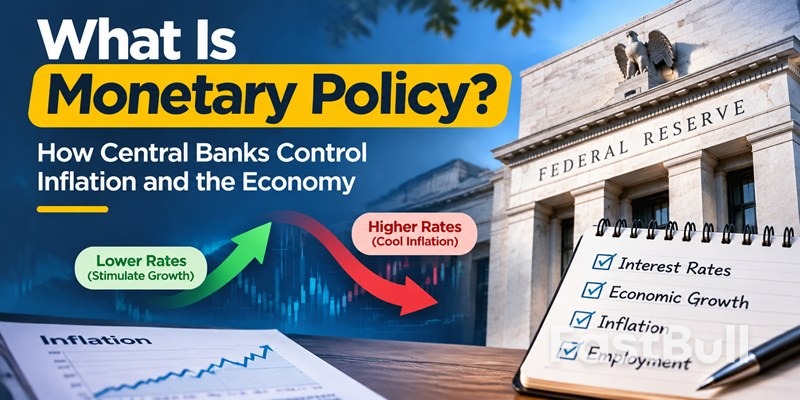
          La politica monetaria è il modo in cui le banche centrali influenzano i tassi di interesse e le condizioni finanziarie per tenere sotto controllo l'inflazione e mantenere stabile l'economia. Quando i prezzi aumentano troppo rapidamente, il costo del prestito può aumentare. Quando la crescita economica rallenta, i costi del prestito possono diminuire. Queste decisioni influenzano ogni aspetto, dai mutui e i risparmi all'occupazione e agli investimenti aziendali.
          Che cos'è la politica monetaria? Come le banche centrali controllano l'inflazione e l'economia_1

          Che cos'è la politica monetaria?

          La politica monetaria si riferisce alle azioni intraprese da una banca centrale per influenzare il costo e la disponibilità di moneta e credito in un'economia. Il suo scopo è mantenere la stabilità dei prezzi e sostenere un'attività economica sostenibile.

          Le banche centrali non controllano direttamente i prezzi pagati dai consumatori o il numero di lavoratori assunti dalle imprese. Influenzano invece le condizioni finanziarie, principalmente attraverso i tassi di interesse, che a loro volta incidono sulla quantità di denaro che le persone prendono in prestito, spendono, risparmiano e investono.

          Consideriamo un semplice esempio. Se l'inflazione aumenta perché consumatori e imprese spendono più velocemente di quanto l'economia riesca a fornire beni e servizi, una banca centrale può aumentare i tassi di interesse. Costi di finanziamento più elevati possono scoraggiare la spesa e ridurre la pressione sui prezzi. Se l'economia rallenta e la disoccupazione aumenta, la banca centrale può abbassare i tassi per incentivare i prestiti e gli investimenti.

          Queste decisioni rappresentano la politica monetaria in azione.

          Quali sono gli obiettivi principali della politica monetaria?

          L'obiettivo principale della politica monetaria è mantenere stabile l'economia, sebbene le responsabilità specifiche varino da paese a paese.

          Negli Stati Uniti, la Federal Reserve ha due obiettivi principali di politica monetaria, comunemente definiti il ​​suo doppio mandato :

          • Stabilità dei prezzi: mantenere un'inflazione bassa e prevedibile in modo che famiglie e imprese possano pianificare le proprie spese e i propri investimenti con maggiore sicurezza.
          • Massima occupazione: sostenere il livello di occupazione più elevato che l'economia può garantire senza generare pressioni inflazionistiche persistenti.

          La Federal Reserve punta a un'inflazione del 2% nel lungo periodo, misurata dall'indice dei prezzi delle spese per consumi personali (PCE). Ciò non significa che i prezzi debbano diminuire del 2% o rimanere completamente invariati. Significa piuttosto che il livello generale dei prezzi dovrebbe aumentare a un ritmo relativamente lento e prevedibile.

          Questi obiettivi possono talvolta entrare in conflitto. Tassi di interesse più bassi possono favorire l'occupazione ma anche aumentare l'inflazione. Tassi più alti possono controllare l'inflazione ma indebolire l'occupazione. I responsabili delle politiche economiche devono valutare attentamente questi effetti, anziché perseguire un obiettivo senza considerare l'altro.

          Chi controlla la politica monetaria?

          La politica monetaria è generalmente gestita dalla banca centrale di un paese, non direttamente dal suo governo.

          Negli Stati Uniti, la politica monetaria è condotta dalla Federal Reserve . Il suo Comitato federale per le operazioni di mercato aperto (FOMC) stabilisce l'intervallo obiettivo per il tasso sui fondi federali, un parametro di riferimento che influenza i costi di finanziamento in tutta l'economia.

          Other central banks perform similar functions, including the European Central Bank (ECB) in the euro area and the Bank of England (BoE) in the United Kingdom. Their mandates and policy frameworks differ, but controlling inflation is a central responsibility.

          Governments influence the economy through taxation and public spending. Those decisions belong to fiscal policy, which is different from monetary policy.

          How Does Monetary Policy Work?

          Monetary policy works by changing financial conditions rather than directly ordering businesses to adjust prices or consumers to spend less.

          Interest rates are the main channel. When a central bank changes its policy rate, the effects spread through financial markets, commercial banks, household borrowing, and business investment. These changes influence demand for goods and services, which eventually affects employment and inflation.

          How Interest Rates Affect Inflation and Economic Growth

          Suppose inflation is running above the central bank's target. Raising interest rates makes borrowing more expensive. Some households delay purchasing homes or cars, while businesses reconsider expansion plans that depend on loans.

          As spending and investment slow, demand puts less pressure on the economy's productive capacity. Businesses may find it harder to raise prices without losing customers, allowing inflation to ease.

          The process generally follows this pattern:

          Higher interest rates → More expensive borrowing → Slower spending and investment → Weaker demand → Lower inflationary pressure.

          Lower interest rates generally work in the opposite direction. They can encourage borrowing and spending, supporting economic growth when demand is weak.

          However, monetary policy does not produce immediate or guaranteed results. It can take months or longer for interest rate changes to affect economic activity and inflation. Longer-term borrowing rates also depend on expectations about future rates, inflation, and financial risks.

          There are limits to what interest rates can achieve. For example, if oil prices rise because of a disruption in global supply, raising rates cannot produce more oil. It can reduce broader demand and prevent inflation from spreading, but it cannot directly resolve the shortage.

          Another important distinction is that lower inflation does not necessarily mean lower prices. If inflation falls from 6% to 2%, prices are still rising, just more slowly than before.

          How Monetary Policy Affects Borrowing, Savings, and Employment

          The effects of monetary policy extend beyond inflation statistics. They influence financial decisions that households and businesses make every day.

          • Mortgages and loans: Higher market interest rates generally increase the cost of new mortgages, car loans, and business financing. Existing fixed-rate loans may be unaffected, while variable-rate borrowers can experience changes more quickly.
          • Savings: Higher policy rates can lead to better returns on savings accounts and short-term deposits, although banks do not always pass along the full increase. Lower rates generally reduce these returns.
          • Business investment: Companies become more cautious about borrowing to open stores, purchase equipment, or expand operations when financing becomes expensive.
          • Employment: Weaker consumer demand and reduced business investment can slow hiring. Conversely, stronger spending may encourage businesses to expand and create jobs.

          These effects are connected. A business facing higher loan costs may postpone opening another location. That decision reduces demand for equipment, construction services, and additional workers.

          Monetary policy therefore affects employment and economic growth indirectly, even though the central bank does not determine individual wages, loan rates, or hiring decisions.

          Expansionary vs. Contractionary Monetary Policy

          Central banks adjust monetary policy according to economic conditions. When growth is weak, they may try to stimulate spending and investment. When inflation is persistently high, they may try to reduce demand.

          These two approaches are known as expansionary monetary policy and contractionary monetary policy.

          When Do Central Banks Use Expansionary Monetary Policy?

          Expansionary monetary policy is generally used when economic activity is weak, unemployment is rising, or inflation is below the central bank's target.

          Central banks can lower policy interest rates or use other measures to ease financial conditions. The aim is to make borrowing and investment more attractive, encouraging households and businesses to increase spending.

          For example, during an economic downturn, a company might delay expanding because sales are falling. Lower financing costs can make new investment more affordable, especially if the company expects demand to recover.

          However, lower rates cannot guarantee stronger growth. If businesses are pessimistic about future sales or consumers are worried about losing their jobs, they may avoid borrowing even when credit is inexpensive.

          Expansionary policy also carries inflation risks. If demand rises faster than the economy can increase production, prices may begin climbing too quickly.

          When Do Central Banks Use Contractionary Monetary Policy?

          Contractionary monetary policy is used when inflation is too high or economic demand is growing at an unsustainable pace.

          Central banks typically raise policy interest rates or tighten financial conditions through other tools. This discourages some borrowing and spending, helping bring demand closer to the economy's available supply.

          For example, if strong consumer demand is allowing businesses to raise prices repeatedly, higher borrowing costs can reduce purchases financed by credit. As demand moderates, businesses may have less room to increase prices.

          The trade-off is slower economic activity. If monetary policy becomes too restrictive, businesses may reduce investment, hiring may weaken, and the economy could enter a recession.

          The difference between the two approaches is summarized below.

          FeatureExpansionary PolicyContractionary Policy
          Main PurposeStimulate economic activityReduce inflationary pressure
          Typical ConditionsWeak growth, rising unemployment, or low inflationHigh inflation or excessive demand
          Interest Rate DirectionGenerally lowerGenerally higher
          Borrowing and SpendingEncouragedDiscouraged
          Employment ImpactMay support hiringMay slow hiring
          Main RiskExcessive inflationRecession and higher unemployment

          Neither approach is inherently better. The appropriate policy depends on whether the economy needs stronger demand or relief from inflationary pressure. Central banks may also keep policy unchanged while assessing whether earlier decisions are having their intended effects.

          What Tools Do Central Banks Use?

          Central banks use several tools to influence interest rates, credit conditions, and the amount of liquidity in the financial system. The exact tools vary by country, but interest rates and open market operations are among the most important.

          Interest Rates and Open Market Operations

          The main monetary policy tool used by the Federal Reserve is its target range for the federal funds rate. This is the interest rate banks charge each other for overnight loans of reserve balances.

          Although the Fed does not directly set mortgage rates, credit card rates, or business loan rates, changes in the federal funds rate influence borrowing costs across financial markets. Banks adjust their lending and deposit rates as funding conditions change.

          The Fed uses several mechanisms to keep short-term market rates within its target range. These include:

          • Interest on Reserve Balances (IORB): The interest the Fed pays banks on the funds they hold in reserve accounts. Changing this rate influences the rates banks are willing to accept when lending money overnight.
          • Overnight Reverse Repurchase Facility: This allows eligible financial institutions, including money market funds, to place funds with the Fed overnight at a specified rate. It helps establish a floor for certain short-term market rates.

          Another important tool is open market operations. These involve the Federal Reserve buying or selling government securities, or conducting short-term repurchase agreements, to manage liquidity and support its interest rate targets.

          For example, when the Fed buys securities, it adds reserve balances to the banking system. When it conducts operations that absorb reserves, it reduces available liquidity. These operations help the Fed implement its monetary policy decisions.

          Quantitative Easing, Quantitative Tightening, and Other Tools

          When adjusting short-term interest rates is not enough to influence financial conditions, central banks can use other measures, including quantitative easing (QE) and quantitative tightening (QT).

          • Quantitative Easing (QE): The central bank purchases large amounts of longer-term government bonds or other securities. These purchases increase demand for the assets and can push down longer-term interest rates, making mortgages and business financing more affordable.
          • Quantitative Tightening (QT): The central bank reduces its balance sheet, usually by allowing securities to mature without fully reinvesting the proceeds. This gradually reduces the central bank's holdings and can tighten financial conditions.

          QE is generally used when an economy needs additional monetary support, particularly when short-term interest rates are already very low. QT is more commonly used when policymakers want to gradually withdraw some of the monetary support provided through earlier asset purchases.

          Other tools include the discount window, through which eligible banks can borrow directly from the Federal Reserve to address short-term funding needs, and forward guidance, which communicates the central bank's likely future policy direction to influence market expectations.

          One distinction is important when looking at U.S. monetary policy: although reserve requirements are often listed in traditional explanations of central bank tools, the Federal Reserve reduced reserve requirement ratios to zero in March 2020. They are not a primary tool in its current operating framework.

          The Fed also ended its balance sheet reduction process on December 1, 2025. Therefore, QT is useful to understand as a monetary policy tool, but it should not be confused with an ongoing Fed policy as of November 2026.

          For a complete overview, see the Federal Reserve's monetary policy tools.

          How Does the Federal Reserve Make Monetary Policy Decisions?

          The Federal Reserve does not raise or lower interest rates simply because inflation changes in one month. Its policymakers examine a range of economic indicators to determine whether the economy needs tighter or looser financial conditions.

          What Factors Influence the Fed's Interest Rate Decisions?

          The Federal Open Market Committee (FOMC) is responsible for setting the direction of U.S. monetary policy. It holds eight regularly scheduled meetings each year to review economic conditions and decide whether to change its policy stance.

          Several factors influence these decisions:

          • Inflation: The Fed examines whether price increases are slowing, accelerating, or remaining above its 2% longer-run target. It also considers whether inflation is broad-based or concentrated in specific categories.
          • Employment: Job creation, unemployment, wage growth, and labor market conditions help policymakers assess whether the economy is overheating or losing momentum.
          • Economic growth: GDP, consumer spending, and business investment show whether overall demand is expanding at a sustainable pace.
          • Inflation expectations: If households and businesses expect prices to keep rising, workers may seek higher wages and companies may increase prices in advance. These expectations can make inflation harder to control.
          • Financial conditions: Credit availability, borrowing costs, asset prices, and broader market conditions help the Fed understand how its previous decisions are affecting the economy.

          The Fed must also consider how long monetary policy takes to work. An interest rate increase may affect new borrowing relatively quickly, but its full impact on consumer spending, business investment, hiring, and inflation can take much longer to appear.

          This is why policymakers look at both current economic data and the likely direction of the economy. Raising rates too aggressively can weaken employment and growth, while waiting too long to address persistent inflation can allow price pressures to become more entrenched.

          What Is the Fed's Current Monetary Policy?

          As of November 13, 2026, the Federal Reserve's latest monetary policy decision was announced on October 28, 2026. The FOMC voted 10–2 to maintain the federal funds rate target range at 3.75% to 4.00%.

          The Committee said economic activity was expanding at a strong pace, supported by resilient domestic spending, productivity growth, and business investment. Job gains had kept pace with the workforce, while inflation remained elevated relative to the Fed's 2% goal.

          The decision was not unanimous. Two FOMC members, Lisa D. Cook and Beth M. Hammack, preferred to raise the target range by another 0.25 percentage point rather than leave rates unchanged.

          This decision illustrates an important point: monetary policy is not determined by inflation alone. The Fed must weigh price stability against employment and economic growth, particularly when different indicators suggest different policy responses.

          Future rate decisions will depend on incoming economic data and how inflation and employment develop. The Fed does not follow a fixed schedule of rate increases or cuts simply because a particular number of months has passed.

          You can check the October 28, 2026 FOMC statement for the official decision and its economic assessment.

          Monetary Policy vs. Fiscal Policy: What's the Difference?

          Monetary policy and fiscal policy are two major ways governments influence economic activity, but they work through different channels and are controlled by different institutions.

          La politica monetaria è gestita dalla banca centrale di un paese e influenza principalmente i tassi di interesse, le condizioni del credito e la liquidità finanziaria. La politica fiscale è determinata dal governo attraverso la tassazione, la spesa pubblica e l'indebitamento.

          Negli Stati Uniti, la Federal Reserve gestisce la politica monetaria, mentre il Congresso e l'amministrazione prendono le decisioni in materia di politica fiscale.

          CaratteristicaPolitica monetariaPolitica fiscale
          Chi lo controlla?Banca centrale, come la Federal ReserveGoverno, compresi il Congresso e l'Amministrazione negli Stati Uniti
          Strumenti principaliTassi di interesse, operazioni di mercato aperto e acquisti di attivitàImposte, spesa pubblica e trasferimenti
          Obiettivo primarioStabilità dei prezzi e occupazioneCrescita economica, servizi pubblici, sostegno al reddito e occupazione.
          Come influisce sull'economiaModifiche ai costi di indebitamento, alle condizioni del credito e agli incentivi alla spesaCambiamenti nel reddito familiare, negli incentivi alle imprese e nella domanda pubblica
          EsempioLa Federal Reserve aumenta i tassi di interesse per ridurre la pressione inflazionistica.Il governo aumenta la spesa per le infrastrutture al fine di sostenere l'attività economica.

          Le due politiche possono agire in sinergia, ma possono anche spingere l'economia in direzioni opposte.

          Ad esempio, durante una recessione, il governo può aumentare la spesa pubblica per sostenere l'occupazione e la domanda dei consumatori, mentre la banca centrale può abbassare i tassi di interesse per incentivare i prestiti e gli investimenti privati. Entrambe le azioni possono favorire la ripresa economica.

          Tuttavia, se il governo aumenta significativamente la spesa pubblica mentre l'inflazione è già elevata, la banca centrale potrebbe dover mantenere tassi di interesse più alti o inasprire la politica monetaria per evitare che l'aumento della domanda spinga al rialzo i prezzi.

          In sintesi, la politica monetaria influenza il costo e la disponibilità di moneta e credito, mentre la politica fiscale modifica direttamente le entrate e la spesa pubblica. Entrambe incidono sulla crescita economica, ma attraverso meccanismi differenti.

          Per maggiori dettagli, si veda la spiegazione della Federal Reserve sulla differenza tra politica monetaria e politica fiscale .

          Conclusione

          La politica monetaria influenza l'inflazione, l'occupazione e la crescita economica modificando i tassi di interesse e le condizioni finanziarie. Comprendere come le banche centrali utilizzano questi strumenti aiuta a spiegare perché le loro decisioni incidono sui prestiti, sul risparmio, sugli investimenti delle imprese e sull'economia in generale.

          Avvertenza sui rischi ed esclusione di responsabilità sugli investimenti
          Comprendi e riconosci che esiste un alto grado di rischio coinvolto nel trading con strategie. Seguire qualsiasi strategia o metodologia di investimento è il potenziale di perdita. Il contenuto del sito viene fornito dai nostri collaboratori e analisti solo a scopo informativo. Tu solo sei l'unico responsabile di determinare se qualsiasi attività di negoziazione, o titolo, o strategia, o qualsiasi altro prodotto è adatto a te in base ai tuoi obiettivi di investimento e alla tua situazione finanziaria.
          Preferiti
          Condividi
          FastBull
          Diritto d'autore © 2026 FastBull Ltd

          728 RM B 7/F GEE LOK IND BLDG NO 34 HUNG TO RD KWUN TONG KLN HONG KONG

          TelegramInstagramTwitterfacebooklinkedin
          App Store Google Play Android Windows
          Prodotto
          Grafico

          Chiacchierata

          FAQ con gli esperti
          Filtro
          Calendario economico
          Dati
          Strumenti
          FastBull VIP
          Caratteristiche
          Funzione
          Quotazioni
          Copy Trading
          Segnale dell'AI
          Concorso
          24/7
          Analisi
          Educazione
          Azienda
          Reclutamento
          Chi siamo
          Contattaci
          Pubblicità
          Scaricamento FastBull
          Centro assistenza
          Feedback
          Accordo per gli utenti
          Politica sulla riservatezza
          Dichiarazione sulla Protezione delle Informazioni Personali di
          Attività commerciale

          Etichetta bianca

          Broker API

          API dati

          Plug-in Web

          Creatore di poster

          Programma di affiliazione

          Informativa sui rischi

          Il trading di strumenti finanziari come azioni, valute, materie prime, futures, obbligazioni, fondi o criptovalute è un'attività ad alto rischio, che include la perdita parziale o totale dell'importo dell'investimento, pertanto il trading non è adatto a tutti gli investitori.

          Quando prendi qualsiasi decisione finanziaria, dovresti condurre la tua due diligence, usare il tuo giudizio e consultare consulenti qualificati. Il contenuto di questo sito Web non è rivolto a te, né prendiamo in considerazione la tua situazione finanziaria o le tue esigenze. Le informazioni contenute in questo sito Web non sono necessariamente fornite in tempo reale, né sono necessariamente accurate. I prezzi forniti su questo sito possono essere forniti dai market maker anziché dalle borse. Qualsiasi decisione commerciale o altra decisione finanziaria presa è di esclusiva responsabilità dell'utente e non è possibile fare affidamento su alcuna informazione fornita tramite il sito Web. Non forniamo alcuna garanzia rispetto a qualsiasi informazione sul sito Web e non siamo responsabili per eventuali perdite commerciali che potrebbero derivare dall'uso di qualsiasi informazione sul sito Web.

          L'uso, la memorizzazione, la riproduzione, la visualizzazione, la modifica, la diffusione o la distribuzione dei dati contenuti in questo sito web sono vietati senza il consenso scritto di questo sito web. I fornitori e gli scambi che forniscono i dati contenuti in questo sito Web mantengono tutti i loro diritti di proprietà intellettuale.

          Accesso non effettuato

          Accedi per accedere a più funzionalità

          Connetti al Broker
          Diventa un fornitore di segnali
          Centro assistenza
          Assistenza clienti
          Modalità scura
          Colori di Salita/Discesa Prezzo

          Login

          Registrati

          Posizione
          Disposizione
          Schermo Intero
          Predefinito su Grafico
          La pagina del grafico si apre per impostazione predefinita quando visiti fastbull.com