


U.S DOJ’s Southeast Asia Scam Crackdown Restrains $1.08B in Crypto—But Victim Recovery Remains Slow
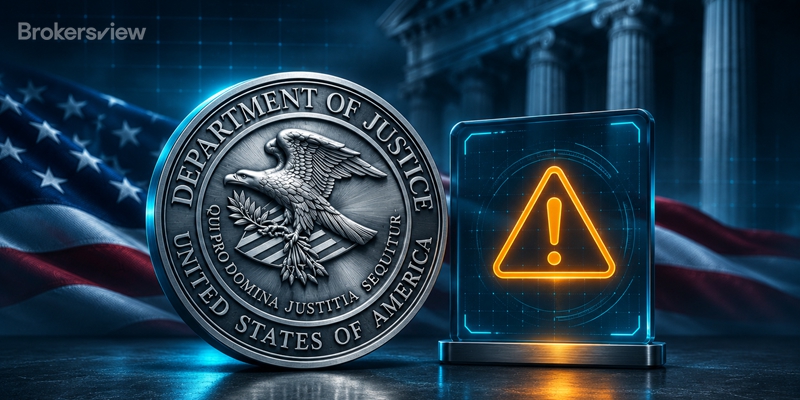
A scam website can vanish overnight; recovering the money takes longer. On November 24, the U.S. Department of Justice (DOJ) announced cumulative enforcement action in more than 400 cases involving over 800 defendants since March 6, including operations targeting Southeast Asian scam compounds and fraudulent investment platforms.
Its Scam Center Strike Force, targeting networks in Cambodia, Laos and Myanmar, has traced and restrained about $1.082 billion in stolen cryptocurrency. This is a cumulative total, not money already returned to victims. Authorities also seized 700 fake crypto-investment websites and Telegram channels supplying laundering services. Agreements with Singapore and Britain support cross-border enforcement.
Recent cases show the networks’ reach. In October, a Chinese national was extradited from the Netherlands over an alleged Cambodia-based investment scam targeting at least 174 U.S. victims. Separately, prosecutors charged six people over fake NFT investments run from Madagascar, alleging the group likely relocated from Cambodia after enforcement action.
Recovery requires wallet tracing, seizure and legal forfeiture before compensation claims can be assessed. On November 16, Connecticut prosecutors announced the seizure and forfeiture of $542,981 in Tether linked to a fake-investment scheme; repayment was not confirmed. DOJ guidance warns that forfeiture and claims reviews can take considerable time, and available funds may cover only part of victims’ losses.
Investors should verify licences, preserve transaction records and report suspected fraud promptly. Beware of paid “recovery” promises: DOJ remission applications are free. Follow BrokersView for investor alerts.
Related Reading


Hottest


Copyright © 2026 FastBull Ltd


Risk Warning
FX trading is of high risk and may not be suitable for all investors. Leverage will create additional risks and loss. Before trading, please carefully consider your investment objectives, experience level and risk tolerance. You may lose part or all of your initial investment; do not invest money that you cannot afford. Educate yourself about the risks associated with FX trading. If you have any questions, please consult an independent financial or tax advisor. Any data and information are provided "as is" and only for information purpose, not for trading or recommendations. Past performance does not predict future results.
Disclaimer
The data contained in this website may not be real-time and accurate. The data and prices on this site are not necessarily provided by the market or exchange, but may be provided by market makers, so prices may be inaccurate and differ from actual market prices. Namely, this price is indicative price only to reflect market trend, and is unfavorable for trading purpose. The provider of the data contained in the Website shall not be liable for any loss incurred by you as a result of your trading activities or reliance on the information contained in the Website.