


Russia's Central Bank Adds 1,665 Entities to Financial Blacklist in 2025
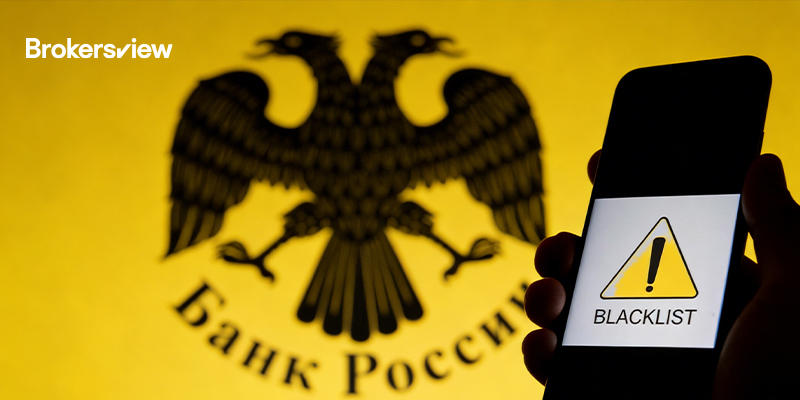
The Bank of Russia continues to actively monitor the financial market for suspicious projects, including those operating in the forex sector and other investment services without the required regulatory approval. As of the start of 2026, the Central Bank's so-called "blacklist" includes 6,966 organisations with signs of illegal activity.
The blacklist has been published by the regulator since June 1, 2021. Over its 4.5-year existence, the list has expanded at an average pace of around 1,500 entries per year. These include companies and online projects identified by the Bank of Russia as showing characteristics of financial pyramids, illegal lenders, or unlicensed professional participants in the securities market.
The regulator identifies illegal market participants through its own monitoring systems as well as reports from individuals and organisations. To curb unlawful financial activity, the Central Bank works to block the websites of such entities, cooperates with law enforcement agencies and other authorised bodies, and engages with foreign regulators to apply additional measures.
At the same time, the methodology behind the compilation of Russia's blacklist remains unclear. It is not known whether the process is fully automated or whether monitoring involves elements of artificial intelligence. What is evident, however, is that the regulator tends to classify online projects with an active Russian-language version as illegal.
In recent years, the blacklist has increasingly expanded beyond traditional forex brokers to include ratings websites, educational courses, pseudo-regulators and similar projects.
Over the course of 2025 alone, the Bank of Russia identified and added 1,665 organisations or websites with signs of illegal activity as professional securities market participants, a category that also covers forex dealers.


Hottest



Copyright © 2026 FastBull Ltd


Risk Warning:
FX trading is of high risk and may not be suitable for all investors. Leverage will create additional risks and loss. Before trading, please carefully consider your investment objectives, experience level and risk tolerance. You may lose part or all of your initial investment; do not invest money that you cannot afford. Educate yourself about the risks associated with FX trading. If you have any questions, please consult an independent financial or tax advisor. Any data and information are provided "as is" and only for information purpose, not for trading or recommendations. Past performance does not predict future results.
Disclaimer:
The data contained in this website may not be real-time and accurate. The data and prices on this site are not necessarily provided by the market or exchange, but may be provided by market makers, so prices may be inaccurate and differ from actual market prices. Namely, this price is indicative price only to reflect market trend, and is unfavorable for trading purpose. The provider of the data contained in the Website shall not be liable for any loss incurred by you as a result of your trading activities or reliance on the information contained in the Website.