


7,087 Online Financial Schemes in Russia 2025: Cryptocurrency, Fraud Patterns, and Enforcement Actions
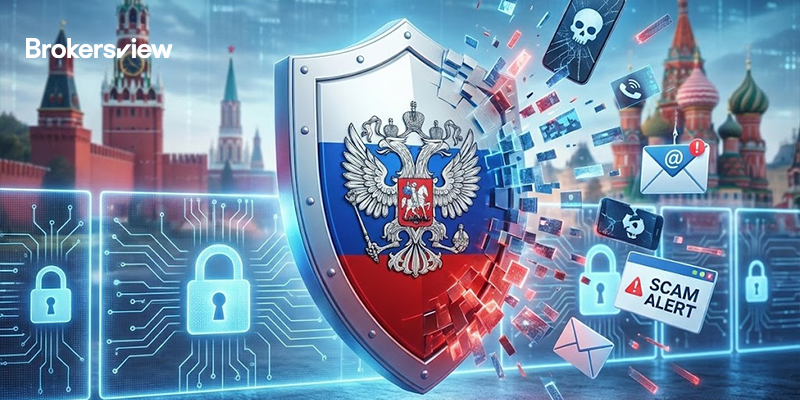
In 2025, Russian regulators uncovered a surge in online financial fraud, identifying 7,087 financial pyramids, pseudo-brokers, and other illicit schemes. The Bank of Russia reported that nearly 80% of these operations ran exclusively online, frequently recycling the same fraudulent projects under multiple names, with some schemes duplicated over 300 times. Criminals increasingly leveraged cryptocurrencies to collect funds, using over 4,600 wallets connected to pyramid schemes and pseudo-brokers. This method allowed operators to maintain anonymity and shield themselves from prosecution, while victims risked not only financial loss but potential legal liability.
Cryptocurrency and Anonymity in Fraud Schemes
Crypto adoption by fraudsters rose sharply in 2025, with 84% of identified scams accepting digital tokens, up from 77% in 2024. Pseudo-brokers and pyramid operators used social media, chat apps, and phone communications to target clients, often without physical offices. Black lenders—1,100 projects operating both online and via temporary offline branches—offered unsecured loans through pseudo-pawnshops and consignment shops. The combination of online platforms and crypto payments enabled rapid scaling of fraudulent operations and complicated enforcement.
Law Enforcement and Regulatory Measures
The Bank of Russia, in collaboration with the Federal Antimonopoly Service and other authorities, blocked 21,500 online resources linked to illegal financial activities. Information collected from identified schemes facilitated over 400 civil lawsuits and prompted more than 650 additional enforcement actions, including account freezes, asset tracking, and criminal investigations. Authorities emphasized monitoring the flow of cryptocurrency, which was increasingly used both to fund schemes and to replenish clients’ accounts at pseudo-brokers.
Data-Driven Insights on Fraud Patterns
Analysis revealed a high concentration of schemes targeting younger audiences, with AI tools occasionally used to simulate legitimacy and attract participants. Fraudsters frequently reused project structures and branding, demonstrating sophisticated replication strategies. In response, regulators are tightening oversight on crypto transactions, with accelerated plans to block foreign exchanges that operate without Russian licenses.
The scale and complexity of online financial fraud in Russia underline a growing intersection of cryptocurrency, money laundering, and digital anonymity, challenging law enforcement and regulatory bodies to adapt rapidly to evolving threats.







Copyright © 2026 FastBull Ltd


Risk Warning
FX trading is of high risk and may not be suitable for all investors. Leverage will create additional risks and loss. Before trading, please carefully consider your investment objectives, experience level and risk tolerance. You may lose part or all of your initial investment; do not invest money that you cannot afford. Educate yourself about the risks associated with FX trading. If you have any questions, please consult an independent financial or tax advisor. Any data and information are provided "as is" and only for information purpose, not for trading or recommendations. Past performance does not predict future results.
Disclaimer
The data contained in this website may not be real-time and accurate. The data and prices on this site are not necessarily provided by the market or exchange, but may be provided by market makers, so prices may be inaccurate and differ from actual market prices. Namely, this price is indicative price only to reflect market trend, and is unfavorable for trading purpose. The provider of the data contained in the Website shall not be liable for any loss incurred by you as a result of your trading activities or reliance on the information contained in the Website.