




 WELL-PERFORMING BROKER










Choosing a broker usually means balancing several practical priorities rather than focusing on one headline feature. Pricing matters, but so do platform access, execution rules, market coverage, regulation, and the protections attached to the account. FISG combines several account structures with MetaTrader access and multi-asset CFD trading, so the details behind those features deserve a closer look.
What Is FISG? Company Background
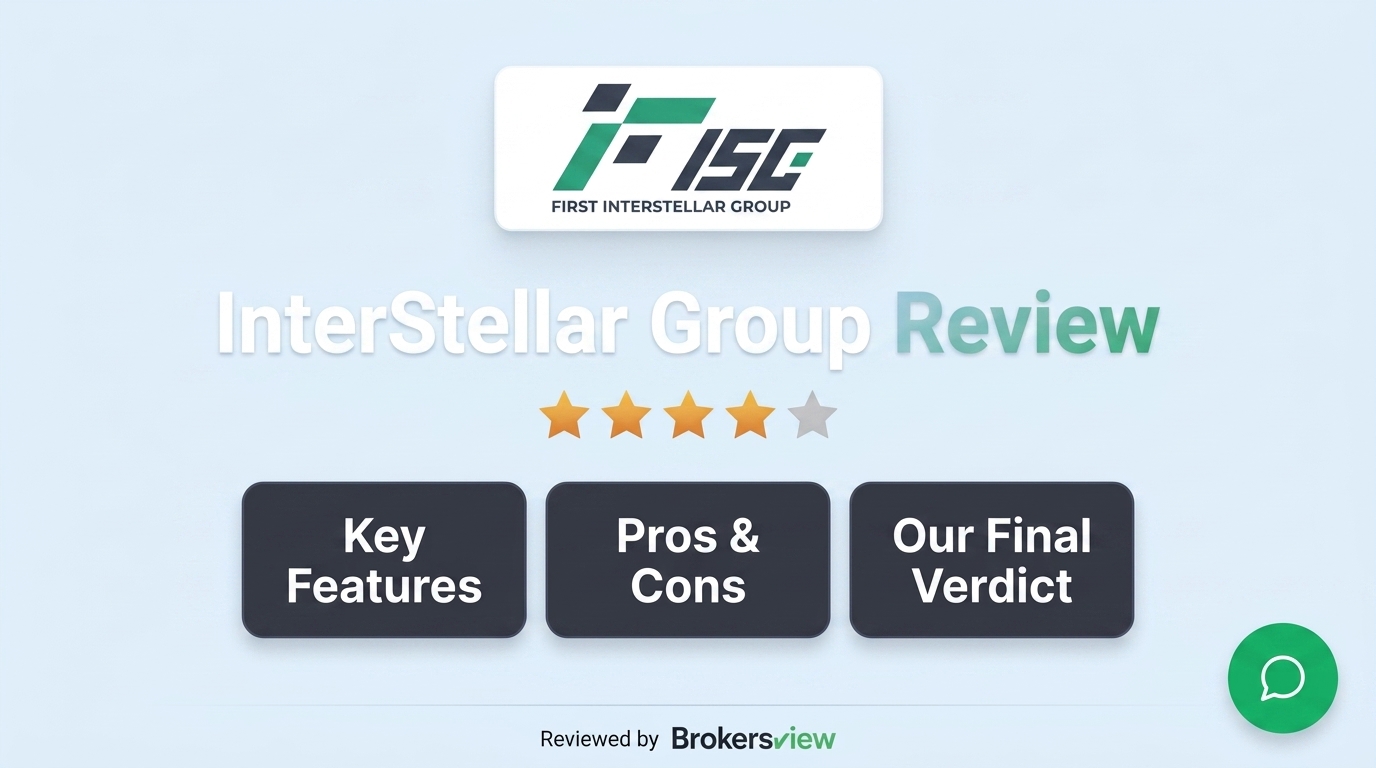
InterStellar Group, commonly presented under the FISG brand, is a forex and CFD broker founded in Europe in 2011. The company states that its services now reach four continents and more than 112,000 clients. Its product range spans six main CFD categories, including forex, metals, energy, indices, stocks, and cryptocurrencies.
The group operates through several legal entities. The First Interstellar Capital Limited, its CySEC-regulated company, is registered in Limassol, Cyprus and has held licence 166/12 since March 2012. FISG has since added regulatory relationships in Seychelles, Australia, and South Africa, giving the brand a broader international structure.
Is FISG Legit and Safe?
FISG has multiple regulated entities, but the protections available to a trader are not identical across the group. The key step is identifying the legal entity named in the account agreement before comparing leverage, compensation arrangements, or other safeguards.
FISG Regulation
The First Interstellar Capital Limited is authorised by the Cyprus Securities and Exchange Commission under licence 166/12. FISG also lists First Interstellar Global Ltd as authorised by the Seychelles Financial Services Authority under licence SD127, while INTERSTELLAR CAPITAL (Pty) Ltd is a South African authorised financial services provider under FSP number 52343.
In Australia, INTERSTELLAR GROUP CAPITAL PTY LTD is presented as an authorised representative under AFS Representative number 001312025, acting as an authorised representative of Wise Harbour Group Pty Ltd. This is different from holding an Australian Financial Services Licence directly, so traders should distinguish the representative status from the broker's other licences.
There is another entity detail worth checking. The main FISG website states that fisg.com is operated by Interstellar Financial Group Limited, a Saint Vincent and the Grenadines company registered as 22770 BC 2015, while the website separately lists the regulated entities above. For that reason, the company name shown during onboarding matters more than the FISG brand name alone.
How Are Client Funds Protected?
Protection varies by entity. FISG states that qualifying clients of The First Interstellar Capital Limited may have access to the Cyprus Investor Compensation Fund, with eligible claims covered up to €20,000. The broker also advertises private insurance coverage of up to €2 million for clients under The First Interstellar Capital Limited and First Interstellar Global Ltd, subject to the policy's eligibility requirements, terms, and exclusions.
The client agreement used by Interstellar Financial Group Ltd defines client bank accounts as segregated from the company's own funds. It also states that negative balance protection applies to retail clients, meaning eligible retail accounts should not lose more than their overall investment under that agreement. These provisions should not automatically be assumed to apply identically to every FISG entity.
Restricted Countries
FISG's current main-site disclosure says CFDs are not offered to residents of the United States, Iran, Canada, the European Union, or China. The broker also states that services are unavailable where local law prohibits their use. Regional eligibility should therefore be checked before registration rather than inferred from FISG's global regulatory footprint.
FISG Fees and Trading Costs
FISG uses different spread structures across its Standard, ECN, and Union accounts. The ECN account displays the tightest quoted spreads, while the Standard and Union options incorporate wider pricing, making account selection an important part of the cost calculation.
Spreads, Commissions and Swap Fees
FISG's live account comparison displays different spreads for the same instruments. At the time checked, EUR/USD was shown at 2.0 on the Standard account, 0.1 on ECN, and 1.6 on Union. XAU/USD was displayed at 3.4, 0.7, and 1.8 respectively. These are live or variable figures rather than guaranteed fixed spreads, so actual pricing can change with market conditions.
The public account table does not provide a complete fixed commission schedule alongside those spreads. FISG's client agreement instead states that commissions may apply to certain instruments and can be charged as either a percentage or a fixed amount, with the applicable figure shown through the trading platform or legal documentation. ECN users should therefore check the full commission basis rather than comparing spreads alone.
Positions held overnight can also incur financing charges. The client agreement describes these as daily swap rates that may change with market conditions, while instrument pages publish current long and short swap information. This makes overnight costs particularly relevant for traders who regularly keep CFD positions open for several sessions.
Non-Trading Fees
One fee is especially important for occasional traders. Under the published client agreement, an account becomes inactive after three calendar months without a deposit or trade and is then charged USD 15 per month. The fee continues until the balance reaches zero and may increase after 12 months of continuous inactivity without a login.
The same agreement provides a useful exception: if a client has several trading accounts and at least one remains active, the inactivity charge does not apply to the other dormant accounts. Bank-transfer withdrawal charges incurred through the banking network are borne by the client, while withdrawals normally return deposited funds through the original funding route.
FISG Trading Platforms
MetaTrader is the core of FISG's platform offering. The broker's 2026 onboarding material lists both MetaTrader 4 and MetaTrader 5 across desktop, web, and mobile. MT4 supports Expert Advisors and custom indicators, while MT5 adds more timeframes, order functions, and an integrated economic calendar for traders who want a broader multi-asset workflow.
There is a platform detail worth confirming before opening a specific account. FISG's account-type comparison currently lists MT4 for its Standard, ECN, and Union accounts, while newer official material states that both MT4 and MT5 are available. Traders who specifically require MT5 should verify that it is supported by their chosen account and regional entity rather than assuming identical availability across the range.
FISG also operates its own copy-trading service. Users can review strategy providers, allocate capital to a selected trader, and automatically replicate subsequent positions. Copy trading changes the workflow significantly compared with manual MetaTrader trading, although copied positions remain exposed to normal market and leverage risks.
FISG Trading Conditions
Markets and Products: FISG provides CFDs across six principal categories: forex, precious metals, energy, indices, stocks, and cryptocurrencies. The core Standard, ECN, and Union comparison focuses on forex, metals, energy, and indices, while separate FISG product pages extend the range to stock and cryptocurrency CFDs. This gives multi-asset traders more scope than a forex-only account.
Leverage and Margin: FISG's account page and FAQ state maximum leverage of 1:500. The client agreement adds an important qualification: between 21:00 and 24:00 on Fridays, new forex CFD positions are limited to maximum leverage of 1:100, while other CFD instruments can require four times their standard margin. Similar adjustments may also be introduced before major economic news.
Order Execution: FISG describes the Standard, ECN, and Union accounts as using market-price execution. The Interstellar Financial Group Ltd client agreement gives more detail on the counterparty arrangement: the company acts as principal and market maker for client orders and may subsequently hedge a position, offset it against another position, or retain exposure. Traders should therefore distinguish the account's ECN pricing label from the legal execution relationship described in the agreement.
FISG Research, Education and Support
FISG provides several tools for traders who want market information alongside the trading platform. Its economic calendar includes real-time event updates, historical data, and market-impact information, while FISG Analysis publishes daily market forecasts and weekly outlooks. The broker also maintains market commentary and educational material covering trading concepts and platform use.
Live education is also part of the offering. FISG ran live webinar sessions during 2026 covering subjects such as NFP and CPI trading, with sessions including presentations and Q&A. This gives the education section more depth than a static glossary or basic FAQ alone, although webinar schedules can change over time.
For account assistance, FISG provides an FAQ, website live chat, and the support@fisg.com email address. The published client agreement also directs transaction-related disputes to the customer service department. The official material reviewed does not establish one uniform support schedule for every region, so availability should be confirmed through the relevant local service channel.
Who Is FISG Best For?
FISG is most relevant to traders who can make use of its MetaTrader environment, differentiated account pricing, and additional copy-trading tools. Its fit depends particularly on trading frequency, platform preference, and the regional entity available to the client.
MT4/MT5 and EA Traders
FISG is a practical option for traders who already work within the MetaTrader ecosystem. MT4 supports Expert Advisors and custom indicators, and the broker states that trading strategies are generally permitted when they comply with its terms. MT5 is also promoted in recent official material, although users should confirm which account types currently provide access to it.
Copy Traders
Traders who prefer strategy replication have a separate FISG copy-trading workflow rather than relying only on third-party MetaTrader tools. The service lets followers examine provider profiles, allocate capital, and copy positions automatically. It can reduce the need for manual execution, but selecting and monitoring the strategy provider remains an important risk decision.
Active CFD Traders
More active CFD traders may find the ECN account the most relevant starting point because its displayed spreads are substantially tighter than those shown for Standard and Union accounts. EA support, 0.01-lot minimum trade size, and access to several CFD markets add flexibility. The separate commission basis still needs to be checked before comparing total trading cost.
FISG Pros and Cons
Pros
- Multi-jurisdiction regulatory structure: FISG lists regulated or authorised entities in Cyprus, Seychelles, South Africa, and Australia, giving clients several regional legal frameworks depending on eligibility.
- Additional client-protection measures: FISG states that qualifying CySEC clients can access ICF protection up to €20,000 and that eligible Cyprus and Seychelles clients are covered by private insurance of up to €2 million, subject to policy terms.
- Choice of pricing structures: Standard, ECN, and Union accounts display different spread levels, allowing active traders to compare tighter ECN pricing with spread-based alternatives.
- Established trading-platform ecosystem: FISG supports MetaTrader access, Expert Advisors, and copy trading, covering both manual and automated trading workflows.
- Useful research coverage: An economic calendar, daily forecasts, weekly outlooks, educational content, and live webinar programs provide several ways to follow markets outside the trading terminal.
Cons
- Regional access is limited: The main FISG website excludes CFD clients from the United States, Iran, Canada, the European Union, and China, reducing availability in several major markets.
- Inactive accounts can become costly: The published agreement applies a USD 15 monthly inactivity fee after three calendar months without a deposit or trade, with the possibility of higher charges after prolonged inactivity.
Summary
FISG is most relevant to CFD traders who want MetaTrader access, several pricing structures, copy trading, and exposure to multiple asset classes. Active and automated traders have several useful tools, while less frequent users should pay closer attention to inactivity charges and account-specific platform availability. Before funding an account, the most important check is the exact FISG legal entity that will contract with the client, since regulation and protection arrangements differ across the group.
Editorial transparency: This review was prepared using FISG's official website, current account and product information, published legal documents, and official regulatory information from CySEC. Broker-specific conditions were assessed by legal entity where the available documents allowed this distinction.
Last updated: September 2026.