Markets
News
Analysis
User
24/7
Economic Calendar
Education
Data
- Names
- Latest
- Prev


Signal Accounts for Members
All Signal Accounts
All Contests


Canada Labor Force Participation Rate (SA) (Nov)A:--
F: --
P: --
U.S. Personal Income MoM (Sept)A:--
F: --
P: --
U.S. PCE Price Index YoY (SA) (Sept)A:--
F: --
P: --
U.S. PCE Price Index MoM (Sept)A:--
F: --
P: --
U.S. Personal Outlays MoM (SA) (Sept)A:--
F: --
P: --
U.S. Core PCE Price Index MoM (Sept)A:--
F: --
P: --
U.S. Core PCE Price Index YoY (Sept)A:--
F: --
P: --
U.S. UMich 5-Year-Ahead Inflation Expectations Prelim YoY (Dec)A:--
F: --
P: --
U.S. Real Personal Consumption Expenditures MoM (Sept)A:--
F: --
P: --
U.S. 5-10 Year-Ahead Inflation Expectations (Dec)A:--
F: --
P: --
U.S. UMich Current Economic Conditions Index Prelim (Dec)A:--
F: --
P: --
U.S. UMich Consumer Sentiment Index Prelim (Dec)A:--
F: --
P: --
U.S. UMich 1-Year-Ahead Inflation Expectations Prelim (Dec)A:--
F: --
P: --
U.S. UMich Consumer Expectations Index Prelim (Dec)A:--
F: --
P: --
U.S. Weekly Total Rig CountA:--
F: --
P: --
U.S. Weekly Total Oil Rig CountA:--
F: --
P: --
U.S. Unit Labor Cost Prelim (SA) (Q3)--
F: --
P: --
U.S. Consumer Credit (SA) (Oct)A:--
F: --
P: --
China, Mainland Foreign Exchange Reserves (Nov)A:--
F: --
P: --
China, Mainland Exports YoY (USD) (Nov)--
F: --
P: --
China, Mainland Imports YoY (CNH) (Nov)--
F: --
P: --
China, Mainland Imports YoY (USD) (Nov)--
F: --
P: --
China, Mainland Imports (CNH) (Nov)--
F: --
P: --
China, Mainland Trade Balance (CNH) (Nov)--
F: --
P: --
China, Mainland Exports (Nov)--
F: --
P: --
Japan Wages MoM (Oct)A:--
F: --
P: --
Japan Trade Balance (Oct)A:--
F: --
P: --
Japan Nominal GDP Revised QoQ (Q3)A:--
F: --
P: --
Japan Trade Balance (Customs Data) (SA) (Oct)--
F: --
P: --
Japan GDP Annualized QoQ Revised (Q3)A:--
F: --
China, Mainland Exports YoY (CNH) (Nov)--
F: --
P: --
China, Mainland Trade Balance (USD) (Nov)--
F: --
P: --
Germany Industrial Output MoM (SA) (Oct)--
F: --
P: --
Euro Zone Sentix Investor Confidence Index (Dec)--
F: --
P: --
Canada Leading Index MoM (Nov)--
F: --
P: --
Canada National Economic Confidence Index--
F: --
P: --
U.S. Dallas Fed PCE Price Index YoY (Sept)--
F: --
P: --
China, Mainland Trade Balance (USD) (Nov)--
F: --
P: --
U.S. 3-Year Note Auction Yield--
F: --
P: --
U.K. BRC Overall Retail Sales YoY (Nov)--
F: --
P: --
U.K. BRC Like-For-Like Retail Sales YoY (Nov)--
F: --
P: --
Australia Overnight (Borrowing) Key Rate--
F: --
P: --
RBA Rate Statement
RBA Press Conference
Germany Exports MoM (SA) (Oct)--
F: --
P: --
U.S. NFIB Small Business Optimism Index (SA) (Nov)--
F: --
P: --
Mexico Core CPI YoY (Nov)--
F: --
P: --
Mexico 12-Month Inflation (CPI) (Nov)--
F: --
P: --
Mexico PPI YoY (Nov)--
F: --
P: --
Mexico CPI YoY (Nov)--
F: --
P: --
U.S. Weekly Redbook Index YoY--
F: --
P: --
U.S. JOLTS Job Openings (SA) (Oct)--
F: --
P: --
China, Mainland M2 Money Supply YoY (Nov)--
F: --
P: --
China, Mainland M0 Money Supply YoY (Nov)--
F: --
P: --
China, Mainland M1 Money Supply YoY (Nov)--
F: --
P: --
U.S. EIA Short-Term Crude Production Forecast For The Next Year (Dec)--
F: --
P: --
U.S. EIA Short-Term Crude Production Forecast For The Year (Dec)--
F: --
P: --


No matching data
Latest Views
Latest Views
Trending Topics
Top Columnists
Latest Update
White Label
Data API
Web Plug-ins
Affiliate Program
View All

No data
The U.S. government shutdown crisis may end; RBA Deputy Governor warns of limited room for rate cuts......
The Indian rupee and government bonds will yet again count on market interventions by the Reserve Bank of India this week, to help keep the currency above its record low and protect the benchmark bond from falling sharply.
The rupeeclosed at 88.66 against the U.S. dollar, up 0.1% on the week, supported by multiple dollar-selling interventions by the central bank.
Lacklustre foreign portfolio flows, persistent dollar demand from local importers and renewed strength in the greenback have proven to be headwinds for the rupee over the last few weeks.
Traders expect the currency to hover in the 88.40-88.80 range this week with a modest bias towards depreciation. Data released on Friday showed that India's foreign exchange reserves declined by $5.6 billion to $689.7 billion as of October 31.
The dollar index, meanwhile, ended the week at 99.5, down slightly on the week, as investors weighed the odds of a U.S. Federal Reserve rate cut in December amid a hawkish tilt in policymakers' commentary and lingering concerns over the health of the U.S. economy.
"With the U.S. government shutdown ongoing, we are still in the dark about the true labour market picture," analysts at ING said in a note. They expect the dollar to consolidate in the near-term.
Meanwhile, India's 10-year benchmark 6.33% 2035 bond yield (IN063335G=CC) settled at 6.5142% on Friday, largely unchanged week-on-week, as large purchases from a particular investment category was met with selling pressure, mainly from state-run banks.
Traders expect the benchmark yield to stay in the 6.48% to 6.55% band this week, with few catalysts aside from potential central bank actions to support sentiment.
Investors from the so-called others category bought bonds worth 205 billion rupees on a net basis last week, with market participants guessing that the Indian central bank purchased a bulk of the bonds.
According to traders, the RBI owned around 20-25% of around 1 trillion rupees of 5.15% 2025 bond that matured on Friday, adding that the central bank must have bought more to replenish the maturing security.
The RBI had also met select market participants last week, where traders suggested the central bank must step in to buy government debt to ease pressure.
"RBI's communication and potential announcement of a structured open market purchase calendar will be critical for market sentiment," said Abhishek Bisen, head of fixed income at Kotak Mahindra Mutual Fund.
"Upcoming inflation data which is expected to be negative for the first time in a while, and softer-than-expected GDP growth could influence RBI's policy stance."
India's retail inflation, due on Wednesday, is expected to have slowed more than a full percentage point to 0.48% in October from 1.54% in September, according to a Reuters poll. This would be the lowest level in the current 2012-base series.
Market participants will also keep an eye on foreign inflows in bonds, which slowed down last week after $1.5 billion purchases in October.
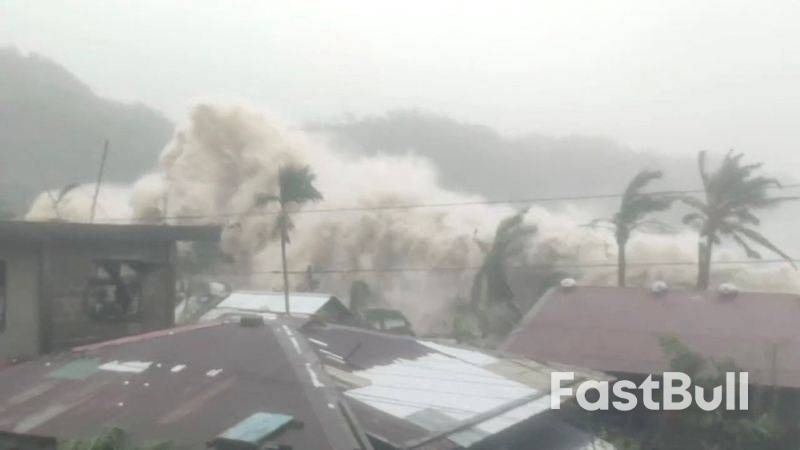
Typhoon Fung-wong ravaged the northern Philippines overnight, killing at least two people and cutting off some towns as residents emerged on Monday morning after a sleepless night to start assessing the damage.
More than one million people were evacuated before Fung-wong made landfall as a super typhoon in the eastern town of Dinalungan in Aurora province on Sunday night. It pounded parts of the country's main island of Luzon with fierce winds, heavy rain and storm swells through the night.
The typhoon, locally named "Uwan", damaged houses in the northern city of Santiago in Isabela province. Tree branches and electric posts were also felled by the typhoon.
"We could not sleep last night because of the winds hitting our metal sheets and the tree branches falling," said Romeo Mariano, who was sheltering with his grandmother in their home.
"Almost all of the tree branches nearby fell, and when we got out to check our home, we saw the damage," he added.
At least two people were killed by the typhoon, according to an early report from the Civil Defence office, with two others injured.
Aurora vice-governor Patrick Alexis Angara said at least three towns were inaccessible due to landslides and broken roads.
"Assessment and clearing operations are underway," Angara told broadcaster DZMM.
The state weather agency said the typhoon was now moving over the South China Sea, and is forecast to shift northeast towards Taiwan. It warned that a large portion of the country still faced heavy rains and severe winds, along with storm swells in coastal areas.

Over 400 flights have been cancelled since Sunday, the civil aviation regulator said.
Fung-wong was the 21st storm to hit the Philippines this year and came immediately after Typhoon Kalmaegi, which last week killed 224 in the country and another five in Vietnam.
China's imports of major commodities were largely soft in October as high prices weighed on volumes, with iron ore's resilience bucking the trend despite the steel sector showing signs of pressure.
Crude oil, natural gas, copper and coal all showed declines from September, according to data released on Friday by the General Administration of Customs.
China, the world's biggest importer of crude oil, saw arrivals of 11.39 million barrels per day (bpd) in October, the third straight monthly decline and down from 11.50 million bpd in September.
The easing in oil imports is most likely a reflection of the higher global prices that prevailed at the time when October-arriving cargoes would have been arranged.
Benchmark Brent futureshit a six-month high of $81.40 a barrel on June 23 during the brief conflict between Israel and Iran, and while they retreated to a low of $66.34 by July 1, they once again trended higher to reach $73.63 by July 31.
Since then, oil prices have been declining on a trend basis, with the occasional spike higher, largely caused by geopolitical events such as the announcement of new sanctions on Russia's crude producers by U.S. PresidentDonald Trump.
Brent ended at $63.63 a barrel on Friday, and the current lower prices are likely to encourage China's refiners to increase imports, even if much of the crude flows into commercial and strategic storages.
The impact of higher prices can also be seen in imports of natural gas, which totalled 9.78 million metric tons in October, down 11.5% from September's 11.05 million and 7.2% below the 10.54 million from October last year.
It's likely that pipeline volumes from Central Asia and Russia were largely steady, meaning the decline was from imports of liquefied natural gas, which have been trending weaker this year amid elevated spot prices caused by European demand for the super-chilled fuel.
Higher prices are also likely behind the 9.7% drop in imports of unwrought copper in October from September.
October arrivals were 438,000 tons, down from 485,000 tons in September and 506,000 tons in October 2024.
Copper prices have been trending higher since April, but the gains accelerated from late September, with London contractsjumping 12.8% from $9,927.50 a ton then to a record high of $11,200 a ton on October 29.
But it's not always prices driving China's commodity imports, with coal being a case in point.
Imports of all grades of coal dropped 9.3% in October to 41.74 million tons from September's 46.0 million tons, and were also down 9.8% from October last year.
The lower imports came as seaborne thermal coal prices languished near five-year lows, with commodity price reporting agency Argus assessing Indonesian coal with an energy content of 4,200 kilocalories per kilogram at $40.45 a ton in the week to July 4.
The grade, which is popular with Chinese utilities, has since recovered to $47.09 a ton in the week to November 7, but still remains well below the $52.30 from the same week in 2024.
However, with the northern winter imminent and higher domestic coal prices, it's likely China's imports will recover heading into the end of the year.
Iron ore was the surprise packet of China's commodity imports in October, with arrivals of 111.31 million tons.
While this was down 4.3% from September's record high of 116.33 million, it was up 7.2% from October last year and was also the fifth consecutive month that imports have topped 100 million tons.
The strength in imports isn't price-related, as benchmark contracts in Singapore (SZZFc1) have been stable in a relatively narrow range anchored around $100 a ton so far this year.
Steel production has also been soft, dropping to a 21-month low in September of 73.49 million tons, with output for the first nine months of the year down 2.9% from the same period in 2024.
It appears that the strength in iron ore is largely because inventories are being rebuilt, with port stockpiles monitored by consultants SteelHome (SH-TOT-IRONINV) rising to 138.44 million tons in the week to November 7, a seven-month high and up from the low so far this year of 130.1 million tons in early August.
With inventories still shy of the 150.7 million tons they reached in November last year, there is still scope for iron ore imports to remain resilient heading into the end of the year.
Malaysia's banking industry is accelerating the use of artificial intelligence (AI) to strengthen compliance, risk management and fraud detection.
However, this must be done responsibly, with strong human oversight, said Asian Institute of Chartered Bankers (AICB) chief executive Edward Ling.
He said the rate of AI adoption among Malaysian financial institutions (FIs) is encouraging, as AICB's 2025 Workforce Survey found that 57 per cent of FIs indicated they are in the early stages of AI adoption, although the pace differs depending on each institution's readiness.
"A few years ago, our focus was on building awareness. Today, the landscape has evolved, and the conversation has shifted beyond awareness; we are firmly in the adoption and implementation phase," he said during a media roundtable held recently in conjunction with the 15th International Conference on Financial Crime and Counter Terrorism Financing (IFCTF).
He highlighted that AICB's Chief Risk Officers' (CRO) Forum, supported by Bank Negara Malaysia (BNM), has also spearheaded Malaysia's first AI Governance Framework for financial services.
Recently launched, the industry-led initiative is designed to help banks integrate technology responsibly and ensure public trust in the financial system remains intact.
"The CROs have come together to develop a comprehensive AI governance framework that will guide Malaysia's financial industry in adopting AI responsibly, safely and in a future-ready manner, underscoring the industry's commitment to maintaining trust in the financial system.
"As financial institutions accelerate their use of AI, those seeking to exploit technology are also becoming more sophisticated, and at times, they may move faster than us. This is precisely why Malaysia must begin its AI journey on the right footing, with clear safeguards and strong governance in place," he added.
Ling said the future of banking will be defined by how effectively the workforce adapts and upskills for an AI-driven era.
He added that AICB's Future Skills Framework (FSF), together with the newly launched FSF Xcel — Malaysia's first digital skills assessment platform for the financial sector — plays a pivotal role in helping financial professionals identify skill gaps and prepare for the industry's accelerating digital transformation.
"We introduced the FSF in July last year to identify current and emerging skills required for banking professionals. To make the framework more actionable, AICB has now launched FSF Xcel, an AI-driven platform that helps professionals identify their skill gaps, benchmark their capabilities and chart personalised learning pathways based on real-time data," he said.
With more than 40,000 employees expected to see their roles evolve due to automation and technological augmentation, and 67 per cent of institutions reporting moderate proficiency in key digital skills, this further underscores the need for targeted upskilling.
Ling added that the role of the compliance officer is evolving, with professionals now expected to become technologists and data storytellers — applying advanced digital literacy, data interpretation and analytical capabilities to strengthen governance and safeguard the integrity of the financial system.
Meanwhile, Oracle Financial Services senior vice president for finance, risk and compliance product development, Jason Wynne, said AI is helping FIs address the root causes of financial crime — shifting from predicting false positives to building intelligent behavioural models that better understand risk.
"We want to enable banks to have investigators spend less time gathering data and more time making high-impact decisions," he said.
Wynne said Oracle's proprietary multi-agent AI Investigators completely transform case investigation workflows by autonomously surfacing critical insights, building case evidence and generating recommendations that significantly enhance investigation quality, accuracy and speed.
"The future of compliance is not just technology; it is humans plus AI. Institutions that master the collaboration between the two — grounded in explainability, agility and control — will be better equipped to stay ahead of their risks," he added.
He said Oracle's enterprise-scale analytics platform enables behavioural models expertly tailored to identify high-risk indicators and red flags, while its data-driven and transparent approach to anti-money laundering and compliance has empowered more than 200 global financial institutions.
He added that Oracle's solutions integrate seamlessly with its robust suite of financial services applications, embedding a data-driven decision-making approach that reinforces the shared goal of future-proofing the financial ecosystem through collaboration, trust and innovation.
The IFCTF 2025, organised by AICB and its Compliance Officers' Networking Group, took place from Nov 4–6, 2025, at the Malaysia International Trade and Exhibition Centre (MITEC), Kuala Lumpur.
Supported by BNM, the Securities Commission Malaysia and the Labuan Financial Services Authority, the three-day conference brought together more than 1,200 banking and compliance professionals and over 50 global experts to explore how technology is transforming compliance, risk management and financial crime prevention.
Japanese Prime Minister Sanae Takaichi said on Monday she would instruct her cabinet in January next year to start work on setting a new fiscal target extending through several years.
She said her administration would not ditch the current primary budget target immediately.
The remarks followed those she made on Friday that her government would ditch the current annual fiscal target in favour of one that measures spending through several years, essentially watering down the country's commitment to fiscal consolidation.
Last week's remarks from Takaichi, known as an advocate of big spending, signal a major shift from past administrations that used the annual target as a key tool to show Japan's resolve to get its fiscal house in order in the long run.
Under a long-term fiscal blueprint set in June, the government said it will aim to deliver a primary budget surplus sometime through fiscal 2025 to 2026.
When asked about the target, Takaichi told parliament on Friday she would drop the idea of using the annual primary budget balance as Japan's fiscal consolidation goal.
Instead, the government will check progress in fixing Japan's finances "by looking at its balance in a span of several years," she said.
The primary budget balance, which excludes new bond sales and debt-servicing costs, measures the extent to which policy measures can be funded without resorting to debt.
Japan has repeatedly pushed back the timeframe for achieving a primary budget surplus as past governments continued to deploy massive spending packages to reflate the economy and fend off shocks such as the pandemic.
Takaichi has repeatedly criticised the primary budget balance as out of sync with global standards and constraining Japan's ability to use fiscal tools to prop up growth.
Takaichi has said her administration will compile a spending package aimed at cushioning the blow from rising living costs, boosting investment in growth areas and defence.
Japan is saddled with public debt twice the size of its economy, which is the worst among major economies.
The Reserve Bank of Australia has warned that the path to more interest rate cuts could be narrow given elevated levels of capacity utilization in the economy and an outlook that includes uncomfortably high inflation well into next year.
"The Australian economy is in a unique situation," RBA Deputy Governor Andrew Hauser said in a speech to money market participants on Monday.
The economy has seen one of the sharpest disinflations in decades and it has been achieved without a contraction in economic activity, and with the employment share at an all-time high, he said.
"That is a great outcome - but it also means that the recovery in GDP growth began last year with the highest level of capacity utilization in any recovery over the past 40 years," Hauser added.
"There is room to debate what that means for the precise stance of monetary policy in the near term," Hauser said.
"It's possible that the economy may find itself boxed in by its own capacity constraints, like a racehorse trapped against the course fence, unable to surge forward," he added.
"On that view, there may be little scope for demand growth to rise further without adding to inflationary pressures, and hence there may be little room for further policy easing," Hauser said.
The RBA's latest projections show inflation settling very slightly above the midpoint of the 2% to 3% target range if the cash rate follows a market-derived path of one more interest rate cut, he said.
The RBA has cut interest rates three times since February, but it passed on an opportunity to deliver a fourth cut at a policy meeting last week, citing a rise in inflation in the third quarter that exceeded its own expectations, and those of nearly all market economists.
The environment in which the RBA finds itself in strongly suggests that the easing cycle could already be over after just three reductions, which have seen the official cash rate lowered by just 75 basis points to 3.60%.
RBA Governor Michele Bullock highlighted last week that the central bank did not tighten interest rates nearly as much as other central banks when inflation rose after the pandemic, so it might be that the easing cycle might be shallow.
Hauser said that years of weak productivity growth meant the speed limit of the economy was lower, increasing inflation risks if the economy runs too hot, and curbing the RBA's ability to cut interest rates.
Still, if productivity could be raised through a process of economic reform, the economy would be "off to the races," he said.
"Expanding productive capacity further will require time and investment - and here there is work to do," Hauser said.
Real business investment has been flat over the past 18 months, and capital expenditure intentions suggest little or no growth over the current fiscal year. And private investment, which also includes housing investment, remains well below historic peaks, he said.
White Label
Data API
Web Plug-ins
Poster Maker
Affiliate Program
The risk of loss in trading financial instruments such as stocks, FX, commodities, futures, bonds, ETFs and crypto can be substantial. You may sustain a total loss of the funds that you deposit with your broker. Therefore, you should carefully consider whether such trading is suitable for you in light of your circumstances and financial resources.
No decision to invest should be made without thoroughly conducting due diligence by yourself or consulting with your financial advisors. Our web content might not suit you since we don't know your financial conditions and investment needs. Our financial information might have latency or contain inaccuracy, so you should be fully responsible for any of your trading and investment decisions. The company will not be responsible for your capital loss.
Without getting permission from the website, you are not allowed to copy the website's graphics, texts, or trademarks. Intellectual property rights in the content or data incorporated into this website belong to its providers and exchange merchants.
Not Logged In
Log in to access more features

FastBull Membership
Not yet
Purchase
Log In
Sign Up