

Markets
News
Analysis
User
24/7
Economic Calendar
Education
Data
- Names
- Latest
- Prev



Signal Accounts for Members
All Signal Accounts
All Contests
 Euro Zone Employment YoY (SA) (Q3)
A:--
F: --
P: --
Euro Zone GDP Final YoY (Q3)A:--
F: --
P: --
Euro Zone GDP Final QoQ (Q3)A:--
F: --
P: --
Euro Zone Employment Final QoQ (SA) (Q3)A:--
F: --
P: --
Euro Zone Employment Final (SA) (Q3)A:--
F: --
 Brazil PPI MoM (Oct)
A:--
F: --
P: --
 Mexico Consumer Confidence Index (Nov)
A:--
F: --
P: --
 Canada Unemployment Rate (SA) (Nov)
A:--
F: --
P: --
Canada Labor Force Participation Rate (SA) (Nov)A:--
F: --
P: --
Canada Employment (SA) (Nov)A:--
F: --
P: --
Canada Part-Time Employment (SA) (Nov)A:--
F: --
P: --
Canada Full-time Employment (SA) (Nov)A:--
F: --
P: --
 U.S. Personal Income MoM (Sept)
A:--
F: --
P: --
U.S. PCE Price Index YoY (SA) (Sept)A:--
F: --
P: --
U.S. PCE Price Index MoM (Sept)A:--
F: --
P: --
U.S. Personal Outlays MoM (SA) (Sept)A:--
F: --
P: --
U.S. Core PCE Price Index MoM (Sept)A:--
F: --
P: --
U.S. Core PCE Price Index YoY (Sept)A:--
F: --
P: --
U.S. UMich 5-Year-Ahead Inflation Expectations Prelim YoY (Dec)A:--
F: --
P: --
U.S. Real Personal Consumption Expenditures MoM (Sept)A:--
F: --
P: --
U.S. 5-10 Year-Ahead Inflation Expectations (Dec)A:--
F: --
P: --
U.S. UMich Current Economic Conditions Index Prelim (Dec)A:--
F: --
P: --
U.S. UMich Consumer Sentiment Index Prelim (Dec)A:--
F: --
P: --
U.S. UMich 1-Year-Ahead Inflation Expectations Prelim (Dec)A:--
F: --
P: --
U.S. UMich Consumer Expectations Index Prelim (Dec)A:--
F: --
P: --
U.S. Weekly Total Rig CountA:--
F: --
P: --
U.S. Weekly Total Oil Rig CountA:--
F: --
P: --
U.S. Unit Labor Cost Prelim (SA) (Q3)--
F: --
P: --
U.S. Consumer Credit (SA) (Oct)A:--
F: --
P: --
 China, Mainland Foreign Exchange Reserves (Nov)
A:--
F: --
P: --
China, Mainland Exports YoY (USD) (Nov)--
F: --
P: --
China, Mainland Imports YoY (CNH) (Nov)--
F: --
P: --
China, Mainland Imports YoY (USD) (Nov)--
F: --
P: --
China, Mainland Imports (CNH) (Nov)--
F: --
P: --
China, Mainland Trade Balance (CNH) (Nov)--
F: --
P: --
China, Mainland Exports (Nov)--
F: --
P: --
 Japan Wages MoM (Oct)
--
F: --
P: --
Japan Trade Balance (Oct)--
F: --
P: --
Japan Nominal GDP Revised QoQ (Q3)--
F: --
P: --
Japan Trade Balance (Customs Data) (SA) (Oct)--
F: --
P: --
Japan GDP Annualized QoQ Revised (Q3)--
F: --
China, Mainland Exports YoY (CNH) (Nov)--
F: --
P: --
China, Mainland Trade Balance (USD) (Nov)--
F: --
P: --
 Germany Industrial Output MoM (SA) (Oct)
--
F: --
P: --
Euro Zone Sentix Investor Confidence Index (Dec)--
F: --
P: --
Canada Leading Index MoM (Nov)--
F: --
P: --
Canada National Economic Confidence Index--
F: --
P: --
U.S. Dallas Fed PCE Price Index YoY (Sept)--
F: --
P: --
U.S. 3-Year Note Auction Yield--
F: --
P: --
 U.K. BRC Overall Retail Sales YoY (Nov)
--
F: --
P: --
U.K. BRC Like-For-Like Retail Sales YoY (Nov)--
F: --
P: --
 Australia Overnight (Borrowing) Key Rate
--
F: --
P: --
RBA Rate Statement RBA Press Conference Germany Exports MoM (SA) (Oct)--
F: --
P: --
U.S. NFIB Small Business Optimism Index (SA) (Nov)--
F: --
P: --
Mexico Core CPI YoY (Nov)--
F: --
P: --
Mexico 12-Month Inflation (CPI) (Nov)--
F: --
P: --
Mexico PPI YoY (Nov)--
F: --
P: --
Mexico CPI YoY (Nov)--
F: --
P: --
U.S. Weekly Redbook Index YoY--
F: --
P: --


No matching data

Latest Views
Latest Views
Trending Topics
Top Columnists
Latest Update
White Label
Data API
Web Plug-ins
Affiliate Program
View All
No data
Ukrainians are in an increasingly difficult situation in the city of Pokrovsk...
Ukrainians are in an increasingly difficult situation in the city of Pokrovsk.
A recent video shows Russians capturing several Ukrainian drone operators who were stranded in the eastern part of the city.

The footage also shows the moment when one of the Ukrainian soldiers raises his hands and surrenders.
There is an ongoing debate surrounding who controls Pokrovsk, a strategic logistics hub for the Ukrainian army. The Ukrainian side claims there are only a few Russian units, which its special forces are already working to eliminate, according to Magyar Nemzet. Russia says it has near-total control of the city.
Moscow claims Russian troops are also actively advancing in Kupyansk, according to information from the Russian news agency RIA Novosti.
Russian troops are currently advancing on the right bank of the Oskol River, where about 130 buildings remain to be captured. In the western part of Kupyansk, the troops have advanced along three streets and captured 16 buildings. In just 24 hours, they have managed to take control of 25 buildings.
The Ukrainians are trying to retake the city, but their supply routes are now controlled by the Russians. The Russian Defense Ministry has said that Zelensky "has completely lost touch with reality."
Meanwhile, Putin has ordered the Russians to mobilize, signing a law on Nov. 4 requiring citizens to be called up for military service throughout the calendar year.
Active reservists in Russia will now be able to participate in special training, and reservists will also be able to be deployed in occupied territory. Previously, officials in Moscow stated that reservists are only protecting the infrastructure of their own region.
Centralized exchanges (CEXs) experienced a significant spike in spot trading volume during October 2025. According to new data, total spot volume across major platforms rose by 36% compared to the previous month, reflecting renewed interest and market activity within the crypto space.
Among the exchanges, KuCoin stood out with a remarkable 240% growth in spot trading volume. This surge could be linked to KuCoin's recent campaign to attract more retail traders, alongside listings of trending altcoins. Such a sharp increase indicates a substantial rise in both user engagement and trading activity on the platform.
Bitfinex also showed impressive numbers, reporting a 67% increase in volume. The platform likely benefited from improved market sentiment and increased institutional interest. Meanwhile, Gate.io posted a solid 45% gain, rounding out the top three performers.
While the overall market showed strong growth, not all exchanges saw large improvements. Bybit (+22%) and Bitget (+16%) experienced moderate increases, possibly due to less aggressive user acquisition or trading incentives. Surprisingly, South Korea-based Upbit saw a slight 1% decrease in spot trading volume, suggesting reduced trading activity or shifting user preferences.
This divergence highlights how trading volume can vary widely based on regional trends, marketing strategies, and listed assets.
The 36% overall jump in CEX spot trading volumes points to rising market optimism and growing investor interest. October's rally in crypto prices likely played a key role in driving trading activity. If this momentum continues into November, we could see even higher engagement across major exchanges.
For traders and investors, these trends suggest increasing liquidity and a more dynamic market environment as we head toward the end of the year.
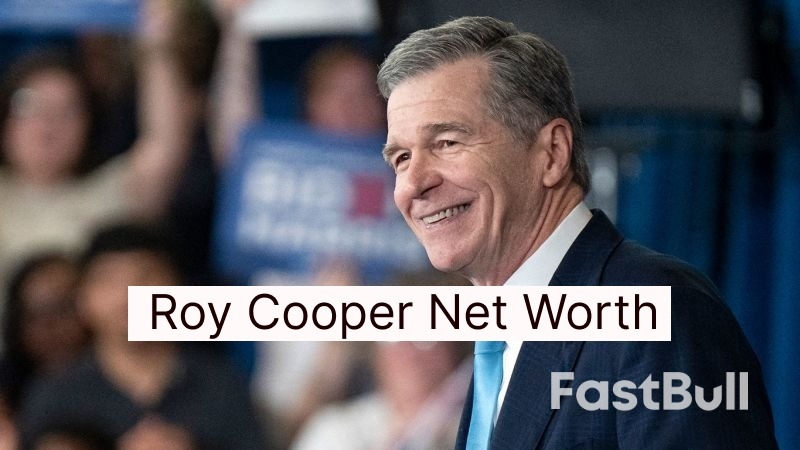
With over four decades in public service, Roy Cooper has built both political influence and steady financial growth. As of 2025, Roy Cooper net worth is estimated at about $4 million, accumulated through his long tenure as North Carolina’s governor, previous legal career, and well-managed investments across real estate and retirement funds.
Based on public filings, Roy Cooper net worth in 2025 is estimated at approximately $4 million. His assets include real estate in Raleigh, state pension funds, and diversified investment accounts. While modest compared to corporate executives, this figure reflects decades of financial consistency rooted in public-sector income and prudent savings habits.
| Year | Position | Estimated Net Worth |
|---|---|---|
| 2010 | North Carolina Attorney General | $800K |
| 2016 | Elected Governor | $1.5M |
| 2020 | Governor (Re-elected) | $2.5M |
| 2025 | Governor (Final Term) | $4M |
The steady financial rise corresponds to incremental salary increases, accumulated pensions, and compound investment returns. Gov Roy Cooper net worth has grown through stability rather than risk-taking, showcasing the benefits of long-term career discipline.
Cooper’s financial journey differs from that of wealthy businessmen-turned-politicians. His primary income has always come from taxpayer-funded roles — attorney, attorney general, and governor. His fiscal stability reflects responsible budgeting and sustained earnings from public office, positioning governor Roy Cooper net worth among the higher yet ethically modest ranges in U.S. state leadership.
As of 2025, Cooper’s base salary as governor stands at roughly $180,000 per year, supplemented by travel and housing allowances. While not extravagant, this compensation ensures steady income and benefits that contribute to long-term wealth security, particularly through pension accrual and deferred compensation programs.
Before becoming governor, Cooper served as North Carolina’s Attorney General for 16 years, earning an annual salary between $120,000 and $150,000. These years provided the foundation for his retirement benefits and savings plan, a cornerstone of Roy Cooper net worth growth.
Cooper’s pension entitlements form a crucial component of his total financial standing. The compounding nature of retirement benefits significantly enhances his long-term fiscal security.
Beyond his political career, Cooper has earned supplementary income through lectures, consulting, and modest investment returns. Though there is no record of major book royalties, his conservative investment portfolio continues to appreciate steadily. Unlike celebrity politicians, Roy Cooper rodeo cowboy net worth comparisons are misplaced — his financial success stems purely from consistent public earnings and disciplined asset management.
Roy Cooper’s primary residence in Raleigh remains his largest individual asset, valued between $1 million and $1.5 million. Unlike politicians with multiple properties or investment homes, Cooper’s real estate portfolio is deliberately conservative. His home equity appreciation accounts for a significant portion of Roy Cooper net worth and reflects steady financial stewardship.
The governor maintains diversified savings accounts and mutual fund investments, alongside participation in North Carolina’s state retirement plan. These holdings include low-risk mutual funds and fixed-income assets aimed at capital preservation. Gov Roy Cooper net worth benefits from consistent state pension contributions and prudent reinvestment of savings over four decades in public service.
Public disclosures show that Cooper’s stock holdings are relatively small compared to wealthier politicians. He owns limited shares in broad-based U.S. equity funds and has no private business ventures, ensuring full compliance with conflict-of-interest laws. This restrained investment strategy emphasizes transparency and ethical consistency in managing governor Roy Cooper net worth.
Cooper’s financial strategy represents the archetype of a disciplined public servant: stable, transparent, and low-risk. His financial disclosures portray the financial profile of a lifelong government official rather than that of an entrepreneur or investor, distinguishing Roy Cooper rodeo cowboy net worth comparisons as inaccurate metaphors for his actual portfolio.
Born and raised in Nash County, North Carolina, Cooper grew up in a middle-class family that valued education and public service over wealth accumulation. This upbringing shaped his modest financial outlook and continues to guide the frugal habits that define Roy Cooper net worth today.
Cooper’s wife, Kristin Cooper, works as a family attorney and advocate for child welfare programs. Their combined household income and assets have grown steadily, with joint financial decisions emphasizing saving, philanthropy, and long-term security. Together, they maintain a balanced and transparent household budget that reflects their shared values.
Unlike many political figures, Cooper has no known corporate board affiliations or inherited assets. His wealth has been entirely self-earned through state service and cautious investment practices. This absence of private-sector entanglement reinforces the perception that gov Roy Cooper net worth originates from genuine public-sector earnings.
Cooper has consistently advocated for public accountability and open disclosure of personal finances. His approach to financial ethics mirrors his administrative philosophy — measured, transparent, and responsible. This integrity-first mindset has helped maintain trust with constituents and defines the foundation of governor Roy Cooper net worth as an example of honest public wealth management.
Compared with high-net-worth governors such as Gavin Newsom and Greg Abbott — both multimillionaires with private business ventures — Roy Cooper’s finances appear modest. His career has been entirely within public service, with no outside business holdings or investments that might elevate Roy Cooper net worth into the same category as these wealthier state leaders.
Many U.S. governors derive their wealth from previous roles as entrepreneurs or corporate executives. Cooper, however, built his career in public law and state administration. This consistent government trajectory limited opportunities for substantial private income, keeping governor Roy Cooper net worth steady but comparatively lower than peers from corporate backgrounds.
North Carolina’s strict ethics and conflict-of-interest laws restrict governors from holding external paid positions while in office. These limitations ensure transparency but prevent income diversification. As a result, gov Roy Cooper net worth reflects an honest but narrowly sourced financial base, free from potential conflicts that often accompany corporate entanglements.
The North Carolina governor’s salary, set around $180,000 annually, ranks below those of leaders in states like California or Texas. Combined with moderate pension benefits and regional cost-of-living standards, this pay structure contributes to Cooper’s financially stable yet modest profile, distinguishing him from governors with significantly higher compensation packages.
Once his term concludes, Cooper could pursue writing or public speaking opportunities, which might offer new income avenues. Given his long political tenure and bipartisan reputation, such ventures could provide a notable but ethical boost to Roy Cooper net worth without compromising his image as a principled leader.
After more than 40 years in public service, Cooper’s pension benefits from the state retirement system will ensure continued stability. This guaranteed income stream — estimated to exceed six figures annually — represents a dependable foundation for long-term financial independence.
Any such transition would likely enhance governor Roy Cooper net worth moderately while maintaining his integrity-first reputation. Despite speculation about future roles, his wealth trajectory is expected to remain steady rather than dramatic — the hallmark of a career built on stability, not speculation, unlike the exaggerated “Roy Cooper rodeo cowboy net worth” myths circulating online.
Yes, Roy Cooper is a U.S. citizen, born and raised in Nash County, North Carolina. His lifelong dedication to public service in his home state — from attorney general to governor — has been the foundation of Roy Cooper net worth and his respected political reputation.
Roy Cooper hails from Nashville, North Carolina. His small-town roots shaped his pragmatic approach to governance and finances, emphasizing modest living, fiscal responsibility, and transparency throughout his decades-long political career.
As of 2025, Cooper earns an annual governor salary of about $180,000, supplemented by allowances and pension contributions. This steady income, combined with prudent investments, has helped sustain his estimated $4 million in total wealth.
In summary, Roy Cooper net worth reflects decades of disciplined financial management, consistent public-sector income, and transparent governance. His estimated $4 million fortune stands as proof that long-term service and ethical leadership can achieve financial stability without reliance on corporate or inherited wealth.
"If we're to build the future of Britain together, we'll all have to contribute." These stirring words of national esprit de corps came from UK Chancellor of the Exchequer Rachel Reeves last week, as she laid the groundwork for what's almost certain to be a punishing budget this month.
From my younger millennial vantage point, it's impossible not to scoff. It's looking like a racing certainty that working people will in fact suffer most of the pain, perhaps through an income tax hike. Last time it was employers who were whacked with Reeves' bill to fund her Labour government's spending. Largely absent again from this latest round of patriotic digging into your own pocket? Older people, probably.
The so-called triple lock on the UK state pension, a ludicrous, expensive and unsustainable guarantee that payments rise each year by whatever is highest out of inflation, wage growth or 2.5%, will sail on untroubled. Yes, you can see why governments in countries with rapidly ageing populations keep running scared of "grey power." But Nigel Farage's Reform UK is the only British party bold enough to even suggest watering down the triple lock. Its populist voter base is hardly in the first blush of youth.
And the UK's no outlier. This year has seen the forced retreat of multiple campaigns in Europe to make things just a tiny bit fairer. In France, Emmanuel Macron's newly reappointed prime minister, Sebastien Lecornu, is proposing to freeze the president's landmark pension reforms. That could cost up to €400 million ($463 million) next year.
Bids to make the burden more affordable have hit obstacles in Germany, Italy, Spain, Denmark and Belgium. Things are desperate enough that the European Commission is considering tying pension reform to cash payouts from the EU's next seven-year €2 trillion budget.
As countries struggle with a toxic mix of geriatric populations, low birth rates and sky-high debt, our "pay-as-you-go" pension systems — where the currently employed fund the payouts to retirees — aren't fit for purpose or for the future. Yet rather than take meaningful action to defuse this economic time bomb, political leaders are handing it off to their successors. How can they do otherwise when they're under baby boomer thumbs?
Instead of weakening the triple lock in the UK, one likely tweak coming in the budget is scaling back salary sacrifice schemes, in which employees have been able to save into retirement pots tax-free. Workers' take-home pay will once more suffer, and they won't be able to save as much for the future.
In fairness, lots of elderly folk don't have rich, comfortable lives. That's why Reeves' sensible attempt to means-test pensioners' winter-fuel allowance went down like a cup of cold sick among her party comrades, forcing their government to fudge a U-turn. Still, non-pensioners are almost twice as likely to be living in fuel stress.
In general, though, oldsters have it pretty good. Former Tory minister David Willetts, president of the Resolution Foundation think tank, points out that British pensioners are about £5,000 richer than families with children. Between 2010 and 2024, benefit hikes have boosted pensioner incomes by £900 above inflation. French over-65s, meanwhile, have higher incomes than people of working age, enjoying a retirement pot twice the size of the amount they contributed during their working lives.
Younger generations know these handsome nest eggs won't be waiting for them — if they can, in fact, retire. In a 2025 survey by Standard Life, only half of millennial respondents believed the state pension would remain available for everyone. With the ratio of working adults per retiree predicted to fall to 2.5 by 2070 from 3.6 in 2023, it's difficult to see where the relentless increases in state payouts will come from.
Other sources of lifelong wealth don't look any prettier. In 1997, British family homes cost an average of three times annual earnings. Today it's closer to eight times. Across Europe, home ownership among under-35s has plummeted.
The UK's Institute for Fiscal Studies found that up to 40% of private-sector employees saving in defined contribution funds are set to have incomes that fall short of standard benchmarks in retirement. Living costs are much higher. And younger generations are paid less than boomers were at the same age.
Looking at future generations is bleaker still. Children are now twice as likely to live in poverty as old people. Almost 10% of France's school budget is being diverted to fill gaps in public pensions.
Perhaps the best illustration of where refreshing the population fits in policymakers' priorities is the state of maternity units in UK hospitals. Medical staff are stretched to breaking point. An NHS England report found many maternity and newborn units are at "serious risk of imminent breakdown."
As Keir Starmer's UK government hunts for growth, along with most other moderate administrations trying to stem the populist tide, they need to bear in mind the economic cost of being in thrall to the elderly.
Tim Vlandas, a professor in comparative political economy and social policy at the University of Oxford, writes that as the share of older voters rises, politicians face fewer direct electoral incentives to pursue long-term growth strategies. Protecting retirees becomes safer than spending on the green transition, education or childcare. That becomes a vicious circle: Fertility rates drop and young people become even less engaged in a political world that doesn't serve them. At the same time, pensions get harder to fund but more important to superannuated voters.
In Germany, young lawmakers are fighting back, threatening to block pension measures for the excessive burden they put on future generations. It's the first time, according to the head of polling institute Forsa, that a youth wing of any party has yielded that much influence.
Politicians elsewhere should take note. This isn't about making life for pensioners worse, just better for everyone else.
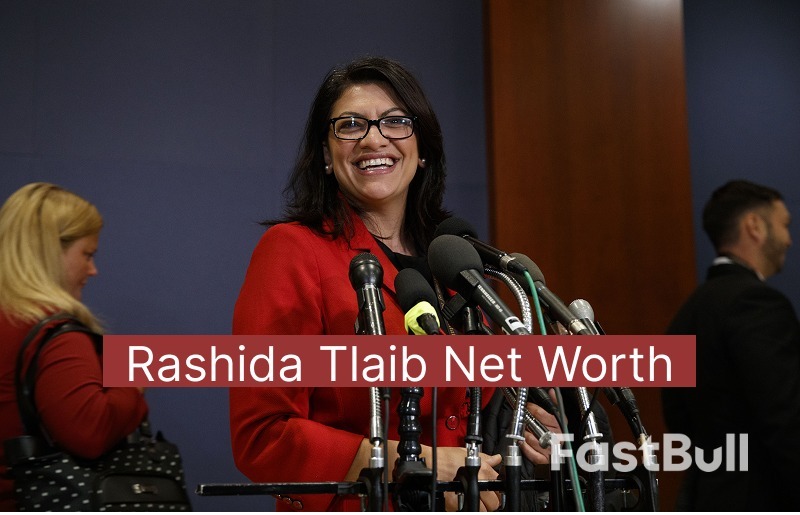
Known as one of Congress’s most outspoken progressive voices, Rashida Tlaib’s financial journey mirrors the struggles of many working-class Americans. As of 2025, Rashida Tlaib net worth is estimated at about $500,000, marking a steady recovery from the heavy debt she carried early in her political career.
As of 2025, Rashida Tlaib net worth is estimated at approximately $500,000. This figure represents significant progress from her negative net worth of around -$200,000 in 2018, primarily due to student loans and personal expenses. Her financial improvement stems from a stable congressional salary, reduced debt, and modest savings growth.
| Year | Estimated Net Worth | Key Financial Change |
|---|---|---|
| 2018 | -$200,000 | Heavy student loan and credit debt |
| 2020 | -$50,000 | Debt repayment through congressional income |
| 2023 | $250,000 | Stable savings and partial mortgage payoff |
| 2025 | $500,000 | Positive net worth achieved with minimal liabilities |
Her current financial position reflects modest but sustainable progress. Assets include her primary residence in Detroit and small investment accounts, while liabilities mainly stem from educational loans and household obligations. Rashida Tlaib net worth 2025 highlights financial discipline rather than wealth accumulation, representing a relatable financial reality for many Americans.
Tlaib’s law school education at Western Michigan University left her with an estimated $50,000 to $100,000 in student loans. These debts significantly impacted her early financial stability and delayed wealth accumulation, a common challenge for many public servants with advanced degrees.
As a single mother of two, Tlaib has consistently prioritized family needs over personal wealth-building. Her financial disclosures reveal the strain of balancing living costs, education expenses, and limited savings — key reasons Rashida Tlaib net worth remains modest despite years in Congress.
Raised in a Palestinian immigrant family in Detroit, Tlaib’s upbringing shaped her focus on community-oriented values rather than financial gain. Her modest lifestyle choices reflect the economic realities of her constituents, reinforcing her authenticity as a representative of the working class.
Although her congressional salary exceeds the local median income, high personal and professional expenses limit her net savings potential. This explains why Rashida Tlaib net worth 2025 remains relatively modest compared to wealthier lawmakers from higher-income backgrounds.
Since taking office in 2019, Rashida Tlaib has earned the standard congressional salary of $174,000 annually. This income forms the backbone of her financial profile, supporting debt repayment and modest asset growth. Despite the consistent income, Rashida Tlaib net worth remains moderate because her financial priorities focus on family support and community engagement rather than personal enrichment.
Before entering Congress, Tlaib worked as an attorney and advocate for nonprofit organizations, including the Sugar Law Center for Economic and Social Justice. Her annual earnings during that period ranged from $60,000 to $80,000. While fulfilling, her nonprofit career offered limited wealth accumulation, which explains the slower pace of Rashida Tlaib net worth 2025 compared to private-sector peers.
Tlaib’s financial disclosures indicate ownership of a small rental property in Detroit, generating approximately $15,000–$20,000 annually. This property has become a modest but steady source of passive income, providing supplemental financial stability and contributing slightly to her overall net worth trajectory.
Although she occasionally receives honoraria for public events and conferences, Tlaib has not monetized her political visibility to the extent of many other lawmakers. Her earnings from these sources remain minimal, reflecting her preference to focus on policy advocacy over profit generation.
Tlaib’s decision to reject corporate PAC contributions limits her fundraising flexibility and potential external income opportunities. While this choice reinforces her political integrity, it also restricts networking avenues that could lead to lucrative post-political roles, indirectly affecting Rashida Tlaib net worth growth.
As a vocal supporter of Medicare for All, Tlaib often prioritizes policies that challenge private insurance and pharmaceutical donors — sectors known for significant lobbying contributions. Her ideological consistency strengthens her reputation but sacrifices potential financial backing that could boost her long-term wealth.
This grassroots model reflects her commitment to authenticity but keeps her campaign and personal finances lean — one reason Rashida Tlaib net worth 2025 remains relatively low compared to establishment politicians.
Tlaib’s progressive stance directly influences her financial reality. Her refusal to engage in corporate-backed ventures or post-office consulting contracts limits potential income sources. In contrast, her emphasis on integrity and equality continues to shape her public identity more than her personal wealth.
Like Alexandria Ocasio-Cortez, Tlaib entered Congress with substantial student debt and minimal savings. Both lawmakers report relatively modest personal assets, highlighting the socioeconomic diversity within younger, progressive representatives. Their shared commitment to transparency keeps Rashida Tlaib net worth comparable to AOC’s, both hovering in the low six-figure range.
Ilhan Omar’s reported net worth, typically between $1 million and $3 million, surpasses Tlaib’s due to business interests and book deals. However, both maintain grassroots political funding and minimal external income, demonstrating a similar ethical approach to wealth accumulation in public life.
| Member | Estimated Net Worth (2025) | Background |
|---|---|---|
| Rashida Tlaib | $500K | Progressive Democrat, Michigan |
| Alexandria Ocasio-Cortez | $300K–$500K | Progressive Democrat, New York |
| Nancy Pelosi | $120M+ | House Speaker Emerita, California |
| Mark Warner | $200M+ | Businessman and Senator, Virginia |
High campaign costs and limited donor access make it difficult for lower-income candidates to sustain long-term political careers. Lawmakers like Tlaib represent exceptions — individuals who reflect everyday Americans’ financial challenges while advocating for economic reform. This authenticity keeps Rashida Tlaib net worth modest but reinforces her political credibility among middle-class voters.
Yes, Rashida Tlaib is a U.S. citizen, born and raised in Detroit, Michigan. She is the daughter of Palestinian immigrants and became one of the first Muslim women elected to the U.S. Congress. Her financial profile, including Rashida Tlaib net worth, reflects the realities of many middle-class American families.
Rashida Tlaib was born in Detroit, Michigan, and represents the state’s 12th congressional district. Her deep roots in Detroit influence her focus on economic justice, affordable housing, and community development — values that also shape her modest lifestyle and practical financial choices.
Rashida Tlaib is not related to Rashida Jones, the actress and daughter of music producer Quincy Jones. Tlaib’s financial history is self-made, grounded in public service and advocacy work rather than inheritance, which underscores why Rashida Tlaib net worth remains relatively modest compared to many of her congressional peers.
Overall, Rashida Tlaib net worth demonstrates a story of resilience and authenticity. From overcoming debt to achieving financial stability through discipline and public service, her financial journey stands as a reflection of her working-class roots and progressive principles that prioritize purpose over profit.
728 RM B 7/F GEE LOK IND BLDG NO 34 HUNG TO RD KWUN TONG KLN HONG KONG


White Label
Data API
Web Plug-ins
Poster Maker
Affiliate Program
The risk of loss in trading financial instruments such as stocks, FX, commodities, futures, bonds, ETFs and crypto can be substantial. You may sustain a total loss of the funds that you deposit with your broker. Therefore, you should carefully consider whether such trading is suitable for you in light of your circumstances and financial resources.
No decision to invest should be made without thoroughly conducting due diligence by yourself or consulting with your financial advisors. Our web content might not suit you since we don't know your financial conditions and investment needs. Our financial information might have latency or contain inaccuracy, so you should be fully responsible for any of your trading and investment decisions. The company will not be responsible for your capital loss.
Without getting permission from the website, you are not allowed to copy the website's graphics, texts, or trademarks. Intellectual property rights in the content or data incorporated into this website belong to its providers and exchange merchants.
Not Logged In
Log in to access more features

FastBull Membership
Not yet
Purchase


Log In
Sign Up


