Markets
News
Analysis
User
24/7
Economic Calendar
Education
Data
- Names
- Latest
- Prev


Signal Accounts for Members
All Signal Accounts
All Contests


Canada Part-Time Employment (SA) (Nov)A:--
F: --
P: --
Canada Unemployment Rate (SA) (Nov)A:--
F: --
P: --
Canada Full-time Employment (SA) (Nov)A:--
F: --
P: --
Canada Labor Force Participation Rate (SA) (Nov)A:--
F: --
P: --
Canada Employment (SA) (Nov)A:--
F: --
P: --
U.S. PCE Price Index MoM (Sept)A:--
F: --
P: --
U.S. Personal Income MoM (Sept)A:--
F: --
P: --
U.S. Core PCE Price Index MoM (Sept)A:--
F: --
P: --
U.S. PCE Price Index YoY (SA) (Sept)A:--
F: --
P: --
U.S. Core PCE Price Index YoY (Sept)A:--
F: --
P: --
U.S. Personal Outlays MoM (SA) (Sept)A:--
F: --
U.S. 5-10 Year-Ahead Inflation Expectations (Dec)A:--
F: --
P: --
U.S. Real Personal Consumption Expenditures MoM (Sept)A:--
F: --
U.S. Weekly Total Rig CountA:--
F: --
P: --
U.S. Weekly Total Oil Rig CountA:--
F: --
P: --
U.S. Consumer Credit (SA) (Oct)A:--
F: --
China, Mainland Foreign Exchange Reserves (Nov)A:--
F: --
P: --
Japan Trade Balance (Oct)A:--
F: --
P: --
Japan Nominal GDP Revised QoQ (Q3)A:--
F: --
P: --
China, Mainland Imports YoY (CNH) (Nov)A:--
F: --
P: --
China, Mainland Exports (Nov)A:--
F: --
P: --
China, Mainland Imports (CNH) (Nov)A:--
F: --
P: --
China, Mainland Trade Balance (CNH) (Nov)A:--
F: --
P: --
China, Mainland Exports YoY (USD) (Nov)A:--
F: --
P: --
China, Mainland Imports YoY (USD) (Nov)A:--
F: --
P: --
Germany Industrial Output MoM (SA) (Oct)A:--
F: --
Euro Zone Sentix Investor Confidence Index (Dec)A:--
F: --
P: --
Canada National Economic Confidence IndexA:--
F: --
P: --
U.K. BRC Like-For-Like Retail Sales YoY (Nov)A:--
F: --
P: --
U.K. BRC Overall Retail Sales YoY (Nov)A:--
F: --
P: --
Australia Overnight (Borrowing) Key Rate--
F: --
P: --
RBA Rate Statement
RBA Press Conference
Germany Exports MoM (SA) (Oct)--
F: --
P: --
U.S. NFIB Small Business Optimism Index (SA) (Nov)--
F: --
P: --
Mexico 12-Month Inflation (CPI) (Nov)--
F: --
P: --
Mexico Core CPI YoY (Nov)--
F: --
P: --
Mexico PPI YoY (Nov)--
F: --
P: --
U.S. Weekly Redbook Index YoY--
F: --
P: --
U.S. JOLTS Job Openings (SA) (Oct)--
F: --
P: --
China, Mainland M1 Money Supply YoY (Nov)--
F: --
P: --
China, Mainland M0 Money Supply YoY (Nov)--
F: --
P: --
China, Mainland M2 Money Supply YoY (Nov)--
F: --
P: --
U.S. EIA Short-Term Crude Production Forecast For The Year (Dec)--
F: --
P: --
U.S. EIA Natural Gas Production Forecast For The Next Year (Dec)--
F: --
P: --
U.S. EIA Short-Term Crude Production Forecast For The Next Year (Dec)--
F: --
P: --
EIA Monthly Short-Term Energy Outlook
U.S. API Weekly Gasoline Stocks--
F: --
P: --
U.S. API Weekly Cushing Crude Oil Stocks--
F: --
P: --
U.S. API Weekly Crude Oil Stocks--
F: --
P: --
U.S. API Weekly Refined Oil Stocks--
F: --
P: --
South Korea Unemployment Rate (SA) (Nov)--
F: --
P: --
Japan Reuters Tankan Non-Manufacturers Index (Dec)--
F: --
P: --
Japan Reuters Tankan Manufacturers Index (Dec)--
F: --
P: --
Japan Domestic Enterprise Commodity Price Index MoM (Nov)--
F: --
P: --
Japan Domestic Enterprise Commodity Price Index YoY (Nov)--
F: --
P: --
China, Mainland PPI YoY (Nov)--
F: --
P: --
China, Mainland CPI MoM (Nov)--
F: --
P: --
Italy Industrial Output YoY (SA) (Oct)--
F: --
P: --


No matching data
Latest Views
Latest Views
Trending Topics
Top Columnists
Latest Update
White Label
Data API
Web Plug-ins
Affiliate Program
View All

No data
U.S. futures dipped as investors eyed U.S.-China trade talks, inflation data, and geopolitical tensions. Trump hinted at extending tariff delays. Oracle surged on strong AI demand. Oil fell amid Iran concerns.

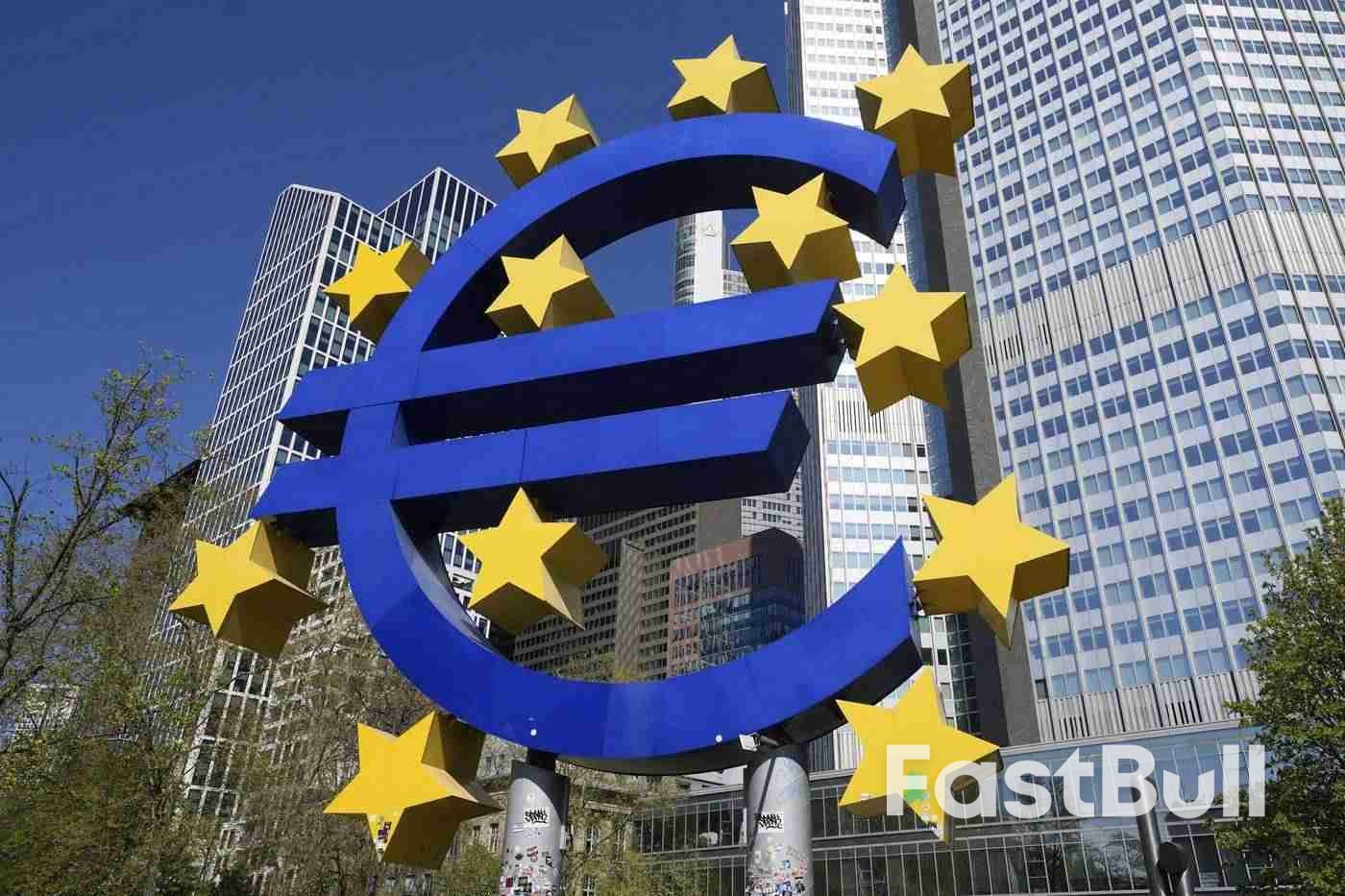
The euro hit its highest level in almost four years against the U.S. dollar as investors rushed into safe-haven assets on Thursday while remaining cautious about the impact of the U.S.-China trade deal.
Geopolitical risks were in focus after U.S. President Donald Trump said some U.S. personnel were being moved out of the Middle East because “it could be a dangerous place,” adding that Washington would not allow Iran to develop a nuclear weapon.
A cocktail of rising Middle East tensions and concern over the fragility of the trade truce between the U.S. and China drew investors into safe-haven assets.
Analysts noted that the U.S. dollar serves as a key barometer of trade talks sentiment, while geopolitical instability prompted investors to buy safe-haven Swiss francs and yen.
The franc rose 0.8% to 0.8138 versus the greenback, its highest level since April 22, and the yen climbed 0.6% to 143.70.
The euro reached its highest since late 2021 at $1.1589 and was last up 0.70% at $1.1568.
Some analysts said the euro has also drawn support from a hawkish European Central Bank, which hinted at a pause in its year-long easing cycle after inflation finally returned to its 2% target.
However, ECB policymaker Isabel Schnabel said on Thursday the strong euro exchange rate is driven by a positive confidence shock in Europe - investors being drawn to the euro as a safe haven - and not by interest rate differentials.
On the trade front, Trump said he would be willing to extend a July 8 deadline for completing trade talks with countries. But he added that the U.S. would send out letters in coming weeks specifying the terms for trade deals to dozens of other countries, which they could then embrace or reject.
Investors argued that such a move keeps the risk of a July 9 jump in U.S. import tariffs on the table, which is regarded as negative for the dollar. The greenback and U.S. Treasuries dropped sharply after Trump announced a blitz of reciprocal tariffs - which he dubbed “Liberation Day” - in early April.
Against a basket of currencies, the U.S. dollar fell to its weakest since April 22 at 98.072 and was last down 0.35% at 98.108. It hit 97.861, its lowest since April 2022.
U.S. Treasury yields dropped on Wednesday as the closely watched “core” consumer price index eased some pressure on the Federal Reserve to maintain higher interest rates for longer.
However, analysts remain cautious about the inflation outlook ahead of Thursday’s release of the producer price index.
“We suspect the core Personal Consumption Expenditures Price Index (PCE) reading will prove modestly firmer, although the result will also hinge on the inputs from core PPI,” said David Doyle, head of economics at Macquarie.
“Despite the subdued figures, through year-end, we expect year-on-year core inflation to remain elevated and potentially (to) rise as price pressures flow from recent tariff implementation.”
Markets priced two Fed rate cuts of 25 basis points by year-end, with an 80% chance of the first move in September and 100 bps by September 2026.
The onshore yuan rose 0.1% to 7.1818 per U.S. dollar, though gains were capped by the still-fragile truce in the U.S.-China trade war and the uncertainty surrounding the next moves of the two countries.
Barclays sees plenty of headwinds over the medium term that could push the currency back onto a depreciation path, even if it might gain a little further from below 7.20.
The Trump administration has launched a review into the Aukus defense pact that the US signed with Australia and the UK in 2021 to counter China’s military expansion in the Indo-Pacific region.
Central to the agreement is a controversial project — expected to cost hundreds of billions of dollars — to help Australia develop a fleet of nuclear-powered submarines over a 30-year period.
If the US ends up abandoning the pact, it would deal a major blow to Australia and its defense capabilities. It would also raise questions for other Asia-Pacific allies about the US commitment to their security interests in the face of a rising China.
Aukus is the nickname given to the wide-reaching security partnership signed between the US, the UK and Australia in September 2021. The most eye-catching part of the pact was the agreement to help Australia acquire a fleet of eight nuclear-powered submarines.
At the moment, only six nations — the US, the UK, France, China, Russia and India — have the technology to deploy and operate nuclear-powered subs, which are faster than their diesel-electric counterparts, can stay submerged for several months and have space for more weapons, equipment and supplies.
The plan is for the US to sell Australia as many as five of its nuclear-powered Virginia-class submarines by the early 2030s. Then Australia and the UK would together design and build a next-generation submarine partly using American technology, due to be completed in the 2040s.
Under the deal, the UK would also expand its own nuclear-powered submarine fleet, from seven to as many as 12. The Aukus deal represented the first time that the US agreed to share its highly sensitive sub technology since 1965. The agreement was important enough to the US that it was willing to risk a diplomatic crisis with France, which saw a $66 billion contract to provide conventional submarines to Australia abruptly canceled because of Aukus.
But the partnership isn’t limited to submarines: The second pillar of the deal, for instance, revolves around strategic technology sharing in areas such as quantum computing, artificial intelligence and advanced weaponry.
The possibilities of the Aukus agreement have already led Japan, South Korea and New Zealand to all publicly express interest in joining the second pillar of the pact.
The Trump administration has been looking to shift the burden of collective defense to its allies and to make sure the US has enough naval vessels of its own in case of a military clash over the coming decades.
The review will study whether the deal, signed while Joe Biden was president, is “aligned with the President’s America First agenda,” the Pentagon said in a statement.
More generally, the Trump administration has been ramping up pressure on allies around the world — including NATO countries and regional partners in Asia — to increase their military budgets. And the US wants to narrow its own gap in total ships with China’s Navy, the world’s largest.
In a face-to-face meeting with Australia’s Deputy Prime Minister Richard Marles, US Secretary of Defense Pete Hegseth specifically asked for Canberra to raise its defense spending to 3.5% of GDP. Currently, Australia is on track to boost its military spending to about 2.4% of GDP by the mid 2030s.
US shipbuilding and submarine production has been plagued by delays and cost overruns. Last year, a top US lawmaker revealed that the Navy’s Virginia-class submarine program is at least two years behind schedule and is projected to run $17 billion over its planned budget through 2030.
Skeptics of Aukus include US Undersecretary of Defense for Policy Elbridge Colby. Last year, he posted to social media that “it would be crazy to have fewer SSNs in the right place and time,” using the shorthand for nuclear-powered attack submarine.
The pact has also attracted criticism in Australia. Former Australian Prime Ministers Paul Keating and Malcolm Turnbull have disapproved of the agreement, saying it undermines the nation’s defense sovereignty at a time of growing strategic uncertainty in the Indo-Pacific.
Following the announcement of the review, Keating described the Aukus program as the “most poorly conceived defense procurement program ever adopted by an Australian government.” Critics of the pact said the review would present Australia with an opportunity to leave the deal.
Any major revisions or even scrapping of the Aukus pact would deal a major blow to Australia’s defense sector, which had begun to reshape itself to accommodate the anticipated submarines. Marles, who is also Australia’s deputy prime minister, earlier this year delivered a A$500 million ($325 million) downpayment to the US as part of Aukus.
The Australian government has also been moving away from conventional military forces and toward longer-range capabilities, including missiles and drones, to support the nuclear fleet.
A failure to acquire the submarines would blow a hole through the center of Australia’s defense capabilities at a crucial moment in regional geopolitics, with tensions high over China’s ambitions in the Indo-Pacific and South China Sea.
Any move by the US or Australia to end Aukus would be viewed as a major win for China, which has been highly critical of the security pact since it was signed.
At a Ministry of Foreign Affairs briefing in Beijing on June 12, spokesman Lin Jian said China opposed “anything that amplifies the risk of nuclear proliferation and exacerbates an arms race.”
China has repeatedly petitioned the International Atomic Energy Agency to consider the Aukus pact a breach of non-proliferation treaties. China’s state-run media has also repeatedly accused Australia of trying to become a nuclear threat.
The initial announcement in 2021 was greeted with some concern from Southeast Asian nations including Indonesia and Malaysia, which worried about a regional arms race. Others, including Japan and the Philippines, fellow US treaty allies, were positive about the partnership.
White Label
Data API
Web Plug-ins
Poster Maker
Affiliate Program
The risk of loss in trading financial instruments such as stocks, FX, commodities, futures, bonds, ETFs and crypto can be substantial. You may sustain a total loss of the funds that you deposit with your broker. Therefore, you should carefully consider whether such trading is suitable for you in light of your circumstances and financial resources.
No decision to invest should be made without thoroughly conducting due diligence by yourself or consulting with your financial advisors. Our web content might not suit you since we don't know your financial conditions and investment needs. Our financial information might have latency or contain inaccuracy, so you should be fully responsible for any of your trading and investment decisions. The company will not be responsible for your capital loss.
Without getting permission from the website, you are not allowed to copy the website's graphics, texts, or trademarks. Intellectual property rights in the content or data incorporated into this website belong to its providers and exchange merchants.
Not Logged In
Log in to access more features

FastBull Membership
Not yet
Purchase
Log In
Sign Up