


- USDX
- XAUUSD
- XAGUSD
- WTI


マーケット情報
分析
ユーザー
7x24
経済カレンダー
教育
データ
- 名前
- 最新値
- 戻る









ゾーントレードとは何か、トレード心理がパフォーマンスにどのように影響するか、そして安定したトレードに必要な規律とマインドセットをどのように構築するかを学びましょう。
ゾーントレードとは、トレーディング心理学における概念で、トレーダーが恐怖、貪欲、感情的な反応ではなく、明晰さ、自信、規律をもって意思決定を行う精神状態を指します。これは、不確実性を受け入れ、確率的に考え、明確に定義されたトレーディングプランに従うことを重視するマーク・ダグラスのトレーディング手法と密接に関連しています。
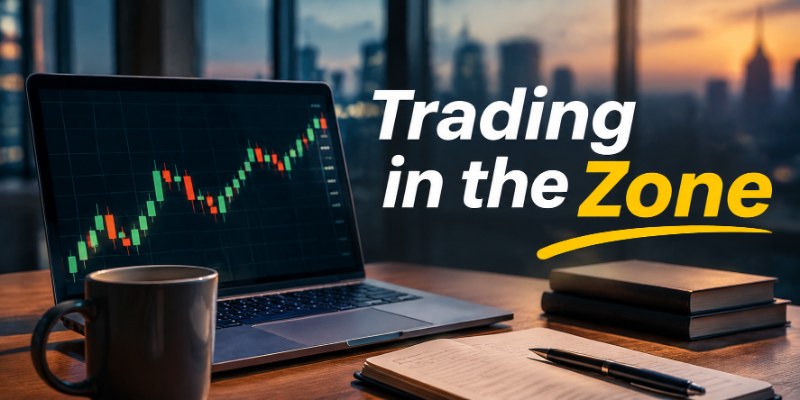
ゾーンに入るということは、市場の動きをすべて正確に予測することではありません。それは、個々の取引で予期せぬ結果が出た場合でも、プロセスに集中し、リスクを管理し、戦略を一貫して実行することを意味します。
目次
ゾーントレードとは、トレーダーが感情や短期的な結果に左右されることなく、戦略に従って取引を行うことができる精神状態を指します。
金融市場は予測不可能です。綿密な調査に基づいた取引でも損失を出す可能性があり、逆に計画性の低い取引でも利益が出る場合があります。個々の結果に過度にこだわるトレーダーは、しばしばフラストレーションを感じたり、過信したり、次の有効な機会を逃してしまう恐れがあります。
ゾーンに入るということは、個々の取引が長期的なパフォーマンスを決定づけるものではないことを理解することです。トレーダーは市場をコントロールしようとするのではなく、自分がコントロールできる決定に集中します。
この考え方は、株式、外国為替、商品、仮想通貨、先物など、さまざまな市場に当てはまります。取引スタイルは異なるかもしれませんが、心理的な課題は共通しています。
『トレーディング・イン・ザ・ゾーン』は、マーク・ダグラスによる有名なトレーディング心理学の本です。本書では、トレーダーがテクニカル分析を理解し、有効な取引戦略を持っているにもかかわらず、なぜ安定した結果を出すのに苦労するのかを探求しています。
ダグラスは、トレーディングで成功するには、多くの日常的な活動とは異なる思考法が必要だと主張する。通常、人々は努力と綿密な計画によって予測可能な結果が得られると考える。しかし、トレーディングはそうはいかない。なぜなら、市場におけるあらゆる意思決定には不確実性が伴うからだ。
トレーダーはチャートを正しく分析し、すべてのルールに従ったとしても、損失を出すことがある。問題は、トレーダーがその損失を戦略の失敗の証拠と捉えたり、次の取引では必ずより良い結果を出さなければならないと考えたりする場合に生じる。
The book encourages traders to develop a probabilistic mindset. Rather than expecting certainty, they should recognize that every trade is an independent opportunity within a larger series of trades.
Its central message is straightforward: consistent trading performance depends not only on strategy but also on the ability to think and act consistently under uncertainty.
Developing the right trading mindset requires more than simply staying calm. It involves changing how you think about risk, uncertainty, and the relationship between individual trades and long-term performance.
No trader can know with certainty what the market will do next. Even strong technical indicators, chart patterns, and fundamental signals can produce unexpected outcomes.
Instead of asking whether a trade will definitely make money, consider whether the setup offers a favorable probability over a series of trades. A strategy with a genuine statistical edge can experience several consecutive losses without necessarily losing its long-term advantage.
Every trade carries risk. Traders who struggle to accept potential losses often move stop-loss orders, close positions too early, or hold losing trades longer than planned.
Before entering a position, determine how much capital you are willing to risk. Set your stop-loss level and calculate your position size accordingly. Once the trade is active, avoid changing these decisions simply because the market moves against you.
A previous winning trade does not guarantee another winner. Similarly, losing three trades in a row does not automatically make the next setup more likely to succeed.
Emotional traders often develop expectations based on recent results. They may become overconfident after winning streaks or hesitate after several losses. Trading in the zone requires evaluating each opportunity according to the same objective criteria.
A profitable trade is not necessarily a good trade if it resulted from breaking your rules. Likewise, a losing trade can still represent a good decision when the trader followed a tested strategy and managed risk correctly.
Measure performance by the quality of your execution, not just the money made or lost on individual positions.
Markets are influenced by countless participants, economic developments, institutional activity, and unexpected events. Traders cannot control these factors, but they can control their own decisions.
Taking responsibility means reviewing mistakes honestly rather than blaming market manipulation, news events, or bad luck for every disappointing result. This approach helps identify patterns that can be improved.
Even experienced traders can lose their emotional balance. The pressure of financial risk, rapidly changing prices, and uncertainty can make it difficult to follow a trading plan consistently.
Several psychological factors commonly interfere with disciplined execution.
Fear can prevent traders from taking valid opportunities or cause them to close positions prematurely. After experiencing a significant loss, some traders become overly cautious, even when their original strategy remains valid.
The solution is to use appropriate position sizing and define acceptable losses before entering the market.
After a series of successful trades, traders may start increasing position sizes, ignoring risk limits, or entering setups that do not meet their usual criteria.
Greed often turns a disciplined trading approach into an attempt to maximize every opportunity. Maintaining consistent risk levels helps prevent this behavior.
Revenge trading occurs when someone enters new positions primarily to recover money lost in previous trades. These decisions are usually driven by frustration rather than a genuine market opportunity.
Traders should recognize emotional warning signs and take a break when they feel compelled to recover losses immediately.
Watching a stock or cryptocurrency rise rapidly can create pressure to enter before the opportunity disappears. However, chasing an extended price move often means accepting unfavorable entry conditions.
A disciplined trader waits for the next valid setup instead of feeling obligated to participate in every market movement.
Trading in the zone is not something that happens automatically. It develops through preparation, repetition, and consistent risk management. The following practices can help traders build a more stable decision-making process.
A trading plan should define the conditions under which you enter and exit positions. It should also include position sizing, stop-loss rules, profit targets, and acceptable risk per trade.
For example, a stock trader might only enter a position when the price breaks above a defined resistance level with confirmation from trading volume. Having clear conditions reduces the influence of spontaneous decisions.
Backtesting helps determine how a trading strategy would have performed under historical market conditions. It provides useful information about win rates, average gains, average losses, and potential drawdowns.
Understanding these statistics makes it easier to accept losing trades because you have a clearer picture of what normal performance looks like.
A trading journal records more than entry prices and profits. It should also capture your reasoning, emotions, and whether you followed your trading rules.
After each trade, consider recording:
Reviewing this information regularly can reveal recurring mistakes, such as entering trades too early or moving stop-loss levels unnecessarily.
A trading simulator allows you to practice executing strategies with virtual money instead of risking real capital. It is particularly useful for beginners who want to develop consistent habits before trading with actual funds.
Use simulated trading to practice following entry rules, managing positions, and accepting losing outcomes. However, remember that virtual trading cannot fully reproduce the emotional pressure of risking real money.
A consistent routine helps reduce unnecessary decisions and keeps your attention on the trading process.
A practical routine might include:
It is also important to recognize when not to trade. Fatigue, stress, and distractions can affect judgment, making it harder to follow a strategy objectively.
Understanding trading psychology becomes easier when comparing how an emotional trader and a disciplined trader respond to the same market conditions.
Consider a strategy that has historically produced profitable results over a sufficiently large sample of trades, but does not win every time.
| Market Situation | Emotional Trader | Disciplined Trader |
|---|---|---|
| Three consecutive losses | Increases position size to recover money. | Reviews the trades and maintains predefined risk limits. |
| A stock rises sharply | Chases the price out of fear of missing out. | Waits for a valid entry signal. |
| A profitable position pulls back | Exits immediately out of fear. | Follows the predefined exit strategy. |
| A winning streak | Becomes overconfident and increases risk. | Continues using consistent position sizing. |
| Unexpected market news | Makes an impulsive trade based on headlines. | Reassesses exposure and waits for clear conditions. |
The difference is not necessarily their ability to analyze charts. It is how they respond to uncertainty and whether they remain committed to their trading rules.
Traders trying to develop the right mindset sometimes misunderstand what trading in the zone actually involves. Avoiding these mistakes can make the learning process more effective.
もう一つよくある間違いは、トレーディング心理学の本を読めばすぐに行動が変わると考えることです。心理的な規律を身につけるには、特に実際のお金や予期せぬ市場の動きが絡む場合、繰り返し練習する必要があります。
ゾーントレードの本質は、不確実な環境下で一貫性のある意思決定を行う能力を養うことにある。完璧な予測や連勝、感情の排除は必要ない。
最も重要な教訓は、確率的に考えること、ポジションを取る前にリスクを受け入れること、実績のある戦略に従うこと、そして個々の取引結果ではなく、一連の取引全体でパフォーマンスを判断することである。
マーク・ダグラスの著書は、これらの原則を理解するための有用な枠組みを提供しているが、実際にそれを実践することが違いを生む。規律ある取引の実行と継続的な改善に重点を置くトレーダーは、常に次の勝ちトレードを追い求めるトレーダーよりも、長期的なパフォーマンスのためのより強固な基盤を築くことができる。
目標は市場を支配することではなく、市場に対する自分の反応をコントロールすることだ。

728 RM B 7/F GEE LOK IND BLDG NO 34 HUNG TO RD KWUN TONG KLN HONG KONG


株式、FX、コモディティ、先物、債券、ETF、仮想通貨などの金融資産を取引する際の損失のリスクは大きなものになる可能性があります。ブローカーに預け入れた資金が完全に失われる可能性があります。したがって、お客様の状況と財政的資源に照らして、そのような取引が適しているかどうかを慎重に検討していただく必要があります.
十分なデューデリジェンスを実施するか、ファイナンシャルアドバイザーに相談することなく、投資を検討するべきではありません。お客様の財務状況や投資ニーズを把握していないため、当社の ウェブコンテンツはお客様に適しない可能性があります。当社の財務情報には遅延があったり、不正確な情報が含まれている可能性があるため、取引や投資に関する決定については、お客様が全責任を負う必要があります。当社はお客様の資本の損失に対して責任を負いません。
ウェブサイトから許可を得ずに、ウェブサイトのグラフィック、テキスト、または商標をコピーすることはできません。このウェブサイトに組み込まれているコンテンツまたはデータの知的財産権は、そのプロバイダーおよび交換業者に帰属します。




