- WTI
- XAUUSD
- XAGUSD
- USDX


マーケット情報
分析
ユーザー
7x24
経済カレンダー
教育
データ
- 名前
- 最新値
- 戻る















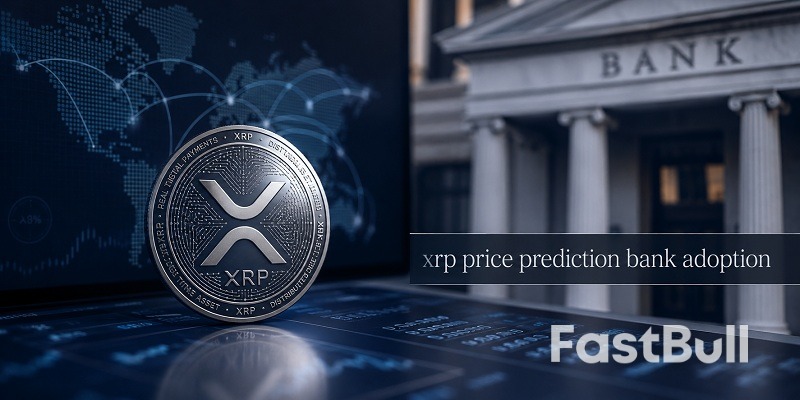
銀行によるXRPの導入は、2026年に価格を押し上げるだろうか?このXRP価格予測では、実際の決済需要、リップルのパートナーシップ、ETFへの資金流入、そして主要なリスクについて解説する。
銀行によるXRPの採用は2026年のXRP価格上昇を支える可能性があるが、そのためには、より多くの金融機関がリップルの決済ネットワークを利用するだけでなく、実際の決済手段としてXRPを使用する必要がある。このXRP価格予測では、銀行による採用が実際に何を意味するのか、どれほどの需要を生み出す可能性があるのか、そしてETF、規制、ステーブルコイン、CBDCがなぜ同様に重要なのかを考察する。
目次
XRPは2026年6月23日現在、1.11ドル付近で取引されており、2025年のサイクル高値である3.65ドル付近を大きく下回っている。慎重な市場環境下では、2026年の現実的な価格帯は1.00ドルから3.00ドル程度と見込まれるが、ETFや決済需要のサイクルが好調であれば、XRPは5.00ドル以上まで上昇する可能性もある。
銀行によるXRPの導入は、実際の決済需要が創出された場合に限り、促進される可能性がある。提携の発表だけでは不十分であり、市場には決済量、流動性の利用、そして金融機関が法定通貨、ステーブルコイン、中央銀行デジタル通貨(CBDC)の代わりにXRPを選択することが必要だ。
一部の銀行や決済会社はリップル関連の技術を採用しているが、リップルとの提携が必ずしもXRPの直接利用につながるわけではない。XRPの需要の伸びが鈍化したとしても、リップルは決済会社として成長できる可能性がある。
リップルネット(現在はリップルペイメントとしてよく議論される)は、銀行、フィンテック企業、決済会社が国境を越えて資金を移動させるのを支援する機関ネットワークです。XRPは、一部の決済フローにおいてブリッジ通貨として使用できるデジタル資産です。
| 学期 | それはどういう意味か | 常にXRPを使用するのですか? |
|---|---|---|
| リップル | 決済、保管、ステーブルコイン、ブロックチェーンのインフラストラクチャを構築する企業 | いいえ |
| リップルネット/リップルペイメンツ | 機関決済ネットワーク | いいえ |
| ODL / XRPの流動性 | XRPが通貨間の橋渡しをできる流動性モデル | はい、フローでXRPが使用される場合 |
| RLUSDまたはステーブルコイン決済 | 安定価値決済オプション | いいえ |
広く引用されている「300以上の金融機関」という主張は有用ではあるものの、数百もの銀行がXRPを購入または保有していることを証明するものではありません。これは通常、銀行、フィンテック企業、送金会社、パイロットプロジェクト、インフラパートナーなどを含む、リップルのより広範な機関投資家ネットワークを指しています。
The better question is not how many institutions are connected to Ripple. The better question is how many use XRP for live settlement at meaningful volume.
Industry trackers often cite more than 20 payment companies and financial institutions with ODL or XRP-linked payment use cases, but that number should still be treated carefully. Usage can change over time, not every corridor is disclosed publicly, and some Ripple customers may use stablecoins, fiat rails, or messaging infrastructure without touching XRP directly.
The strongest adoption case comes from payment corridors where Ripple's liquidity products reduce pre-funded accounts and speed up settlement. SBI Remit is one of the most visible examples because of its long-running connection with Ripple and Asia remittance corridors.
| Institution or Firm | Region | Why It Matters |
|---|---|---|
| SBI Remit | Japan and Southeast Asia | A key Ripple partner often linked to XRP-based liquidity use cases. |
| Travelex Bank | Brazil and global payments | Ripple lists it as a customer using Ripple Payments for faster settlement and liquidity access. |
| Tranglo and Nium | Asia-Pacific and global remittances | Payment firms may be more likely than banks to use digital-asset liquidity in live corridors. |
Some banks and major financial institutions are often mentioned in Ripple or XRP discussions, but investors should not assume that every relationship means live XRP settlement. This distinction is important because Ripple adoption can support the ecosystem without automatically creating direct XRP buying demand.
| Institution | Public Link to Ripple or XRP | What Investors Should Not Assume |
|---|---|---|
| Santander | Built One Pay FX with Ripple technology for faster international transfers. | Do not assume every transaction used XRP unless a specific corridor is confirmed. |
| Standard Chartered | Often cited in XRP market forecasts, ETF discussions, and institutional adoption narratives. | A price forecast or institutional connection is not the same as direct XRP settlement. |
| Deutsche Bank | Frequently mentioned in reports about Ripple-linked rails, tokenization, or RLUSD-related infrastructure. | Public reports do not prove that Deutsche Bank is using XRP as the settlement asset. |
A more accurate statement is that some banks and payment firms are adopting Ripple-related infrastructure, while direct XRP settlement appears narrower, more corridor-specific, and less publicly disclosed.
More adoption does not automatically create lasting XRP buy pressure because XRP can be used as a bridge asset for only a few seconds. A payment can convert fiat into XRP, move across the ledger, and convert into the destination currency almost immediately.
For XRP price to move meaningfully higher, adoption needs higher recurring payment volume, deeper liquidity requirements, more operational XRP inventory, stronger ETF inflows, and clearer rules for bank use of digital assets.
Ripple becoming a federally supervised trust bank would be a credibility boost, but it would not automatically make XRP the default asset for every Ripple payment. The bigger impact would be institutional trust.
Ripple received conditional approval from the Office of the Comptroller of the Currency to establish Ripple National Trust Bank in December 2025. That approval means Ripple must meet pre-opening conditions before the trust bank becomes fully operational.
A national trust bank charter is mainly about regulated trust, custody, and reserve management. It is not the same as a traditional deposit-taking bank license.
A bank charter could make Ripple more acceptable to conservative financial institutions. In the best case, XRP benefits from higher settlement volume. In the neutral case, the charter mainly strengthens RLUSD, custody, and institutional services while XRP remains one liquidity option among several.
XRP's 2026-2030 outlook depends on real XRP settlement volume, regulatory clarity, and institutional capital flows. Bank adoption can help, but only if it creates recurring demand for XRP liquidity.
| Scenario | 2026 Range | 2030 Range | Main Trigger |
|---|---|---|---|
| Bear case | $0.90-$1.50 | $1.00-$3.00 | Weak ODL growth, slow regulation, and stablecoin competition. |
| Base case | $1.50-$3.00 | $4.00-$8.00 | Steady payment growth, gradual ETF inflows, and clearer rules. |
| Bull case | $5.00-$8.00 | $10.00-$25.00 | Major institutions shift meaningful volume to XRP settlement. |
XRP could stay under pressure if Ripple's payment growth does not translate into visible XRP usage. In this scenario, banks prefer stablecoins, tokenized deposits, CBDCs, or traditional fiat rails instead of XRP.
The base case is gradual recovery. XRP gains utility, but banks do not suddenly replace existing payment infrastructure. This could support $1.50 to $3.00 in 2026 and $4.00 to $8.00 by 2030.
The bull case requires major banks or large payment firms to use XRP for meaningful live settlement, not just messaging or custody. If that happens, XRP could become a more important liquidity asset in cross-border payments.
XRP can reach $10 only if the market values it as a serious institutional settlement asset. With roughly 62 billion XRP in circulation, $10 would imply a market value near $620 billion.
XRP reaching $100 is much harder. It would imply a market value near $6.2 trillion, which would require XRP to become one of the world's most important financial settlement assets.
ETF approval matters more for XRP in the short term, while bank adoption matters more in the long term. ETFs can create immediate buying demand, while bank adoption must prove utility over time.
Spot XRP ETFs changed the investment case because they gave institutions a regulated way to gain exposure without directly holding crypto wallets. Goldman Sachs' disclosed spot XRP ETF exposure near $154 million became a major market signal, though institutional positions can change quickly.
Bank adoption works differently from ETF demand. A bank does not need to buy and hold XRP just because it uses Ripple's payment infrastructure. For bank adoption to move price durably, the market needs live corridors, higher payment volume, deeper liquidity, and clearer reporting around XRP usage.
Bank adoption carries more weight long term, but ETFs carry more weight for 2026 price action. ETFs can lift XRP's price, but settlement demand must validate XRP's utility by 2030.
XRP could fail to rise even if Ripple keeps expanding. The main risks are regulatory delays, weak settlement volume, stablecoin competition, and banks using Ripple infrastructure without directly needing XRP.
The SEC case is no longer the same overhang it was during earlier XRP cycles, but regulation still matters. The lawsuit ended with clearer treatment for XRP trading on public exchanges, while institutional sales remained a compliance issue.
The bigger question now is whether U.S. and global rules become clear enough for banks, brokers, ETF issuers, and payment companies to use digital assets at scale.
Stablecoins and CBDCs are the biggest challenge to the simple bank adoption bull case. Banks want speed, compliance, low cost, and predictable value, and a dollar stablecoin or CBDC can offer those benefits without XRP price volatility.
This does not make XRP irrelevant. It means XRP's strongest use case is the corridor where it offers better liquidity, faster settlement, or lower capital costs than the alternatives.
XRP may still be worth holding for investors who believe bank adoption will eventually turn into real settlement demand. But it is not a simple "banks use Ripple, so XRP must rise" trade.
強気な見方としては、XRPには明確な機関投資家向け決済手段としての実績があるという点が挙げられる。リップル社は長年にわたり、銀行、決済会社、流動性プロバイダー、規制当局との関係構築に尽力してきた。こうしたインフラがXRPを直接利用するケースが増えれば、XRPは実用需要と投資家需要の両方から恩恵を受ける可能性がある。
最大のリスクは、リップルが成功する一方で、XRPの価値が投資家の期待を下回る可能性があることだ。リップルは、決済ソフトウェア、RLUSD、カストディ、トークン化、エンタープライズサービスなどを通じて成長できるが、すべての製品にXRPが必要となるわけではない。
銀行によるXRPの採用が拡大し続ける限り、XRPは注目に値するが、その根拠は慎重に検討する必要がある。2026年については、ETFの資金流入と規制の進展が価格に大きく影響するだろう。2030年については、銀行や決済会社の実際の決済需要がより重要になるだろう。
一部の銀行や決済会社はリップル関連技術を採用しているが、リップルとの提携がすべて直接的なXRP利用につながるわけではない。XRP価格の上昇は、採用が実際の決済需要につながるかどうかにかかっている。
現在の供給量と普及状況では、XRPが200ドルに達する可能性は極めて低い。現在の流通量では、XRPが200ドルに達するには、時価総額が12兆ドルを超える必要がある。
XRPの価格が5ドルに達すれば、5,000 XRPの価値は25,000ドルになり、10ドルに達すれば50,000ドルになり、25ドルに達すれば125,000ドルになる。これらの結果は、ETFへの資金流入、規制、そして実際のXRP決済需要によって左右される。
現在の流通量に基づくと、XRPが1,000ドルに達することは現実的ではない。それは時価総額が60兆ドルを超えることを意味し、世界のほとんどの資産市場の規模を上回る。
はい、XRPの購入はリスクを伴います。なぜなら、その価格は仮想通貨サイクル、規制、ETFの需要、そして銀行での導入の不確実性に左右されるからです。投資家はXRPを、銀行での導入が保証された取引ではなく、変動の激しいデジタル資産として扱うべきです。

728 RM B 7/F GEE LOK IND BLDG NO 34 HUNG TO RD KWUN TONG KLN HONG KONG





株式、FX、コモディティ、先物、債券、ETF、仮想通貨などの金融資産を取引する際の損失のリスクは大きなものになる可能性があります。ブローカーに預け入れた資金が完全に失われる可能性があります。したがって、お客様の状況と財政的資源に照らして、そのような取引が適しているかどうかを慎重に検討していただく必要があります.
十分なデューデリジェンスを実施するか、ファイナンシャルアドバイザーに相談することなく、投資を検討するべきではありません。お客様の財務状況や投資ニーズを把握していないため、当社の ウェブコンテンツはお客様に適しない可能性があります。当社の財務情報には遅延があったり、不正確な情報が含まれている可能性があるため、取引や投資に関する決定については、お客様が全責任を負う必要があります。当社はお客様の資本の損失に対して責任を負いません。
ウェブサイトから許可を得ずに、ウェブサイトのグラフィック、テキスト、または商標をコピーすることはできません。このウェブサイトに組み込まれているコンテンツまたはデータの知的財産権は、そのプロバイダーおよび交換業者に帰属します。