


- EURUSD
- XAUUSD
- XAGUSD
- WTI
- USDX


















منتجات الدخل الثابت هي استثمارات تُدرّ دخلاً من خلال الفوائد أو مدفوعات الكوبونات أو غيرها من التدفقات النقدية التعاقدية. ومن الأمثلة الشائعة عليها السندات الحكومية وسندات الشركات، وسندات البلديات، وشهادات الإيداع، وصناديق السندات. وتختلف هذه المنتجات في آجال استحقاقها، وهياكل الدفع، والمخاطر، والمعاملة الضريبية.
ما هي منتجات الدخل الثابت وكيف تعمل؟
منتجات الدخل الثابت هي أدوات مالية توفر دخلاً وفق شروط محددة. وتتمثل آلية عملها في السماح للمستثمرين بإقراض الأموال للحكومة أو الشركة أو المؤسسة المالية مقابل الفائدة، وفي معظم الحالات، سداد رأس المال عند الاستحقاق.
على سبيل المثال، قد تُصدر شركة سندات لجمع رأس المال، وتتعهد بدفع فوائد للمستثمرين في تواريخ محددة. وعند الاستحقاق، يُتوقع سداد القيمة الاسمية للسند. أما المنتجات الأخرى فتختلف في طريقة عملها: تُشترى أذونات الخزانة عادةً بخصم، بينما تدفع بعض القروض والسندات فوائد تتغير وفقًا لسعر فائدة مرجعي.
لا يعني مصطلح "الدخل الثابت" أن كل دفعة أو قيمة استثمارية مضمونة. فقد تتغير أسعار الفائدة، وقد يتخلف المصدرون عن السداد، وقد تكون قيمة الورقة المالية المباعة قبل تاريخ استحقاقها أقل من سعر شرائها.
كيف تُدرّ منتجات الدخل الثابت دخلاً؟
تعتمد عمليات الإرجاع على هيكل المنتج. وتشمل المصادر الشائعة ما يلي:
- دفعات الكوبون: تدفع السندات عادةً فوائد على فترات منتظمة، غالباً مرتين في السنة. على سبيل المثال، سند بقيمة 1000 دولار أمريكي بفائدة سنوية 5% يدفع 50 دولاراً أمريكياً سنوياً.
- مدفوعات الفائدة: تدفع شهادات الإيداع والعديد من القروض فوائد وفقًا لشروطها. وقد يكون معدل الفائدة ثابتًا أو متغيرًا.
- عوائد الخصم على القيمة الاسمية: تُباع سندات الخزانة عمومًا بخصم أو بالقيمة الاسمية. عند الاستحقاق، يحصل المستثمرون على القيمة الاسمية؛ ويمثل أي خصم العائد.
- المدفوعات ذات المعدل المتغير: تقوم بعض السندات والقروض بإعادة ضبط أسعار الفائدة الخاصة بها مقابل معيار مرجعي، لذلك يمكن أن ترتفع المدفوعات أو تنخفض.
- توزيعات الصناديق: تحصل صناديق السندات على دخل من ممتلكاتها، ويجوز لها توزيعه على المساهمين. ويمكن أن تتغير مبالغ التوزيع.
ماذا يحدث عند استحقاق منتج ذي دخل ثابت؟
بالنسبة للسندات أو الودائع الفردية ذات تاريخ الاستحقاق، يُتوقع من المُصدر أو البنك سداد رأس المال عند انتهاء المدة، وذلك رهناً بقدرته على الوفاء بالتزاماته وشروط المنتج. وتتوقف مدفوعات الفائدة عموماً عند تاريخ الاستحقاق.
يختلف صندوق الاستثمار المشترك في السندات أو صندوق المؤشرات المتداولة (ETF) عن ذلك. فهو يستثمر في محفظة من الأوراق المالية، وعادةً لا يكون له تاريخ استحقاق محدد. يبيع المستثمرون أسهم الصندوق بسعر السوق السائد بدلاً من استلام مبلغ السداد الأصلي الموعود به في تاريخ محدد.
ما هي الأنواع الرئيسية لمنتجات الدخل الثابت؟
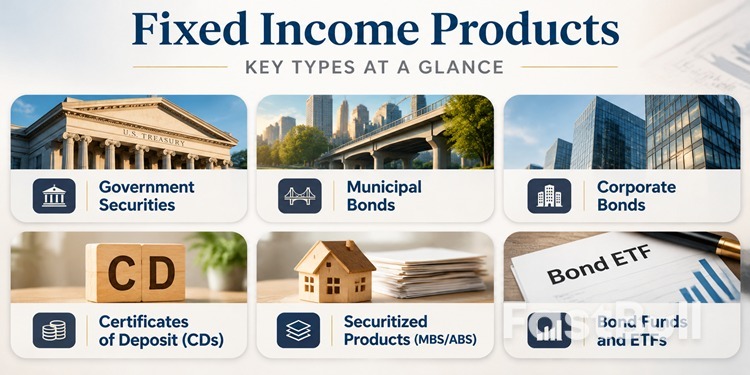
تتنوع منتجات الدخل الثابت بين سندات حكومية قصيرة الأجل وسندات الشركات وصناديق الاستثمار المشتركة. وتكمن الاختلافات الرئيسية في الجهة المصدرة لها، وكيفية توليد الدخل منها، وتاريخ استحقاقها، والمخاطر التي يتحملها المستثمرون.
سندات الخزانة الأمريكية
U.S. Treasury securities are debt instruments issued by the federal government. Common types include:
- Treasury Bills (T-Bills): Short-term securities with maturities of 4 to 52 weeks. They are generally sold at a discount and pay face value at maturity.
- Treasury Notes (T-Notes): Securities with maturities of 2, 3, 5, 7, or 10 years that pay interest every six months.
- Treasury Bonds (T-Bonds): Long-term securities with 20- or 30-year maturities that generally pay interest twice a year.
- Treasury Inflation-Protected Securities (TIPS): Securities whose principal adjusts with changes in the Consumer Price Index for All Urban Consumers (CPI-U). Interest is calculated on the adjusted principal, so payment amounts can change.
Treasury securities are backed by the full faith and credit of the U.S. government. Their interest is generally subject to federal income tax but exempt from state and local income taxes. See TreasuryDirect's overview of marketable securities for product details.
Municipal Bonds
Municipal bonds are issued by states, cities, counties, and public authorities to finance projects such as schools, roads, hospitals, and utilities. Two common types are:
- General Obligation Bonds: Supported by the issuer's taxing power or general revenues.
- Revenue Bonds: Repaid primarily from revenue generated by a specific project or service, such as a toll road or water system.
Interest on many municipal bonds is exempt from federal income tax, and it may also be exempt from state and local taxes for residents of the issuing state. Tax treatment varies: some municipal bond interest is taxable or may affect the alternative minimum tax (AMT). Check the bond's official documents and your tax situation. The IRS guidance on investment income explains the general rules.
Corporate Bonds
Companies issue corporate bonds to finance expansion, acquisitions, refinancing, and operations. Investors receive interest under the bond terms, and the company is expected to repay principal at maturity.
- Investment-Grade Bonds: Have higher credit ratings and generally lower perceived default risk, so they often offer lower yields.
- High-Yield Bonds: Have lower credit ratings and greater default risk. They generally offer higher yields to compensate investors for taking that risk.
A higher yield is not automatically a better deal. It may reflect a greater chance that the issuer will miss interest payments or fail to repay principal.
Certificates of Deposit (CDs)
Certificates of deposit are bank deposits that pay interest in exchange for keeping money deposited for an agreed term. Early withdrawal from a traditional CD may trigger a penalty.
- Traditional CDs: Purchased directly from a bank, usually with a stated interest rate and maturity date.
- Brokered CDs: Issued by banks but purchased through brokerage firms. They may be sold in a secondary market before maturity, and the sale price can be above or below the amount invested.
CDs at FDIC-insured banks are generally covered up to $250,000 per depositor, per insured bank, per ownership category, subject to FDIC rules. Coverage is aggregated with other deposits in the same category at that bank. Brokered CD investors should check the issuing bank and available coverage. The FDIC deposit insurance overview explains the limits and eligible deposits.
Agency Bonds and Securitized Products
Agency bonds are issued by federal agencies or government-sponsored enterprises (GSEs). Their backing varies by issuer, and not all carry the full faith and credit guarantee of the U.S. government.
Securitized products are created by pooling loans or other financial assets and issuing securities backed by the cash flows from those assets. Examples include:
- Mortgage-Backed Securities (MBS): Backed by pools of residential or commercial mortgages. Investor payments come from mortgage principal and interest.
- Asset-Backed Securities (ABS): Backed by assets such as auto loans, credit card receivables, or student loans.
Cash flows can be affected by borrower defaults, early repayments, and changes in interest rates.
Bond Mutual Funds and ETFs
Bond mutual funds and exchange-traded funds pool investors' money to buy portfolios of government, corporate, municipal, or other debt securities. They can provide diversification and access to bonds without requiring investors to select each security themselves.
Bond ETFs trade on exchanges during market hours. Mutual funds generally transact once each business day at their net asset value (NAV). Both can fluctuate in value, charge fees, and make distributions that vary. Unlike an individual bond held to maturity, a typical bond fund does not promise to return a fixed principal amount on a specific date.
Other Fixed Income Instruments
Institutional fixed income markets also include instruments such as:
- Commercial Paper: Short-term, generally unsecured corporate debt used to fund operating expenses and other near-term needs.
- Bank Loans: Loans to businesses. Many institutional loan investments have floating rates, so interest payments can change as benchmark rates move.
Fixed Income Products: Examples and Key Differences
The table below compares common products by how they generate income and what distinguishes them.
| Product | Income Source | Key Characteristic |
|---|---|---|
| Treasury Bills | Discount to face value | Short-term U.S. government debt |
| Treasury Bonds | Coupon payments | Long-term U.S. government debt |
| Municipal Bonds | Interest payments | Potential tax advantages |
| Corporate Bonds | Coupon payments | Credit risk varies by issuer |
| CDs | Interest payments | Bank deposit with a stated term |
| Bond ETFs | Portfolio income and distributions | Diversified bond exposure |
Consider a corporate bond with a $1,000 face value and a 5% annual coupon. It pays $50 in interest each year, often in two $25 installments. If the investor buys it for $950, the current yield is about 5.26% ($50 ÷ $950).
The coupon rate, current yield, and yield to maturity (YTM) measure different things:
- Coupon Rate: Annual coupon interest divided by the bond's face value.
- Current Yield: Annual coupon interest divided by the bond's current market price.
- Yield to Maturity: The estimated annualized return if the bond is held until maturity, taking into account coupon payments and the difference between its purchase price and the amount repaid at maturity, assuming the issuer makes the required payments.
What Risks Should Investors Understand?
Fixed income products can offer more predictable cash flows than some investments, but they are not risk-free. The main risks depend on the issuer, maturity, structure, and market conditions.
Interest Rate Risk
Market interest rates and the prices of existing fixed-rate bonds generally move in opposite directions. When rates rise, older bonds with lower coupons become less attractive and their market prices tend to fall. Longer-maturity bonds are usually more sensitive to rate changes.
Credit and Default Risk
Credit risk is the possibility that an issuer will fail to make interest payments or repay principal. Lower-rated corporate bonds generally carry greater default risk than investment-grade bonds. Credit ratings help assess risk, but they are opinions, not guarantees.
Inflation, Liquidity and Reinvestment Risks
Inflation reduces the purchasing power of fixed payments. Liquidity risk arises when a security is difficult to sell without accepting a lower price. Reinvestment risk occurs when coupon or principal payments must be reinvested at lower rates. Callable bonds and mortgage-backed securities can also expose investors to early repayment, which may force them to reinvest sooner than expected.
How Do You Choose the Right Fixed Income Product?
The right product depends on when you need the money, how much risk you can accept, and whether you prioritize income, liquidity, or tax treatment.
Match the Product to Your Investment Timeline
Investors who need their money soon may compare Treasury bills or short-term CDs. Those seeking longer-term income may consider Treasury notes, corporate bonds, or municipal bonds. Bond funds can provide ongoing exposure without requiring investors to choose individual maturity dates.
Compare Yields, Credit Quality and Tax Treatment
لا تقارن المنتجات بناءً على العائد المعلن فقط. ضع في اعتبارك جودة الائتمان، وفترة الاستحقاق، والرسوم، والسيولة، والدخل بعد الضريبة. بالنسبة لسندات البلديات، يمكن أن يساعد العائد المكافئ للضريبة في مقارنة الدخل المعفى من الضريبة بالبدائل الخاضعة للضريبة، ولكن النتيجة تعتمد على الشريحة الضريبية للمستثمر وقواعد الضرائب في الولاية.
السندات الفردية مقابل صناديق الدخل الثابت
تتميز السندات الفردية بشروط دفع وتواريخ استحقاق محددة. إذا أوفى المُصدر بالتزاماته واحتفظ المستثمر بالسند حتى تاريخ استحقاقه، يُسدد رأس المال عادةً بالقيمة الاسمية. توفر صناديق السندات تنويعًا للمحفظة الاستثمارية وسهولة الوصول إليها، إلا أن أسعار أسهمها متقلبة، وعادةً لا يكون لها تاريخ استحقاق محدد أو ضمان لاسترداد رأس المال المستثمر.
الأسئلة الشائعة حول منتجات الدخل الثابت
هل تُعتبر السندات منتجات ذات دخل ثابت؟
نعم. تُعد السندات الحكومية والبلدية وسندات الشركات من منتجات الدخل الثابت الشائعة. وهي تدفع عمومًا فوائد وفقًا لشروط محددة، ومصممة لسداد رأس المال عند الاستحقاق، وذلك رهناً بقدرة الجهة المصدرة على السداد.
هل القروض دخل ثابت؟
يمكن أن تُعتبر القروض جزءًا من سوق الدخل الثابت عندما يمتلك المستثمرون حقوق دين تُولّد مدفوعات تعاقدية للفائدة وأصل الدين. بعض القروض ذات أسعار فائدة متغيرة، لذا تتغير مدفوعاتها تبعًا لأسعار الفائدة المرجعية.
ما هي منتجات الدخل الثابت في مجال الخدمات المصرفية الاستثمارية؟
في مجال الخدمات المصرفية الاستثمارية، تشمل منتجات الدخل الثابت عموماً سندات الدين والأدوات المالية ذات الصلة التي تصدرها المؤسسات أو تُهيكلها أو تتداولها أو توزعها. ومن الأمثلة على ذلك السندات الحكومية وسندات الشركات، وسندات الدين البلدية، والأوراق المالية المدعومة بالرهن العقاري، وغيرها من منتجات الائتمان المهيكلة.
ما هو صندوق الدخل الثابت؟
صندوق الدخل الثابت هو صندوق استثمار مشترك أو صندوق متداول في البورصة يستثمر بشكل أساسي في سندات الدين، مثل السندات الحكومية أو سندات الشركات أو السندات البلدية. يوفر هذا الصندوق فرصة الاستثمار في محفظة من استثمارات الدخل الثابت، ولكن قيمته السوقية وتوزيعاته قابلة للتغيير.